Unknown's avatar

SXSW 2018 Mini-cast #2: March 11, 2018; Can We Create Consciousness In A Machine?


“No problem can be solved from the same level of consciousness that created it.”–Albert Einstein
For anyone who has watched the HBO series Westworld,  the questions about creating machine consciousness run much deeper than “can we.”  These include,  should we?  How will we treat it?  How will it feel about its station as artificial life?  Will we be able to control it, and is that ethical?  And most profoundly,  how will that change what it means to be human?  The questions go beyond ethical to existential, and they were all addressed in the SXSW Intelligent Future track in a panel titled Can We Create Consciousness In A Machine? Not surprisingly, there were two techno-philosophers on the panel to explore these issues.  They are David Chalmers, with NYU’s Center for Brain an Mind Consciousness, and Susan Schneider, with the Department of Cognitive Sciences at the University of Connecticut.

In this Seeking Delphi™ minicast,  I speak with both of them about some of these issues.   The third panelist mentioned in the podcast is Allen Institute physicist, Kristoff Koch.

A reminder that this and all Seeking Delphi ™podcasts are available on iTunes, PlayerFM, and  YouTube.  You can also follow us on Facebook and on twitter @MarkSackler

David Chalmers

Susan Schneider


Special Edition SXSW 2018 mini-cast #2.

YouTube slide show of  Seeking Delphi™ SXSW 2018 minicast #2

The experts on the panel agreed…classical digital computers can’t create consciousness.  Neural networks? Neuromorphic chips?  And what about quantum computing?  My interview with whurley on quantum computing, immediately following his SXSW keynote on the subject, is below.

SXSW minicast #3: whurley on quantum computing


In case you missed it, the YouTube slide show link for SXSW 2018 minicast #1, on covering sessions on quantum computing and self-driving car safety, is below.

A reminder that this and all Seeking Delphi ™podcasts are available on iTunes, PlayerFM, and  YouTube.  You can also follow us on Facebook and on twitter @MarkSackler

Unknown's avatar

News of the Future This Week, March 8, 2018

“Life is a DNA software system.”–Craig Ventner

You’ve heard it all, and lately you’re hearing it more.  The singularity is near.  Robots are going to take our jobs.  Robots are going to take over altogether.  Robots are even going to take over our sex lives.  Yadda yadda yadda.

I’m not saying it won’t happen;  I just think it’s farther away than the impression most people are getting from all the news.  What’s here right now is genetic editing, and with it, the possibility of directing human evolution. The very real and very near possibility of changing what it means to be human.  Read all the artificial intelligence and future of work articles–yes.  But keep your eye on the gene editing ball–it’s here right now.

Seeking Delphi™ will be at SXSW 2018 in Austin, TX through Wednesday of next week.  Stay tuned for updates on the Intelligent Future track.

While you’re reading about all this week’s future-related  news, don’t forget that you can subscribe to Seeking Delphi™ podcasts on iTunes, PlayerFM, or YouTube (audio with slide show) and you can also follow us on Twitter and Facebook 

Gene editing/synthetic biology–A Japanese team has created a new genetic editing process so precise it can edit a single letter of DNA.  Called MhAX, it works by combining the gene editing tool CRISPR with a DNA repair technique.

–If you thought IBM was only about information technology and business processes, think again.  Researchers at the compnay  are making headway in the development of synthetic molecules that might be able to replace antibiotics in the fight against drug resistant infectious organisms.

The Future of Work–Speaking of artificial intelligence, maybe it is coming to take jobs.  But a new Gallup survey suggests that most Americans think it will take somebody else’s job–not theirs.

Image Credit: Shutterstock

Autonomous Vehicles/Advanced Transportation–If job disruptive technology is at hand, can Luddism be far behind?  Apparently not, as recent attacks on self-driving vehicles in San Franscisco demonstrate.

–If cars are ever going to be fully autonomous, every aspect of the operation needs to be designed to be human-free.  Even headlights.  Engineers at Mercedes Benz have now done just that, they’ve designed smart, autonomous headlights.

Energy–Elon Musk has been rather quiet lately–for him–as far as these weekly reports go.  Not to worry; his latest idea is to equip 50,000 Australian homes with his Tesla solar roofing tiles and lithium ion batteries, to create a virtual power plant.

Tesla solar roofing tiles look like…well…roofing tiles.

Chinese Space Station–China’s failing space station is due to come crashing back into the atmosphere within the next few weeks.  Fear not, though.  Your own future probably doesn’t include getting conked on the head by the falling debris.  Experts have calculated your chances of being hit as a million times more remote than winning Powerball.   That equates to about one in three hundered trillion.

A reminder that the Seeking Delphi™ podcast is available on iTunesPlayerFM, blubrry , and has a channel on YouTube.  You can also follow us on Facebook.

Unknown's avatar

News of the Future This Week, March 1, 2018

“The killer app is making calls.”–Steve Jobs

“For three days after death hair and finger nails continue to grow, but phone calls taper off.”–Johnny Carson.

Phone calls?  Who makes phone calls?  Texts, chats, messages…yes.  The only way I can get my daughter on the phone is to text her with a message to call me.  And  it helps to make it read like somebody died.  Anyway, the Mobile World Congress was this week.  I’d love to see the stats on calls vs. texts and miscellaneous messaging and chat apps among the attendees at the conference.

While you’re reading about all this week’s future-related  news, don’t forget that you can subscribe to Seeking Delphi™ podcasts on iTunes, PlayerFM, or YouTube (audio with slide show) and you can also follow us on Twitter and Facebook 

Earth man phone home?

Mobile Telephony–If you think your cell service is bad at home, just imagine what it might be on the moon.  Vodaphone and Nokia have announced their intent to build a lunar mobile service initially intended to enable communication between robotic probes and their base station.

According to one pundit presenting at the MWC, mobile service providers are way behind the AI curve.  They could be using artificial intelligence to improve service, but so far have not done much.

–Looking for MWC highlights?  The Verge gives its take on the good, the bad, and the ugly at this year’s conference.

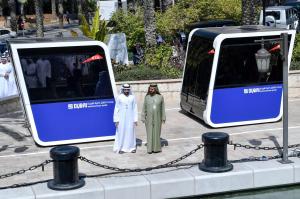
Impressive, even if they don’t fly

Autonomous Vehicles/Advanced Transport–Wherever humanity is going, Dubai seems determined to get there first.   And they are determined that their workers get there first, by commuting via proposed autonomous transport pods.

Tests of fully driverless cars may be hitting California highways as soon as next month.   Well, sort of–there will be no driver in the cars, but they will be linked to humans by remote control.

–If autonomous cars bomb out as a concept, it won’t be for lack of trying–or funding.  Toyota has announced a nearly $3 billion investment in the technology, which will employ 1,000 workers.

Artificial Intelligence–A new study says artificial intelligence can best lawyers in searching legal documents.   Other than lawyers themselves, this does not break anyone’s heart.

–Two top Microsoft executives make a stunning assertion in a new book.  In the future, they say, we will all have artificially intelligent, alter ego digital assistants.  Just what the world needs: a mechanical me.

Coming Soon–I’ll be representing Seeking Delphi™ and Age of Robots, covering the Intelligent Future track at SXSW in Austin, Texas, March 9-14.  Stay tuned for multiple podcasts and reports.

A reminder that the Seeking Delphi™ podcast is available on iTunesPlayerFM, blubrry , and has a channel on YouTube.  You can also follow us onTwitter and Facebook.

Unknown's avatar

News of the Future This Week, January 31, 2018

“The main thing in life is not to be afraid of being human.”–Aaron Carter

You’ve heard it all, and lately you’re hearing it more.  The singularity is near.  Robots are going to take our jobs.  Robots are going to take over altogether.  Robots are even going to take over our sex lives.  Yadda yadda yadda.

I’m not saying it won’t happen;  I just think it’s farther away than the impression most people are getting from all the news.  What’s here right now is genetic editing, and with it, the possibility of directing human evolution. The very real and very near possibility of changing what it means to be human.  Read all the artificial intelligence and future of work articles–yes.  But listen to what  Elizabeth Parrish has to say about modifying the human genome to reverse aging and to keep up–cognitively and physically–with robots.

Seeking Delphi™ will be on vacation next week.  Enjoy the peace and quiet.

Singularity/Being Human/Artificial Intelligence–Addressing the World Economic Forum in Davos,  Yuval Harari speculated on whether are future will indeed still be human.

A quasi-human future? Image credt: Kai Stachowiak

–Ray Kurzweill isn’t the only one talking about a technology singularity.  Futurism.com, with an eye toward separating fact from hype, polled several other technology experts for their take on liklihood and timing. 

–I remember when the Cold War simply meant fears of nuclear anhilation.  Physics.org says we should watch out for artificial intelligence as well.

–A big part of being human is IQ (intellectdual quotiant) and EQ (emotional quotiant). But the future of success in the workplace, according to Fast Company, might be AQ (adaptability quotient).

Here’s the latest take on the robot job apocalypse.     A new report suggests the UK will lose one in 12 jobs to robots and automation by 2030. That’s less then some forecasts, but still enough to be a bother.

In this weeks Seeking Delphi™ podcast interview, Ending Aging, Part 2, with Elizabeth Parrish,  the CEO of Bioviva, says we need to alter the human genome in two ways.  The first is to reverse aging, which her company is working on.  The second is to enhance humans cognitively and physically to keep up with robots and artificial intelligence.

Laser imaging–Do you like how those 3-D images appear out of thin air in the Star Wars world?  Now a team of BYU physicists have actually created this effect with lasers.

Space Commerce–It seems like everyone and his brother is getting into the business of private space launches.  That’s bound to create the need for support services, and UK company, Effective Space, hope to launch a  satellite repair service by 2020.

Self-Driving vehicles–Have we been hearing altogether too much about autonomous vehicle development, lately.  Satirical web site, The Onion, seems to think so.  The released the image below with headline Tesla Debuts Carless Driver.

Image Credit: The Onion


Thanks for visiting and reading.  See you in two weeks.

While you’re reading about all this week’s future-related  news, don’t forget that you can subscribe to Seeking Delphi™ podcasts on iTunes, PlayerFM, or YouTube (audio with slide show) and you can also follow us on Twitter and Facebook 


A reminder that the Seeking Delphi™ podcast is available on iTunesPlayerFM, blubrry , and has a channel on YouTube.  You can also follow us on Facebook.

Unknown's avatar

News of the Future This Week, January 24, 2018

“There are no right answers to wrong questions.”–Ursula K. Le Guin

Le Guin in 2004

This week’s future news is dedicated to the author of my favorite Science Fiction novel, Ursula Le Guin.  She died yesterday at age 88.   Her 1971 novel, The Lathe of Heaven, depicted a vision of a mildly dysfunctional Portland, Oregon, on the verge of a major apocalypse, at the turn of the 20th century.  But the real message, amidst the effects of chaos, complexity and unintended consequences, was “think globally, act locally.”  It is a must for anyone seriously interested in how our thoughts and actions create our future.

 While you’re reading about all this week’s future-related  news, don’t forget that you can subscribe to Seeking Delphi™ podcasts on iTunes, PlayerFM, or YouTube (audio with slide show) and you can also follow us on Twitter and Facebook 


 Artificial Intelligence–We’ve heard it before; let’s hear it again.  Yet another pundit is forecasting huge job losses to artificial intelligence an autonomous vehicles.  In this case, fully 1/3 of all jobs by 2030.


–If the above isn’t vexing enough, The Verge reports that artificial intelligence will, as they put it, “supercharge surveillance.”  All those passive security cameras will, in effect, wake up and smell your location.

–Speaking of digital surveillance, Futurism.com reports that we are well on our way to having location tracking implants, a la a recent episode of Black Mirror.  They put the time frame as some time in the latter half of the 2030’s–or about 20 years from now.

–Artificial intelligence?  How about an artificial synapse?  MIT engineers have apparently created such a device, which could lead to brain-on-a-chip technology,

Automation–Amazon opened its first Amazon Go fully automated convenience store, in Seattle, Washington.  It uses sensors and cameras to track your movements and purchases, and charge you through an app on your smartphone.  And maybe creep you out, as well.

Cryptocurrency/Blockchain–One of the allures of cryptocurrency, for its users, is the ability to fly below government radar.  Unfortunately, that can mean money laundering, terrorism funding, and tax evasion.  India becomes the latest country to look into this, with reports it wants to tax cryptocurrency investments.

–Another appeal of cryptocurrency–and anything executed in a blockchain, for that matter–is security.  Well, maybe. According to  a new report from Ernst & Young, hackers have been stealing millions from ICO’s.

Space Travel/Colonization–If you think Mars colonization is ambitious, consider what Mars One CEO Bas Lansdorp is proposing: floating balloon habitats in the upper atmosphere of Venus.  That sounds more like a prison colony than a “habitat” to me.


A reminder that the Seeking Delphi™ podcast is available on iTunesPlayerFM, blubrry , and has a channel on YouTube.  You can also follow us on Facebook.

Unknown's avatar

The Future Last Year: 2017 In Review

“My mentality is that of a samurai. I would rather commit seppuku than fail.”–Elon Musk

“The best way to predict the future is to invent it.”–Alan Kay

Technology was everywhere in 2017.  And everywhere technology went, Elon Musk was sure to lead.  Perhaps we should paraphrase Alan Kay.  The best way to predict the future, is to watch Elon. If anybody is inventing it, it’s him. Tesla, Solar City, SpaceX, Neuralink, Hyperloop.  If it involved renewable energy, autonomous vehicles, space commerce, transhumanism, or warnings about artificial intelligence (lot’s of warnings), it probably involved Elon.
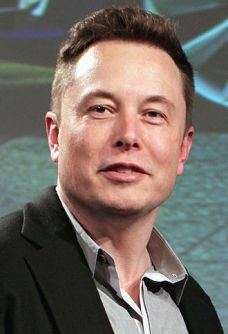
With that, I name Elon Musk, in total, our first Future Story of The Year, for 2017.  Here’s a very brief history of his year, along with some of the other top stories from 2017.

While you’re reading about it all, don’t forget that you can subscribe to Seeking Delphi™ podcasts on iTunes or PlayerFM, and you can also follow us on Twitter and Facebook 

Elon Musk

Tesla– Even as the lower priced ($35,000) model 3 production lagged way behind predictions, Elon revealed the new Tesla semi.  It’s great that he aims high, but in 2018 he will need to deliver, not just promise.

SpaceXAs of this writing, the Falcon Heavy rocket sits on pad 39A at Cape Canaveral.  It’s the precursor of even heavier launch vehicles that Elon hopes will send humans to Mars by 2030. 

HyperloopMusk may have invented it, but Richard Branson’s Virgin Hyperloop One is making the bulk of the headlines these days.  Kudos to Elon, though, for open sourcing the concept and allowing competition to rapidly develop it.

The Boring CompanyWhile aiming to odominate the transportation on the surface of the earth (Tesla) and space above it (SpaceX) , Elon also created The Boring Company to drill tunnels below it. give him credit for a sense of humor with this company’s name.

Neuralink–When it comes to A.I., Elon’s motto seems to be “if you can’t beat ’em, join ’em.” He created Neuralink to accelerate the merger of mind and machine.

So…how many new technology ventures will he create in 2018, as he continues to invent the future?  I’d put the over/under at 2 1/2.

Other top stories of the Year.

Artificial intelligence, CRISPR/Cas9 gene editing, self-driving cars, Bitcoin and blockchain, reversing aging and the future of work, were all frequently in the news in 2017.   Somewhat less visible were stories about laboratory grown meat, reversing aging, hypersonic weapons, 3D printing and advanced drone technology.  Here are few top story lists from other sources.

Futureseek Daily Link Digest

Wired Magazine’s top stories of 2017

Favorite 2017 Science Stories, The Verge

Science Fiction vs. Science Fact: Replicating Machines (my article from the first issue of Age of Robots)

IEEE Spectrum best stories of 2017

2017 in 3D printing

Dave Barry’s less than reassuring look back at 2017

Seeking Delphi™ finished the year with a podcast interview with SENS foundation,s chief science officer,  Aubrey de Grey, on ending aging.


Happy New Year, all.  2018 figures to be quite a ride.

Coming Attractions–2018 will kick off with an interview with Bioviva CEO Elizabeth Parrish, the first person to edit parts of her own genome to reverse aging.


A reminder that the Seeking Delphi™ podcast is available on iTunesPlayerFM, blubrry , and has a channel on YouTube.  You can also follow us on Facebook.