Autonomous vehicles? Flying cars? The concepts are exciting, but the truth is: most of us will still be driving manually on the ground for many years to come. And that means dealing with the motorist’s most persistent annoyance. Congestion. It costs time and money and tries patience. But advanced vehicles are not necessarily required to solve the problem. In the final episode of the Future Driving series on the Seeking Delphi™ podcast, we explore intelligent traffic control with Rapid Flow Technologies CEO, Griffin Schultz. Advanced sensors, edge computing and artificial intelligence are helping cities to lessen the occurrence–and the frustration–of traffic congestion.
Future Driving, Part 1, Self-Driving Cars,with Alex Wyglinskihere.
Future Driving, Part 2, Flying Cars, with Kaushik Rajashekara here.
“The hard part is, how do you make a flying car that’s super safe and quiet? Because if it’s a howler, you’re going to make people very unhappy.”–Elon Musk
“We wanted flying cars; what we got is 140 characters.”–Peter Thiel
Well, guess what? We now have 280 characters, and we may finally be getting flying cars. Well, some of us may get the flying cars. They clearly won’t be mass market cheap for a very long time, if ever. Part 2 of the Seeking Delphi™ Future Driving series presents an interview with Kaushik Rajashekara. He is a University of Houston professor and IEEE fellow who has been tracking the subject for decades. Me? I’ve been vaguely following it ever since The Jetsons.
Future Driving, Part 1, Self-Driving Cars,with Alex Wyglinskihere.
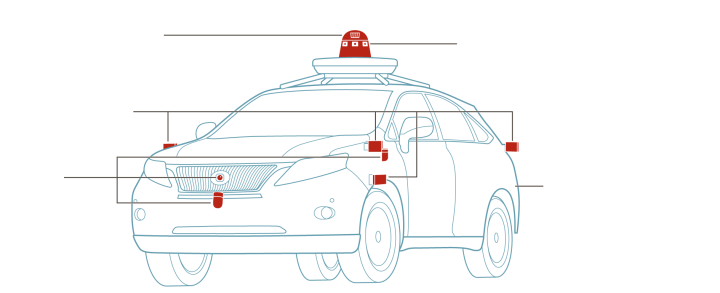
There’s no shortage of opinions on the viability of self-driving cars. Be you a bull or a bear, though, there is no denying that there is a plethora of big players banking on them with R&D spending.
The issues surrounding the technology are too many and complex to deal with all of them in a single podcast. And while things like collision avoidance, navigation, regulation, liability and public acceptance take up much of the debate over the technology, one key element has not so often been discussed. That would be connectivity. To assure safety and efficiency, to any degree greater than currently exists with manually driven cars, they need to be able to talk to each other.
In episode #26 of Seeking Delphi™ host Mark Sackler talks with Alex Wyglinski, president of IEEE’s Vehicle Technology Society and co-chair of the Community Development Working Group for IEEE Future Networks, on how wireless connectivity might enable the technology.
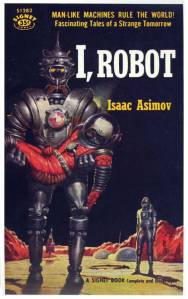
In the popular HBO series Westworld, robotic hosts are depicted as being placed into a kind of psychiatric analysis by their creators. Could this actually happen one day? Joanne Pransky thinks it will. She bills herself as the World’s First Robotic Psychiatrist® (yes, she even registered that title!). She was dubbed the real life Susan Calvin by Isaac Asimov, after the robot psychologist he created in his classic 1950 short story anthology, I, Robot. In this episode of the Seeking Delphi™ podcast, host Mark Sackler talks to her about this and other significant issues in the man/machine relationships to come.
Oh, how jaded we’ve become. Remember Skylab? When it became the first orbiting space station to crash back to earth, away back in 1979, it provoked a wide range of bizarre cultural outcroppings, from Skylab crash parties to insurance against it landing on your head. This time? Not so much. If the cable news channels can’t politicize it, they won’t give it much mention.
While you’re reading about all this week’s future-related news, don’t forget that you can subscribe to Seeking Delphi™ podcasts on iTunes, PlayerFM, or YouTube(audio with slide show) and you can also follow us on Twitter and Facebook
Is Vladimir Putin serious? He’s really going to put Russians on the moon by next year? Live Russians? Human Russians? Russian manikins, maybe. Or how about those nested Russian dolls? I have my hunches about his obvious hyperbole. Like maybe he’s goading a certain Western leader I won’t name to take it seriously and go broke trying to compete with him. All the while what he’s really doing is focusing his resources on hacking democracy and wreaking havoc.
While you’re reading about all this week’s future-related news, don’t forget that you can subscribe to Seeking Delphi™ podcasts on iTunes, PlayerFM, or YouTube(audio with slide show) and you can also follow us on Twitter and Facebook
–Next Big Future reports on the progress–and relative merits–of AD-Astra’s VX200SSTM VASIMR® prototype space propulsion engine. Recent test firings have brought them one step closer to enabling earth to mars transit in as little as 4 to 6 weeks. SpaceX, with its BFR, has aims at making the transit at similar speeds.
Quantum Computing–IBM released it’s 5 in 5 list–five inovations that will change our lives in five years. Most notably they, predicted that quantum computing will be mainstream within five years. If you listened to my podcast with whurley from SXSW 2018, you’d know that enabling broad use of quantum computing is exactly what he’s aiming for with his new company, Strangeworks (YouTube link below).
Quantum Computing featuring whurley, recorded March 12, 2018 at SXSW, Austin, TX







 Seeking Delphi™