Unknown's avatar

News of the Future This Week, March 21, 2018

“It’s not going to do any good to land on Mars if we’re stupid.”–Ray Bradbury

“You cannot be serious.”–John McEnroe

Is Vladimir Putin serious?  He’s really going to put Russians on the moon by next year?  Live Russians? Human Russians?  Russian manikins, maybe.  Or how about those nested Russian dolls?  I have my hunches about his obvious hyperbole.  Like maybe he’s goading a certain Western leader I won’t name to take it seriously and go broke trying to compete with him. All the while what he’s really doing is focusing his resources on hacking democracy and wreaking havoc.

While you’re reading about all this week’s future-related  news, don’t forget that you can subscribe to Seeking Delphi™ podcasts on iTunes, PlayerFM, or YouTube (audio with slide show) and you can also follow us on Twitter and Facebook 

Matryoshka dolls. Send these to Mars?

Space Exploration– Yes, according to Futurism.com, Vladimir Putin did say that he intends to send both manned and unmanned missions to Mars, possibly as soon as next year.  This timetable is a full 5 years ahead of SpaceX’s most optimistic scenario. He might have his work cut out for him.  The Russian space agency has not attempted to reach beyond earth’s gravity well since a 2011 launch failed and fell out of orbit.

–Next Big Future reports on the progress–and relative merits–of AD-Astra’s  VX200SSTM VASIMR® prototype  space propulsion engine.  Recent test firings have brought them one step closer to enabling earth to mars transit in as little as 4 to 6 weeks.  SpaceX, with its BFR, has aims at making the transit at similar speeds.

Quantum Computing–IBM released it’s 5 in 5 list–five inovations that will change our lives in five years.  Most notably they, predicted that quantum computing will be mainstream within five years.  If you listened to my podcast with whurley from SXSW 2018, you’d know that enabling broad use of quantum computing is exactly what he’s aiming for with his new company, Strangeworks (YouTube link below).

Quantum Computing featuring whurley, recorded March 12, 2018 at SXSW, Austin, TX

Age of Robots reported on the marriage of quantum computing with biological data.  Specifically, researchers at USC have demonstrated how a quantum processor could effectively predict certain processes in the human genome.

3D printing-A vehicle its maker says will be the first mass-produced, 3D-printed car, is slated for availability in 2019.   With a price tag of less than $10,000, but with a single-charge range of only 90 miles at a maximum speed of 45mph, it might seem more like a golf cart on steroids than a real car.  Dr. Paul Tinari talked about 3D-printed cars in Seeking Delphi™ podcast #7 in March of 2017.

Dr. Paul Tinari on 3D printing cars, homes and–good grief–even human beings. Seeking Delphi™ podcast #7, from March 2017

Self-Driving Cars–In the wake of the Tempe, Arizona pedestrian fatality involving an Uber self-driving car, the New York Times published this guide to how self-driving cars sense the world.
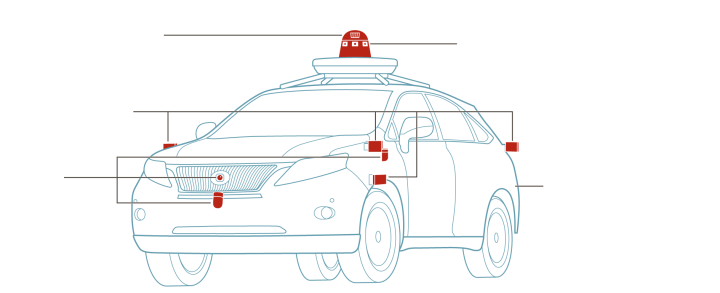
Google-modified Lexus. Source: Google


Up next:  one final special edition mini-cast out of SXSW.  Exteme Bionics: The Future of Human Ability.

A reminder that the Seeking Delphi™ podcast is available on iTunesPlayerFM, blubrry , and has a channel on YouTube.  You can also follow us onTwitter and Facebook.

Unknown's avatar

News of the Future This Week, March 1, 2018

“The killer app is making calls.”–Steve Jobs

“For three days after death hair and finger nails continue to grow, but phone calls taper off.”–Johnny Carson.

Phone calls?  Who makes phone calls?  Texts, chats, messages…yes.  The only way I can get my daughter on the phone is to text her with a message to call me.  And  it helps to make it read like somebody died.  Anyway, the Mobile World Congress was this week.  I’d love to see the stats on calls vs. texts and miscellaneous messaging and chat apps among the attendees at the conference.

While you’re reading about all this week’s future-related  news, don’t forget that you can subscribe to Seeking Delphi™ podcasts on iTunes, PlayerFM, or YouTube (audio with slide show) and you can also follow us on Twitter and Facebook 

Earth man phone home?

Mobile Telephony–If you think your cell service is bad at home, just imagine what it might be on the moon.  Vodaphone and Nokia have announced their intent to build a lunar mobile service initially intended to enable communication between robotic probes and their base station.

According to one pundit presenting at the MWC, mobile service providers are way behind the AI curve.  They could be using artificial intelligence to improve service, but so far have not done much.

–Looking for MWC highlights?  The Verge gives its take on the good, the bad, and the ugly at this year’s conference.

Impressive, even if they don’t fly

Autonomous Vehicles/Advanced Transport–Wherever humanity is going, Dubai seems determined to get there first.   And they are determined that their workers get there first, by commuting via proposed autonomous transport pods.

Tests of fully driverless cars may be hitting California highways as soon as next month.   Well, sort of–there will be no driver in the cars, but they will be linked to humans by remote control.

–If autonomous cars bomb out as a concept, it won’t be for lack of trying–or funding.  Toyota has announced a nearly $3 billion investment in the technology, which will employ 1,000 workers.

Artificial Intelligence–A new study says artificial intelligence can best lawyers in searching legal documents.   Other than lawyers themselves, this does not break anyone’s heart.

–Two top Microsoft executives make a stunning assertion in a new book.  In the future, they say, we will all have artificially intelligent, alter ego digital assistants.  Just what the world needs: a mechanical me.

Coming Soon–I’ll be representing Seeking Delphi™ and Age of Robots, covering the Intelligent Future track at SXSW in Austin, Texas, March 9-14.  Stay tuned for multiple podcasts and reports.

A reminder that the Seeking Delphi™ podcast is available on iTunesPlayerFM, blubrry , and has a channel on YouTube.  You can also follow us onTwitter and Facebook.

Unknown's avatar

News of the Future This Week, February 21, 2018

“While technology is important, it’s what we do with it that truly matters.”–Muhammad Yunus

So what’s more important–technological breakthroughs or how we apply them?  The cloud is a technology;  blockchain is an application.

So where do the 10 breakthrough technologies that make up MIT Technology Review’s annual list for 2018 stand?  All over the place.  Many, if not all of them, might be described as either incremental improvements or advanced applications built on existing technologies.   Where is the line?  Tell me if you know.

Technology Breakthroughs–MIT Technology Review published its annual list of breakthrough technologies for 2018.  Not surprisingly, it’s chock full of digital and bio technologies.  Good list?  Somehow I feel there is more out there.

EM Drive. A propulsion system without propellant? Image credit: nasaspaceflight.com

Space/propulsion systems–Talk about your breakthrough technology: China claims to have perfected the EM drive.  You might not see it on that MIT list anytime soon, though.  It will take more than talk to convince the mainstream scientific community, which views the concept as an impossible violation of one of Newton’s third law of motion.  It claims to create thrust without a propellant.

–NASA isn’t sold on the EM drive, at least not yet.  But they are considering reviving a decades old plan to use nuclear powered rockets in an effort to send manned craft to Mars by the 2030’s.

Energy/Transportation–BP is forecasting a peak in oil and gas demand by 2040. It sees the mass emergence of self-driving electric vehicles as the main cause.  Considering their vested interest, they may be ignoring the possibility of a more rapid drop off.

Bored in Space?

Space Commerce/Tourism–Hotel magnate Robert Bigelow, also  CEO of Bigelow Aerospace, has now formed a new enterprise, Bigelow Space.  One of his proposed projects is to launch an inflatable orbiting space hotel by 2021.  I’m just wondering what one would do up there, other than float around in microgravity.  Maybe binge watch episodes of the Lost In Space reboot?

Aerospace/Advanced Transportation–A Chinese team has announced the design of a hypersonic jet that could make the trip from Beijing to New York in as little as two hours.  If feasible, it could upstage the planned 2020 test flight of a new Lockheed jet which aims to make the trip in 7 hours.  There is no announced timetable for building and testing the Chinese craft.

Electric Vehicles–It might not be as sexy as a 6,000kph jet;  but Volkswagon has provided a teaser preview of its proposed 112mph, 400+ mile range electric vehicle.

Coming Attractions–Seeking Delphi,™ the podcast, will return in March, featuring interviews with Roberto Sacarro on social robotics, and Jerome Glenn, on The Millennium Project’s 19th State of the Future publication.  We’ll also feature some on the spot interviews from the Intelligen Future tracks at the 2018 SXSW conference from Austin, Texas.

While you’re reading about all this week’s future-related  news, don’t forget that you can subscribe to Seeking Delphi™ podcasts on iTunes, PlayerFM, or YouTube (audio with slide show) and you can also follow us on Twitter and Facebook 


A reminder that the Seeking Delphi™ podcast is available on iTunesPlayerFM, blubrry , and has a channel on YouTube.  You can also follow us on Facebook.

Unknown's avatar

News of The Future This Week, February 14, 2018

“I don’t believe in a conspiracy to hide the existence of extraterrestrial life.”–David Duchovney

“Where are they?”–Enrico Fermi

If David Duchovney is right–and I for one agree with him–then Fermi and his paradox certainly become relevent.  But it hardly proves that extraterrestrials don’t exist.  It just proves we haven’t been able to confirm any signals or communication.  What hampers us from doing so?  The vastness of the universe? Our relatively inferior technology?  Maybe they are hiding, as in Cixin Liu’s chilling novel The Dark Forrest?  These are all possiblities, true.  But in a strange ocurrance of the law of unintended consequences, the biggest current hindernece to finding E.T. could be bitcoin mining.

 While you’re reading about all this week’s future-related  news, don’t forget that you can subscribe to Seeking Delphi™ podcasts on iTunes, PlayerFM, or YouTube (audio with slide show) and you can also follow us on Twitter and Facebook 

 SETI/Cryptocurrencies–This heading might look like an oxymoron.  But in a bizarre turn of events, the cornering of the GPU market by Bitcoin and other cryptocurrency mining has created a shortage that is hitting the video game market, and even the search for extraterrestrial intelligence.

NASA/Space–In another unusual turn of events, NASA will be sending a Martian meteorite back to its home planet on a rover scheduled for launch in 2020.  The purpose is best described as “target practice” for precision lasers designed to pick targets for sample collection that a future mission might return to earth.

How about these for target practice?

The FCC is looking closely at SpaceX’s plan to provide sattelite delivered  internet.  The head of the agency views it favorably, so don’t bet against it.

The Trump administration’s latest NASA plans call for a return to the moon.  They call for it; but they don’t budget it.  It likely won’t happend until after The Donald leaves office, even if he gets re-elected.

Autonomous Vehicles —The U.S. Transportation Agency has called a summit on autonomous vehicles for March 1 of this year.  One can only hope that the government might become as concerned with artificial intelligence as it is with this one application.

Matt Chappell has been effectively cured of HIV

Genetic Editing/HIV–As gene editing techniques continue their rapid advance, efforts are accelerating to control, and possibly cure, HIV.  The template may be one patient who has been off medications for over two years with no recurrence.

Artificial Intelligence/Singularity–In an interview with Futurism.com, the father of artificial intelligence says that the singularity is 30 years away.

Nanotechnology–Reasearchers at Arizona State University, working with a team from the Chinese Academy of Sciences, have created nanorobots designed to shrink tumors by cutting off their blood supply.

“A reminder that the Seeking Delphi™ podcast is available on iTunesPlayerFM, blubrry , and has a channel on YouTube.  You can also follow us on Facebook.

Unknown's avatar

News of the Future This Week, January 31, 2018

“The main thing in life is not to be afraid of being human.”–Aaron Carter

You’ve heard it all, and lately you’re hearing it more.  The singularity is near.  Robots are going to take our jobs.  Robots are going to take over altogether.  Robots are even going to take over our sex lives.  Yadda yadda yadda.

I’m not saying it won’t happen;  I just think it’s farther away than the impression most people are getting from all the news.  What’s here right now is genetic editing, and with it, the possibility of directing human evolution. The very real and very near possibility of changing what it means to be human.  Read all the artificial intelligence and future of work articles–yes.  But listen to what  Elizabeth Parrish has to say about modifying the human genome to reverse aging and to keep up–cognitively and physically–with robots.

Seeking Delphi™ will be on vacation next week.  Enjoy the peace and quiet.

Singularity/Being Human/Artificial Intelligence–Addressing the World Economic Forum in Davos,  Yuval Harari speculated on whether are future will indeed still be human.

A quasi-human future? Image credt: Kai Stachowiak

–Ray Kurzweill isn’t the only one talking about a technology singularity.  Futurism.com, with an eye toward separating fact from hype, polled several other technology experts for their take on liklihood and timing. 

–I remember when the Cold War simply meant fears of nuclear anhilation.  Physics.org says we should watch out for artificial intelligence as well.

–A big part of being human is IQ (intellectdual quotiant) and EQ (emotional quotiant). But the future of success in the workplace, according to Fast Company, might be AQ (adaptability quotient).

Here’s the latest take on the robot job apocalypse.     A new report suggests the UK will lose one in 12 jobs to robots and automation by 2030. That’s less then some forecasts, but still enough to be a bother.

In this weeks Seeking Delphi™ podcast interview, Ending Aging, Part 2, with Elizabeth Parrish,  the CEO of Bioviva, says we need to alter the human genome in two ways.  The first is to reverse aging, which her company is working on.  The second is to enhance humans cognitively and physically to keep up with robots and artificial intelligence.

Laser imaging–Do you like how those 3-D images appear out of thin air in the Star Wars world?  Now a team of BYU physicists have actually created this effect with lasers.

Space Commerce–It seems like everyone and his brother is getting into the business of private space launches.  That’s bound to create the need for support services, and UK company, Effective Space, hope to launch a  satellite repair service by 2020.

Self-Driving vehicles–Have we been hearing altogether too much about autonomous vehicle development, lately.  Satirical web site, The Onion, seems to think so.  The released the image below with headline Tesla Debuts Carless Driver.

Image Credit: The Onion


Thanks for visiting and reading.  See you in two weeks.

While you’re reading about all this week’s future-related  news, don’t forget that you can subscribe to Seeking Delphi™ podcasts on iTunes, PlayerFM, or YouTube (audio with slide show) and you can also follow us on Twitter and Facebook 


A reminder that the Seeking Delphi™ podcast is available on iTunesPlayerFM, blubrry , and has a channel on YouTube.  You can also follow us on Facebook.

Unknown's avatar

News of the Future This Week, January 24, 2018

“There are no right answers to wrong questions.”–Ursula K. Le Guin

Le Guin in 2004

This week’s future news is dedicated to the author of my favorite Science Fiction novel, Ursula Le Guin.  She died yesterday at age 88.   Her 1971 novel, The Lathe of Heaven, depicted a vision of a mildly dysfunctional Portland, Oregon, on the verge of a major apocalypse, at the turn of the 20th century.  But the real message, amidst the effects of chaos, complexity and unintended consequences, was “think globally, act locally.”  It is a must for anyone seriously interested in how our thoughts and actions create our future.

 While you’re reading about all this week’s future-related  news, don’t forget that you can subscribe to Seeking Delphi™ podcasts on iTunes, PlayerFM, or YouTube (audio with slide show) and you can also follow us on Twitter and Facebook 


 Artificial Intelligence–We’ve heard it before; let’s hear it again.  Yet another pundit is forecasting huge job losses to artificial intelligence an autonomous vehicles.  In this case, fully 1/3 of all jobs by 2030.


–If the above isn’t vexing enough, The Verge reports that artificial intelligence will, as they put it, “supercharge surveillance.”  All those passive security cameras will, in effect, wake up and smell your location.

–Speaking of digital surveillance, Futurism.com reports that we are well on our way to having location tracking implants, a la a recent episode of Black Mirror.  They put the time frame as some time in the latter half of the 2030’s–or about 20 years from now.

–Artificial intelligence?  How about an artificial synapse?  MIT engineers have apparently created such a device, which could lead to brain-on-a-chip technology,

Automation–Amazon opened its first Amazon Go fully automated convenience store, in Seattle, Washington.  It uses sensors and cameras to track your movements and purchases, and charge you through an app on your smartphone.  And maybe creep you out, as well.

Cryptocurrency/Blockchain–One of the allures of cryptocurrency, for its users, is the ability to fly below government radar.  Unfortunately, that can mean money laundering, terrorism funding, and tax evasion.  India becomes the latest country to look into this, with reports it wants to tax cryptocurrency investments.

–Another appeal of cryptocurrency–and anything executed in a blockchain, for that matter–is security.  Well, maybe. According to  a new report from Ernst & Young, hackers have been stealing millions from ICO’s.

Space Travel/Colonization–If you think Mars colonization is ambitious, consider what Mars One CEO Bas Lansdorp is proposing: floating balloon habitats in the upper atmosphere of Venus.  That sounds more like a prison colony than a “habitat” to me.


A reminder that the Seeking Delphi™ podcast is available on iTunesPlayerFM, blubrry , and has a channel on YouTube.  You can also follow us on Facebook.