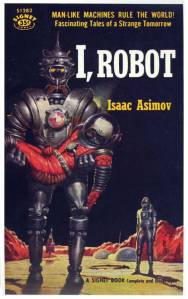
In the popular HBO series Westworld, robotic hosts are depicted as being placed into a kind of psychiatric analysis by their creators. Could this actually happen one day? Joanne Pransky thinks it will. She bills herself as the World’s First Robotic Psychiatrist® (yes, she even registered that title!). She was dubbed the real life Susan Calvin by Isaac Asimov, after the robot psychologist he created in his classic 1950 short story anthology, I, Robot. In this episode of the Seeking Delphi™ podcast, host Mark Sackler talks to her about this and other significant issues in the man/machine relationships to come.
Maybe NDT is right–NASA didn’t directly give us GPS as in Global Positioning System. But they are going to directly give us–or at least their astronauts–GPS as in Galactic Positioning System. What that portends for the ratings for Lost in Space is beyond the foresight of this blog. But hey, the plausibility of that series was already next to zero.
While you’re reading about all this week’s future-related news, don’t forget that you can subscribe to Seeking Delphi™ podcasts on iTunes, PlayerFM, or YouTube(audio with slide show) and you can also follow us on Twitter and Facebook
Here’s a very brief video with a very basic explanation of what CRISPR does.
Coming Attractions: The next Seeking Delphi podcast features Roberto Saracco on Social Robotics and the IEEE Initiative On Symbiotic Autonomous Systems.
So what’s more important–technological breakthroughs or how we apply them? The cloud is a technology; blockchain is an application.
So where do the 10 breakthrough technologies that make up MIT Technology Review’s annual list for 2018 stand? All over the place. Many, if not all of them, might be described as either incremental improvements or advanced applications built on existing technologies. Where is the line? Tell me if you know.
EM Drive. A propulsion system without propellant? Image credit: nasaspaceflight.com
Space/propulsion systems–Talk about your breakthrough technology: China claims to have perfected the EM drive. You might not see it on that MIT list anytime soon, though. It will take more than talk to convince the mainstream scientific community, which views the concept as an impossible violation of one of Newton’s third law of motion. It claims to create thrust without a propellant.
Energy/Transportation–BP is forecasting a peak in oil and gas demand by 2040. It sees the mass emergence of self-driving electric vehicles as the main cause. Considering their vested interest, they may be ignoring the possibility of a more rapid drop off.
Bored in Space?
Space Commerce/Tourism–Hotel magnate Robert Bigelow, also CEO of Bigelow Aerospace, has now formed a new enterprise, Bigelow Space. One of his proposed projects is to launch an inflatable orbiting space hotel by 2021. I’m just wondering what one would do up there, other than float around in microgravity. Maybe binge watch episodes of the Lost In Space reboot?
Coming Attractions–Seeking Delphi,™ the podcast, will return in March, featuring interviews with Roberto Sacarro on social robotics, and Jerome Glenn, on The Millennium Project’s 19th State of the Future publication. We’ll also feature some on the spot interviews from the Intelligen Future tracks at the 2018 SXSW conference from Austin, Texas.
While you’re reading about all this week’s future-related news, don’t forget that you can subscribe to Seeking Delphi™ podcasts on iTunes, PlayerFM, or YouTube(audio with slide show) and you can also follow us on Twitter and Facebook
“My mentality is that of a samurai. I would rather commit seppuku than fail.”–Elon Musk
“The best way to predict the future is to invent it.”–Alan Kay
Technology was everywhere in 2017. And everywhere technology went, Elon Musk was sure to lead. Perhaps we should paraphrase Alan Kay. The best way to predict the future, is to watch Elon. If anybody is inventing it, it’s him. Tesla, Solar City, SpaceX, Neuralink, Hyperloop. If it involved renewable energy, autonomous vehicles, space commerce, transhumanism, or warnings about artificial intelligence (lot’s of warnings), it probably involved Elon.
With that, I name Elon Musk, in total, our first Future Story of The Year, for 2017. Here’s a very brief history of his year, along with some of the other top stories from 2017.
While you’re reading about it all, don’t forget that you can subscribe to Seeking Delphi™ podcasts on iTunes or PlayerFM, and you can also follow us on Twitter and Facebook
So…how many new technology ventures will he create in 2018, as he continues to invent the future? I’d put the over/under at 2 1/2.
Other top stories of the Year.
Artificial intelligence, CRISPR/Cas9 gene editing, self-driving cars, Bitcoin and blockchain, reversing aging and the future of work, were all frequently in the news in 2017. Somewhat less visible were stories about laboratory grown meat, reversing aging, hypersonic weapons, 3D printing and advanced drone technology. Here are few top story lists from other sources.
Seeking Delphi™ finished the year with a podcast interview with SENS foundation,s chief science officer, Aubrey de Grey, on ending aging.
Happy New Year, all. 2018 figures to be quite a ride.
Coming Attractions–2018 will kick off with an interview with Bioviva CEO Elizabeth Parrish, the first person to edit parts of her own genome to reverse aging.
Ah, the moon; so close, and yet so far away. Has it really been almost fifty years since Neil Armstrong took his one small step for man? Now, finally, the race is on to go back to our nearby celestial neighbor. But in 1969, the only motivation was to win a race that was instigated by the cold war. Now there is different driver in play. It’s money; many of the new players, in what is now a multi-way competition, are commercial ventures.
While you’re reading about all this week’s future-related news, don’t forget that you can subscribe to Seeking Delphi™ podcasts on iTunes or PlayerFM, and you can also follow us on Twitter and Facebook
Electric Vehicles–Tesla unveiled two new ambitious vehicles, slated to begin production in 2019. Its big-rig truck has a projected single-charge range of 500 miles and acceleration capabilities far better than diesel powered semis. The roadster will boast a 620-mile range and a 260 mph top speed. The price for these indulgences? I’m not asking; i know I can’t afford either one.






 Technology was everywhere in 2017. And everywhere technology went, Elon Musk was sure to lead. Perhaps we should paraphrase Alan Kay. The best way to predict the future, is to watch Elon. If anybody is inventing it, it’s him. Tesla, Solar City, SpaceX, Neuralink, Hyperloop. If it involved renewable energy, autonomous vehicles, space commerce, transhumanism, or warnings about artificial intelligence (lot’s of warnings), it probably involved Elon.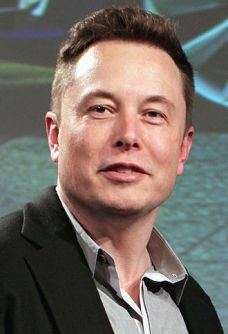


 Seeking Delphi™