Unknown's avatar

News of The Future This Week: July 8, 2018

“Artficial Intelligence will reach human levels by around 2029.”–Ray Kurzweil

“There is no reason and no way that a human mind can keep up with an artificial intelligence machine by 2035.”–Gray Scott
 

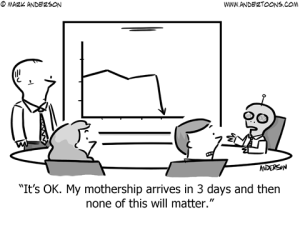
Make no mistake about it.  Artificial General Intelligence (AGI) is still a pipe dream.  Nobody is exactly sure how to create  it.  But that doesn’t seem to discourage technology inventors like Ray Kurzweil and techno-philosophers like Gray Scott from their certainty that someone eventually will.  I remain agnostic on the question; my role is to report on it, not to predict it.  Who knows, maybe in a few years an A.I. will be able to predict itself.  What comes first, the chicken or the A.I.?

While you’re reading about all this week’s future-related  news, don’t forget that you can subscribe to Seeking Delphi™ podcasts on iTunes, PlayerFM, or YouTube (audio with slide show) and you can also follow us on Twitter and Facebook 

 Artificial Intelligence–Is Ray Kurzweil’s prediction of human level A.I. by 2029 realistic?  This evaluation of the global A.I. race, by The Lifeboat Foundation, suggests it is.

source: Lifebooat Foundation

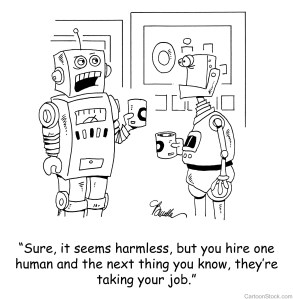
–The A.I. job apocalypse forecasts just keep on coming.  The latest to raise the red flag is hedge fund billionaire Ray Dalio.  Speaking on CNBC this week, he said that A.I., while increasing productivity, it is also exacerbating the wealth gap and has become a national emergency.

According to The Economist, A.I. poses a unique threat of fake videos so realistic, that dead celebrities may essentially become immortal.   Elvis is alive and in the virtual building.

Sayonara, Ralph Kramden. image: Baidu

Chinese conglomerate, Baidu, has announced a new artificial intelligence chip that it intends to use in a number of applications.  The first such use will be in autonomous buses to be launched in Japan next year.

Researchers from UK firm, Wayve, have created a neural network A.I. that they claim can be taught to drive a car in 15-20 minutes.  Now if they could only train your teenager to avoid dinging the family sedan at the mall.

Biometrics–London’s trial of A.I. for facial recognition has been a complete bust.  Yet a 98% false positive I.D. rate has not deterred the enthusiasm of the city’s chief of police.

–In the meantime, Australia has launched its own facial scanning scheme.  It’s a trial to replace passports with facial recognition scans at the Sydney airport.  Let’s hope the accuracy is better than London’s.

Home, sweet (3D-printed) home.

3D printed house–We’ve been hearing about 3D printed housing for some time now.  For the first time, a multi-room 3D-printed house has been occupied in France. It took 54 hours to print and its creators claim a construction cost savings of 20% versus conventional methods.

Space Exploration–Jeff Bezos’ Blue Origin has announced intentions to land astronauts on the moon by 2023.  It’s a first step to what they hope will be the establishment of a permanent manned base.

Next Big Future reports that SpaceX is helping NASA stay out in front of China through 2030.  The key is getting their BFR off the ground several years sooner.

You can subscribe to Seeking Delphi™ podcasts on iTunes, PlayerFM, or YouTube (audio with slide show) and you can also follow us on Twitter and Facebook 

Unknown's avatar

News of The Future This Week: July 1, 2018

“I would love to have a robot at home.”–Hugh Jackman

“I think I’d take a human butler over a robot one.”–Tom Felton


Robot butler? Maybe.  Robot sommelier? No thanks.

But right on cue with last weeks podcast #23, with robot psychiatrist Joanne Pransky, this week’s news is full up with robots.  (See a YouTube link to the Pransky interview at the bottom of this page).

While you’re reading about all this week’s future-related  news, don’t forget that you can subscribe to Seeking Delphi™ podcasts on iTunes, PlayerFM, or YouTube (audio with slide show) and you can also follow us on Twitter and Facebook 

Robots/Voice Assistants–A new survey by the Brookings institute finds that even while many Americans are OK with Alexa and Siri, 61% are uncomfortable with robots in the home.  The afore-mentioned Joanne Pransky takes issue with the survey’s methodology, even while she attempts to explain the problem.

An AI-equipped robot named CIMON has been launched to join the international space station aboard the SpaceX Dragon Cargo Capsule.   It’s the first Ai-equipped machine ever to be launched into space.

Bye bye ASIMO

Honda has announced the retirement of their famed robot, ASIMO.  They’re shutting him (her? it?) down to focus their robotic technology on more practical uses such as elder care and disaster relief.

CybersecurityThe future of security in the digital world might lie in the realm of a quantum random number generator.   According to IEEE Spectrum, it may be the only was to generate truly random numbers.

Energy– UK-based Tokamak Energy has heated plasma in a  to a record 15 million degrees Celsius (27 million Farenheit).  They say this could lead to commercial nuclear fusion by 2030.  Let me know if you see Bigfoot or a unicorn first.

Space/NASA–NASA has again delayed the launch of the James Webb Space Telescope, now scheduling the launch for 2021.  Cost overruns–bringing the total expenditure estimate to $9.7 billion–may threaten the continuation of the project.

Bioprinting/Biotechnology–3D printed implantable organs may be getting closer to reality. Tech crunch reports that a startup company in a San Francisco biotech incubator is leading the way.

Seeking Delphi Podcast #23–A Conversation with Joanne Pransky, The World’s First Robotic Psychiatrist®

You can subscribe to Seeking Delphi™ podcasts on iTunes, PlayerFM, or YouTube (audio with slide show) and you can also follow us on Twitter and Facebook 

Unknown's avatar

News of The Future This Week: April 19, 2018

“Space in general gave us GPS – that’s not specifically NASA, but its investments in space.”–
Neil DeGrasse Tyson

No more Lost In Space? image credit: http://www.andertoons.com

Maybe NDT is right–NASA didn’t directly give us GPS as in Global Positioning System.  But they are going to directly give us–or at least their astronauts–GPS as in Galactic Positioning System.  What that portends for the ratings for Lost in Space  is beyond the foresight of this blog.  But hey, the plausibility of that series was already next to zero.

While you’re reading about all this week’s future-related  news, don’t forget that you can subscribe to Seeking Delphi™ podcasts on iTunes, PlayerFM, or YouTube (audio with slide show) and you can also follow us on Twitter and Facebook 

Danger Will Robinson, ratings in jeopardy.

NASA/Space–Lost In Space  may now be an obsolete concept.  NASA has unveiled plans for a galactic positioning system that uses x-rays emitted from pulsars.

–The exo-planet exploration baton has been passed from Kepler to TESS.  The newest planet-finding telescope was successfully launched on the back of a SpaceX Falcon 9 rocket.

–As a reminder that technologies, as well as people, are increasingly interconnected, NASA will employ 3D printing to produce over 100 parts of its next generation Orion Space Capsule.  The first manned launch of the vehicle is slated for sometime in the early 2020’s.

Automotive Future–The Verge reports that self-driving vehicles are poised to creat an $800 billion market by 2030 and a staggering $7 trillion by 2050.  Handling the data is key, and Telsa and Waymo are leading the pack.

–Almost on cue with the above, Toyota announced plans to deploy chips, by 2021, that will enable cars to communicate with each other.  The technology has implications for safety in conventional vehicles, and is a flat out necessity for massive autonomous vehicle rollout.

–Even as Uber is still reeling from its first self-driving car fatality in Arizona, competition is heating up on the other side of the globe.  Ola, a major Uber rival in Asia, announced plans to deploy 10,000 electric vehicles within the next year.-

CRISPR/genetic editing–To date, 86 human patients in China have been treated with CRISPR/Cas9 edited cells to help fight cancer and HIV.

–Even as lower regulatory hurdles have been a boon to rapid deployment of human tests in China, Europe has approved its first CRISPR trial for patients with a devastating blood disorder.

Here’s a very brief video with a very basic explanation of what CRISPR does.

Coming Attractions:  The next Seeking Delphi podcast features Roberto Saracco on Social Robotics and the IEEE Initiative On Symbiotic Autonomous Systems.

You can subscribe to Seeking Delphi™ podcasts on iTunes, PlayerFM, or YouTube (audio with slide show) and you can also follow us on Twitter and Facebook 

Unknown's avatar

News of the Future This Week, April 13, 2018

“Suppose you were an idiot, and suppose you were a member of congress; but I repeat myself.”–Mark Twain

Happy Friday the 13th.  With that cheerful note, we go straight to the foibles of the U.S. Congress.  Did you really think that Senators that look and sound more like stuffed dinosaurs than live human beings could really extract anything meaningful from hearings with Mark Zuckerberg?  Really?  I didn’t think so.  My audience is more with it than that.

While you’re reading the future news of the week, don’t forget that  the Seeking Delphi™ podcast is available on iTunesPlayerFM, blubrry , and has a channel on YouTube.  You can also follow us onTwitter and Facebook.

Social Media/Future of Privacy–In a scathing opinion piece on Futurism.com,  Victor Tangermann said that congress is ill-equiped to regulate Facebook.  He says they simply don’t  understand it.

Man or machine?

–Zuckerberg wasn’t exactly stellar in his performance, either.  CNBC’s Jim Cramer speculated that he might not be able to pass a Turing Test.

–Is privacy dead?  Speaking on the Seeking Delphi™ podcast, noted futurist Gray Scott says it has simply become irrelevant. (Scroll all the way down for the YouTube link).

Artificial Intelligence–The military is pursuing AI that mimics the human brain.  But one DARPA scientist thinks that’s the wrong approach.

Biotechnology–It isn’t just for–well, you know–any more.  Viagra might be effective against some cancers.    That’s what I call a pick me up.

NASA/Space–NASA has begun construction and testing on the next Mars rover, due for launch in 2020.

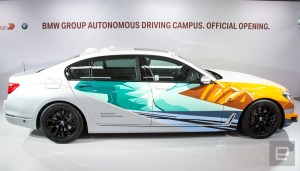
image credit: BMW

Autonomous Driving-Whatever the problems and perceptions, self-driving cars are not going away.  BMW became the latest major player, launching an autonomous vehicle research center.

Automation/Future of Work–What’s billed as the world’s first “unmanned” bank has opened in Shanghai.  It’s complete with a robot bank manager.


A reminder that the Seeking Delphi™ podcast is available on iTunesPlayerFM, blubrry , and has a channel on YouTube.  You can also follow us onTwitter and Facebook.

Unknown's avatar

News of The Future This Week: April 6, 2018

“The universe is under no obligation to make sense to you.”–Neil DeGrasse Tyson

“This is the way the world ends.  With a whimper, not a bang.”–TS Eliot


NDT is absolutley correct, but TS Eliot?  Maybe not so much. The latest theory of how the universe will end is most decidedly with a bang: a second big bang, to be precise.  But it’s probably a few trillion years in the future–assuming the math is correct.

While you’re reading about all this week’s future-related  news, don’t forget that you can subscribe to Seeking Delphi™ podcasts on iTunes, PlayerFM, or YouTube (audio with slide show) and you can also follow us on Twitter and Facebook 

Cosmology–According to a new Harvard study,  the universe might end with a second big bang, caused by changes to the Higgs Boson.  While the process may have already begun in some distant galaxy, it’s  most likely to occur trillions of years in the future.    So return those overdue library books now.

–While the universe is still here, a team based at Plymouth University in the UK has published a study suggesting artificial intelligence can be use to predict the likelihood of life on other planets. 

Credit: USC

Transhumanism–A DARPA-funded prosthetic memory system has shown significant efficacy.  Researchers at Wake Forrest and USC report a  35%+ imrovement in memory by writing codes directly into the hippocampus of subjects.

Future of Work–A new OECD report projects that job losses from automation and robotics in coming years may not be a severe as some are projecting.  Just 14% of jobs are at high risk of automation in OECD countries, they say, versus the 47% risk cited in an Oxford University study.

Quantum Computing–IBM announced a new initiative to work with several startup companies to further develop applications for quantum computing.  One of the companies is Strangeworks, started by whurley, and briefly discussed in the Seeking Delphi™ podcast, with You Tube link below.

whurley on Quantum Computing and Strangeworks

Aerospace–NASA awarded a contract to Lockheed-Martin to build its first  supersonic X-plane slated for test flights by 2021.  The craft is designed to break the sound barrier over land, without blasting the ground with sonic booms.

3D printed bridge or robot pasta?

3D Printing–Dutch company MX3D is creating a fully funcional 3D printed stainless steel bridge to cross one of Amsterdam’s canals.  It looks eerie, to say the least.

You can subscribe to Seeking Delphi™ podcasts on iTunes, PlayerFM, or YouTube (audio with slide show) and you can also follow us on Twitter and Facebook 
Unknown's avatar

News of The Future This Week, February 14, 2018

“I don’t believe in a conspiracy to hide the existence of extraterrestrial life.”–David Duchovney

“Where are they?”–Enrico Fermi

If David Duchovney is right–and I for one agree with him–then Fermi and his paradox certainly become relevent.  But it hardly proves that extraterrestrials don’t exist.  It just proves we haven’t been able to confirm any signals or communication.  What hampers us from doing so?  The vastness of the universe? Our relatively inferior technology?  Maybe they are hiding, as in Cixin Liu’s chilling novel The Dark Forrest?  These are all possiblities, true.  But in a strange ocurrance of the law of unintended consequences, the biggest current hindernece to finding E.T. could be bitcoin mining.

 While you’re reading about all this week’s future-related  news, don’t forget that you can subscribe to Seeking Delphi™ podcasts on iTunes, PlayerFM, or YouTube (audio with slide show) and you can also follow us on Twitter and Facebook 

 SETI/Cryptocurrencies–This heading might look like an oxymoron.  But in a bizarre turn of events, the cornering of the GPU market by Bitcoin and other cryptocurrency mining has created a shortage that is hitting the video game market, and even the search for extraterrestrial intelligence.

NASA/Space–In another unusual turn of events, NASA will be sending a Martian meteorite back to its home planet on a rover scheduled for launch in 2020.  The purpose is best described as “target practice” for precision lasers designed to pick targets for sample collection that a future mission might return to earth.

How about these for target practice?

The FCC is looking closely at SpaceX’s plan to provide sattelite delivered  internet.  The head of the agency views it favorably, so don’t bet against it.

The Trump administration’s latest NASA plans call for a return to the moon.  They call for it; but they don’t budget it.  It likely won’t happend until after The Donald leaves office, even if he gets re-elected.

Autonomous Vehicles —The U.S. Transportation Agency has called a summit on autonomous vehicles for March 1 of this year.  One can only hope that the government might become as concerned with artificial intelligence as it is with this one application.

Matt Chappell has been effectively cured of HIV

Genetic Editing/HIV–As gene editing techniques continue their rapid advance, efforts are accelerating to control, and possibly cure, HIV.  The template may be one patient who has been off medications for over two years with no recurrence.

Artificial Intelligence/Singularity–In an interview with Futurism.com, the father of artificial intelligence says that the singularity is 30 years away.

Nanotechnology–Reasearchers at Arizona State University, working with a team from the Chinese Academy of Sciences, have created nanorobots designed to shrink tumors by cutting off their blood supply.

“A reminder that the Seeking Delphi™ podcast is available on iTunesPlayerFM, blubrry , and has a channel on YouTube.  You can also follow us on Facebook.