Unknown's avatar

News of the Future This Week, March 1, 2018

“The killer app is making calls.”–Steve Jobs

“For three days after death hair and finger nails continue to grow, but phone calls taper off.”–Johnny Carson.
Phone calls?  Who makes phone calls?  Texts, chats, messages…yes.  The only way I can get my daughter on the phone is to text her with a message to call me.  And  it helps to make it read like somebody died.  Anyway, the Mobile World Congress was this week.  I’d love to see the stats on calls vs. texts and miscellaneous messaging and chat apps among the attendees at the conference.

While you’re reading about all this week’s future-related  news, don’t forget that you can subscribe to Seeking Delphi™ podcasts on iTunes, PlayerFM, or YouTube (audio with slide show) and you can also follow us on Twitter and Facebook 

Earth man phone home?

Mobile Telephony–If you think your cell service is bad at home, just imagine what it might be on the moon.  Vodaphone and Nokia have announced their intent to build a lunar mobile service initially intended to enable communication between robotic probes and their base station.

According to one pundit presenting at the MWC, mobile service providers are way behind the AI curve.  They could be using artificial intelligence to improve service, but so far have not done much.

–Looking for MWC highlights?  The Verge gives its take on the good, the bad, and the ugly at this year’s conference.
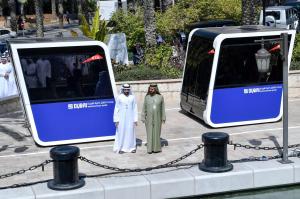
Impressive, even if they don’t fly

Autonomous Vehicles/Advanced Transport–Wherever humanity is going, Dubai seems determined to get there first.   And they are determined that their workers get there first, by commuting via proposed autonomous transport pods.

Tests of fully driverless cars may be hitting California highways as soon as next month.   Well, sort of–there will be no driver in the cars, but they will be linked to humans by remote control.

–If autonomous cars bomb out as a concept, it won’t be for lack of trying–or funding.  Toyota has announced a nearly $3 billion investment in the technology, which will employ 1,000 workers.

Artificial Intelligence–A new study says artificial intelligence can best lawyers in searching legal documents.   Other than lawyers themselves, this does not break anyone’s heart.

–Two top Microsoft executives make a stunning assertion in a new book.  In the future, they say, we will all have artificially intelligent, alter ego digital assistants.  Just what the world needs: a mechanical me.

Coming Soon–I’ll be representing Seeking Delphi™ and Age of Robots, covering the Intelligent Future track at SXSW in Austin, Texas, March 9-14.  Stay tuned for multiple podcasts and reports.

A reminder that the Seeking Delphi™ podcast is available on iTunesPlayerFM, blubrry , and has a channel on YouTube.  You can also follow us onTwitter and Facebook.
Unknown's avatar

News of the Future This Week, February 21, 2018

“While technology is important, it’s what we do with it that truly matters.”–Muhammad Yunus

So what’s more important–technological breakthroughs or how we apply them?  The cloud is a technology;  blockchain is an application.

So where do the 10 breakthrough technologies that make up MIT Technology Review’s annual list for 2018 stand?  All over the place.  Many, if not all of them, might be described as either incremental improvements or advanced applications built on existing technologies.   Where is the line?  Tell me if you know.

Technology Breakthroughs–MIT Technology Review published its annual list of breakthrough technologies for 2018.  Not surprisingly, it’s chock full of digital and bio technologies.  Good list?  Somehow I feel there is more out there.

EM Drive. A propulsion system without propellant? Image credit: nasaspaceflight.com

Space/propulsion systems–Talk about your breakthrough technology: China claims to have perfected the EM drive.  You might not see it on that MIT list anytime soon, though.  It will take more than talk to convince the mainstream scientific community, which views the concept as an impossible violation of one of Newton’s third law of motion.  It claims to create thrust without a propellant.

–NASA isn’t sold on the EM drive, at least not yet.  But they are considering reviving a decades old plan to use nuclear powered rockets in an effort to send manned craft to Mars by the 2030’s.

Energy/Transportation–BP is forecasting a peak in oil and gas demand by 2040. It sees the mass emergence of self-driving electric vehicles as the main cause.  Considering their vested interest, they may be ignoring the possibility of a more rapid drop off.

Bored in Space?

Space Commerce/Tourism–Hotel magnate Robert Bigelow, also  CEO of Bigelow Aerospace, has now formed a new enterprise, Bigelow Space.  One of his proposed projects is to launch an inflatable orbiting space hotel by 2021.  I’m just wondering what one would do up there, other than float around in microgravity.  Maybe binge watch episodes of the Lost In Space reboot?

Aerospace/Advanced Transportation–A Chinese team has announced the design of a hypersonic jet that could make the trip from Beijing to New York in as little as two hours.  If feasible, it could upstage the planned 2020 test flight of a new Lockheed jet which aims to make the trip in 7 hours.  There is no announced timetable for building and testing the Chinese craft.

Electric Vehicles–It might not be as sexy as a 6,000kph jet;  but Volkswagon has provided a teaser preview of its proposed 112mph, 400+ mile range electric vehicle.

Coming Attractions–Seeking Delphi,™ the podcast, will return in March, featuring interviews with Roberto Sacarro on social robotics, and Jerome Glenn, on The Millennium Project’s 19th State of the Future publication.  We’ll also feature some on the spot interviews from the Intelligen Future tracks at the 2018 SXSW conference from Austin, Texas.

While you’re reading about all this week’s future-related  news, don’t forget that you can subscribe to Seeking Delphi™ podcasts on iTunes, PlayerFM, or YouTube (audio with slide show) and you can also follow us on Twitter and Facebook 


A reminder that the Seeking Delphi™ podcast is available on iTunesPlayerFM, blubrry , and has a channel on YouTube.  You can also follow us on Facebook.

Unknown's avatar

News of the Future This Week, January 31, 2018

“The main thing in life is not to be afraid of being human.”–Aaron Carter

You’ve heard it all, and lately you’re hearing it more.  The singularity is near.  Robots are going to take our jobs.  Robots are going to take over altogether.  Robots are even going to take over our sex lives.  Yadda yadda yadda.

I’m not saying it won’t happen;  I just think it’s farther away than the impression most people are getting from all the news.  What’s here right now is genetic editing, and with it, the possibility of directing human evolution. The very real and very near possibility of changing what it means to be human.  Read all the artificial intelligence and future of work articles–yes.  But listen to what  Elizabeth Parrish has to say about modifying the human genome to reverse aging and to keep up–cognitively and physically–with robots.

Seeking Delphi™ will be on vacation next week.  Enjoy the peace and quiet.

Singularity/Being Human/Artificial Intelligence–Addressing the World Economic Forum in Davos,  Yuval Harari speculated on whether are future will indeed still be human.

A quasi-human future? Image credt: Kai Stachowiak

–Ray Kurzweill isn’t the only one talking about a technology singularity.  Futurism.com, with an eye toward separating fact from hype, polled several other technology experts for their take on liklihood and timing. 

–I remember when the Cold War simply meant fears of nuclear anhilation.  Physics.org says we should watch out for artificial intelligence as well.

–A big part of being human is IQ (intellectdual quotiant) and EQ (emotional quotiant). But the future of success in the workplace, according to Fast Company, might be AQ (adaptability quotient).

Here’s the latest take on the robot job apocalypse.     A new report suggests the UK will lose one in 12 jobs to robots and automation by 2030. That’s less then some forecasts, but still enough to be a bother.

In this weeks Seeking Delphi™ podcast interview, Ending Aging, Part 2, with Elizabeth Parrish,  the CEO of Bioviva, says we need to alter the human genome in two ways.  The first is to reverse aging, which her company is working on.  The second is to enhance humans cognitively and physically to keep up with robots and artificial intelligence.

Laser imaging–Do you like how those 3-D images appear out of thin air in the Star Wars world?  Now a team of BYU physicists have actually created this effect with lasers.

Space Commerce–It seems like everyone and his brother is getting into the business of private space launches.  That’s bound to create the need for support services, and UK company, Effective Space, hope to launch a  satellite repair service by 2020.

Self-Driving vehicles–Have we been hearing altogether too much about autonomous vehicle development, lately.  Satirical web site, The Onion, seems to think so.  The released the image below with headline Tesla Debuts Carless Driver.

Image Credit: The Onion


Thanks for visiting and reading.  See you in two weeks.

While you’re reading about all this week’s future-related  news, don’t forget that you can subscribe to Seeking Delphi™ podcasts on iTunes, PlayerFM, or YouTube (audio with slide show) and you can also follow us on Twitter and Facebook 


A reminder that the Seeking Delphi™ podcast is available on iTunesPlayerFM, blubrry , and has a channel on YouTube.  You can also follow us on Facebook.

Unknown's avatar

News of the Future This Week, January 17, 2018

“Consumers want a better world, not just better widgets.”–Simon Mainwaring

The annual Consumer Electronics Show (CES 2018) recently concluded.  Some of the news coming out of it suggests there are still product marketers who think consumers do just want better widgets.  Let’s hope that doesn’t lead to major investment in The Internet of Stuff.

 While you’re reading about all this week’s future-related  news, don’t forget that you can subscribe to Seeking Delphi™ podcasts on iTunes, PlayerFM, or YouTube (audio with slide show) and you can also follow us on Twitter and Facebook 

 CES 2018–IEEE Spectrum notes 5 important takeaways on the future of 5G wireless technology from CES 2018.  Most notably, it may gear up sooner than some think.

 —Nissan shared its vision for autonomous electrical vehicles at the show.  They suggested doing the other automakers one better, by adding a machine/brain interface.  Methinks Elon Musk, via Tesla and Neuralink might already be looking into that.

As for those crazy widgets,  Futurism.com reported on the most ridiculous ideas to come out of CES 2018.  These include robot strippers and a $6,000 smart toilet.  What will they waste their time thinking of next?

But we can have robodogs…this one will set you back $1,700.00

Don’t expect a personal robot butler anytime soon.  Based on Popular Science’s assessment of robotics and automation at the show, the robots won’t serve us, or take us over, any time soon.

 —Business insider reports that voice assistant integration was the top smart-home trend at CES.     Q. Hey Google, can you verify that?    A. Ask Alexa.

Space travel/exploration–China has unveiled a plan to zap space junk with orbiting lasers.  Now if only somebody could figure out how to zap robocalls.

Smart Cars–Elon Musk says that Tesla model 3 owners will be able to do just about anything with voice control.  He still needs to figure out how to build them fast enough to supply order backlog before the technology becomes obsolete.

Bitcoin/Cryptocurrencies–Bitcoin price dropped sharply this week, amid reports that the EU may place restrictions on cryptocurrencies.  This chart published by Mother Jones makes many historic investment bubbles look cheap by comparison to Bitcoin–even those infamous tulip bulbs.

A reminder that the Seeking Delphi™ podcast is available on iTunesPlayerFM, blubrry , and has a channel on YouTube.  You can also follow us on Facebook.

Unknown's avatar

The Future Last Year: 2017 In Review

“My mentality is that of a samurai. I would rather commit seppuku than fail.”–Elon Musk

“The best way to predict the future is to invent it.”–Alan Kay

Technology was everywhere in 2017.  And everywhere technology went, Elon Musk was sure to lead.  Perhaps we should paraphrase Alan Kay.  The best way to predict the future, is to watch Elon. If anybody is inventing it, it’s him. Tesla, Solar City, SpaceX, Neuralink, Hyperloop.  If it involved renewable energy, autonomous vehicles, space commerce, transhumanism, or warnings about artificial intelligence (lot’s of warnings), it probably involved Elon.
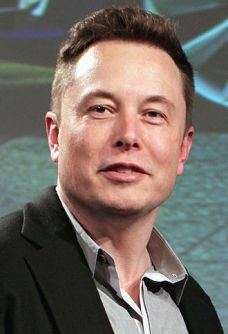
With that, I name Elon Musk, in total, our first Future Story of The Year, for 2017.  Here’s a very brief history of his year, along with some of the other top stories from 2017.

While you’re reading about it all, don’t forget that you can subscribe to Seeking Delphi™ podcasts on iTunes or PlayerFM, and you can also follow us on Twitter and Facebook 

Elon Musk

Tesla– Even as the lower priced ($35,000) model 3 production lagged way behind predictions, Elon revealed the new Tesla semi.  It’s great that he aims high, but in 2018 he will need to deliver, not just promise.

SpaceXAs of this writing, the Falcon Heavy rocket sits on pad 39A at Cape Canaveral.  It’s the precursor of even heavier launch vehicles that Elon hopes will send humans to Mars by 2030. 

HyperloopMusk may have invented it, but Richard Branson’s Virgin Hyperloop One is making the bulk of the headlines these days.  Kudos to Elon, though, for open sourcing the concept and allowing competition to rapidly develop it.

The Boring CompanyWhile aiming to odominate the transportation on the surface of the earth (Tesla) and space above it (SpaceX) , Elon also created The Boring Company to drill tunnels below it. give him credit for a sense of humor with this company’s name.

Neuralink–When it comes to A.I., Elon’s motto seems to be “if you can’t beat ’em, join ’em.” He created Neuralink to accelerate the merger of mind and machine.

So…how many new technology ventures will he create in 2018, as he continues to invent the future?  I’d put the over/under at 2 1/2.

Other top stories of the Year.

Artificial intelligence, CRISPR/Cas9 gene editing, self-driving cars, Bitcoin and blockchain, reversing aging and the future of work, were all frequently in the news in 2017.   Somewhat less visible were stories about laboratory grown meat, reversing aging, hypersonic weapons, 3D printing and advanced drone technology.  Here are few top story lists from other sources.

Futureseek Daily Link Digest

Wired Magazine’s top stories of 2017

Favorite 2017 Science Stories, The Verge

Science Fiction vs. Science Fact: Replicating Machines (my article from the first issue of Age of Robots)

IEEE Spectrum best stories of 2017

2017 in 3D printing

Dave Barry’s less than reassuring look back at 2017

Seeking Delphi™ finished the year with a podcast interview with SENS foundation,s chief science officer,  Aubrey de Grey, on ending aging.


Happy New Year, all.  2018 figures to be quite a ride.

Coming Attractions–2018 will kick off with an interview with Bioviva CEO Elizabeth Parrish, the first person to edit parts of her own genome to reverse aging.


A reminder that the Seeking Delphi™ podcast is available on iTunesPlayerFM, blubrry , and has a channel on YouTube.  You can also follow us on Facebook.

Unknown's avatar

The Future This Week: December 12, 2017

“The pace of progress on Mars depends upon the pace of progress of SpaceX.”–Elon Musk

Who will get there first?

Oh really, Elon?  It seems that Boeing may have something to say about that.  We got to the moon because of a frantic race between the U.S. and the Soviet Union, propelled by the cold war. If an when we get to Mars, it just might be because of a frantic race between commercial ventures, fueled by the almighty dollar.

 While you’re reading about all this week’s future-related  news, don’t forget that you can subscribe to Seeking Delphi™ podcasts on iTunes or PlayerFM, and you can also follow us on Twitter and Facebook 

Mars/Space Exploration–Speaking on CNBC recently, Boeing CEO Dennis Mullenberg said, “I firmly believe the first person to set foot on Mars will get there on a Boeing rocket.”  There was no immediate comment from Elon Musk, whose SpaceX aims to be there first.  Whoever gets there first, maybe they can getaround on the Tesla that Elon intends to launch into Mars orbit next year.

President Trump announced that the Moon will be the next destination for U.S. astronauts.  Whether he intends to put the treasury’s money where his mouth is remains to be seen.

Physics.org reports that a new space suit design will have a “take me home” button for astronauts who get separated from their craft and disoriented on space walks. Danger, Will Robinson!

Artificial Intelligence–The IEEE released the second edition of its global treatise on ethics of autonomous and intelligent systems, today.  The report can be requested for download here.   The report was mentioned in Seeking Delphi™ podcast episode #17, featuring an interview with the initiative’s executive director, John C. Havens.  (YouTube video  link below).

Researchers from the University of Texas and the city of Austin are employing deep learning and big data to try to alleviate traffic jams.  They will present their findings at an IEEE conference on big data later this month.

Using A.I. to alleviate traffic? Good!  Using A.I. to create fake porn of anybody?  Er–not so much.  The Verge reports that just a few photographs and some open source A.I. software is all that it takes to graft anybody’s face onto any picture in a convincing manner. As they put it, seeing may no longer be believing.

Biotech–Researchers at the Salk Institute say they have been able to use CRISPR gene editing to reverse disease in mice.  They used a new procedure that does not actually cut the genes, but affects the expression–or epigenetics–of genes. It turns them on or off.

Researchers at the University of Rochester say they have successfully been able to insert new information directly in the the pre-motor cortex of the brains of two monkeys.   Anyone for trying this on politicians?

Material Science/Athletics–British sportswear brand inov-8 is partnering with the University of Manchester to introduce graphene-infused athletic footwear in 2018.  Laboratory tests have shown the shoes to be stretchier, stronger and more wear resistant than conventional rubber-soled sneakers.


Aubry de Grey

Coming Attractions–SENS foundation co-founder and chief science officer, Aubrey de Grey, will join me for the final Seeking Delphi™ podcast interview of 2017.  Look for it in soon.

A reminder that the Seeking Delphi™ podcast is available on iTunesPlayerFM, blubrry , and has a channel on YouTube.  You can also follow us on Facebook.