Unknown's avatar

News of The Future This Week: March 4, 2019

“Nothing is more responsible for the good old days than a bad memory.”–Franklin Pierce Adams

Is artificial human memory possible?  Today’s lead story deals exactly with that possibility–and it links rather directly to a question I have about the quest to end, and even reverse, human aging.  If we live indefinitely, will we need some sort of artificial enhancement in order to hold decades or evern centuries of additional memories?  When you reach a certain age, after all,  it’s hard enough to remember what you had for breakfast.

While you’re reading about all this week’s future-related  news, don’t forget that you can subscribe to Seeking Delphi™ podcasts on iTunes, PlayerFM, or YouTube (audio with slide show) and you can also follow us on Twitter and Facebook.

 Neuromorphic Computing/Memory–Researchers at UCLA claim they have created a neuromorphic “brain” out of synthetic nanowires.   They say it exhibits behavior similar to human memory.

Image: undoing-aging.org Click for link.

 Aging Research/Rejuvenation–Aubrey de Grey has become much more upbeat about the progress being made toward reversing human aging.  He now thinks robust human longevity extension could be here by 2037.  You can here his preview of the 2019 Undoing Aging conference (Berlin, Germany March 28-30) on the Seeking Delphi podcast here.   The YouTube slide show version of the interview is embedded at the bottom of this page.

Houston, the Dragon has landed. Image: NASA

NASA/Space Launch/Space Commerce–SpaceX successfully tested an unmanned launch of the first private passenger vehicle, reaching the International Space Station late last week.  If all goes well, the first manned mission will bring astronauts there later this year.  It would be the first manned U.S. space launch since the space shuttle was retired a decade ago.

NASA intends to test a nuclear powered rocket by 2024, per it’s 2019 budget.  Other advance propulsion systems are also in the works.

CRISPR/Biotech–Switzerland-based CRISPR therapeutics has become the first non-Chinese entity to use CRISPR genetic editing to treat a human medical condition.  The procedure was done in attempt to correct a genetic blood disorder.  Previously, Chinese researchers have used CRISPR to treat cancer.

A Chinese research group claims to have given a mouse night vision by a simple injection of nano particles into the animal’s eyes.  They say the effect has minimal side effects and lasts for up to ten weeks.

Breakthrough technologiesMIT has issued it’s annaul list of the top ten breakthrough technologies.  Custom cancer vaccines, a wearable ECG, and laboratory-grown meat are notable inclusions.

Wearables/Fitness–A university research team in Singapore says they have developed self-charging, fitness tracking socks.  The socks could also be used to power other wearables.

YouTube slide show of  the 2019 Undoing Aging preview podcast with Aubrey de Grey

Seeking Delphi™ podcasts are available on iTunes, PlayerFM, or YouTube (audio with slide show) and you can also follow us on Twitter and Facebook 

Unknown's avatar

News of The Future This Week: February 24, 2019

“I had to stop driving my car for a while… the tires got dizzy.”–Steven Wright

Elon Musk is at it again.  And if you believe him, there will be another excuse for bad driving available by the end of next year.  He says Tesla auto-pilot could be reliable enough for drivers to safely sleep behind the wheel.   Will Tesla really be ready?  Will the public be ready?  If not, it could end very badly.

While you’re reading about all this week’s future-related  news, don’t forget that you can subscribe to Seeking Delphi™ podcasts on iTunes, PlayerFM, or YouTube (audio with slide show) and you can also follow us on Twitter and Facebook.

Self-Driving Cars–Elon Musk is promising Tesla drivers they will be able to nap behind the wheel by the end of next year. There are a lot of skeptics regarding that timeline–including myself.  And there are already a lot of drivers out there who seem to be sleeping.

Space/Space Commerce–Musk is also taking criticism in other areas as well.  In a widely publicized talk in New York this past week, Amazon CEO and Musk space commerce rival Jeff Bezos laid into the SpaceX goal of colonizing Mars.  He also had uncomplimentary words for Richard Branson’s Virgin Galactic space tourism venture.  There’s nothing like commercial competition…

Regardless of what  Jeff Bezos thinks of Virgin Galactic, its spaceplane reached the boundary of space for the second time this past week.  And for the first time, it carried a passenger along with the astronaut crew.

–It’s a far cry from Mars,  but SpaceX did launch the first private lunar lander with its Falcon 9 rocket.  The lander was designed and built by Israeli firm SpaceIL.

–While  private ventures continue to gain the lion’s share of news headlines regarding manned flight and Mars exploration, NASA remains focused on exo-planets.  Universe Today reports on it’s proposed WFIRST space telescope, planned for a launch in the mid 2020-s.  They suggest it will be up to 100 times more powerful than Hubble and capable of detecting perhaps a million exo-planets.

Artists conceptioon: robot museum built by robots.

Robotics/Automation–What’s more au courant than a robot museum?  How about a robot museum that is itself built by robots?  That’s apparently what South Korea is planning to do.

5G/Mobil Technology–Even as Verizen unveiled plans for rolling out 5G technology to 30 cities later this year, Donald Trump called for 6G–which doesn’t even exist.

Coming soon to the Seeking Delphi™ podcast–Your Personal Future, with Verne Wheelright, a preview of the 2019 Undoing Aging conference with Aubrey de Grey, and a discussion with David Wood on his latest book, Sustainable Superabundance: A Universal Transhumanist Invitation.

Seeking Delphi™ podcasts are available on iTunes, PlayerFM, or YouTube (audio with slide show) and you can also follow us on Twitter and Facebook 

Unknown's avatar

News of The Future This Week: February 16, 2019

“Diagnosis is not the end, but the beginning of practice.”–Martin H. Fischer

What will it take for artificial intelligence to replace doctors?  Probably a lot more than you think.  It is getting better and better–often superior to M.D.’s–at diagnosing illness.  But heed the quote above.  Diagnosing an illness is not treating it.  To do everything that a physician does will probably require AGI (artificial general intelligence) which, as of now, is nowhere in sight.

While you’re reading about all this week’s future-related  news, don’t forget that you can subscribe to Seeking Delphi™ podcasts on iTunes, PlayerFM, or YouTube (audio with slide show) and you can also follow us on Twitter and Facebook.

AI/Medical Diagnosis–This from a study by a UC San Diego physician using data from a major Chinese medical center:  artificial intelligence can now diagnose some childhood diseases better than many doctors.

Cardiovascular disease is another area ripe for A.I. diagnosis.  IBM has entered into a partnership with the Broad Institute to develop such a system.

In other A.I. news,  Fast Company finds seven flaws in Donald Trump’s proposed initiative.

–Some AI applications are sublime, some are ridiculous.  In which category would you place a “smart” cat shelter that lets in felines, but keeps out canines?

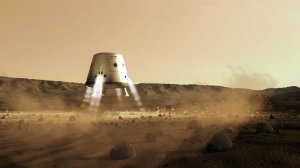
Mars One–not as good an idea as some thought.

Space News–Mars One is dead.  Unless, just maybe, a mystery investor comes forward to save it.

Material Science-The Verge reports gallium nitride might be chip material of the future.  It could make them smaller and more energy efficient than those made with Silicon.

Heidi Toffler–The wife of iconic futurist Alvin Toffler has died at age 89.  She finally shares the credit with her late husband of Future Shock fame.

Self-Driving Cars–Science Daily reports that the University of Michigan is working on teaching self-driving cars to anticipate pedestrian movement.  It’s an important step towards making autonomous vehicles safe for prime time.

Easier walking directions?

Augmented Reality–Google is working on an augmented reality upgrade to its map app.  It’s specifically designed to be used with walking directions.

Coming soon to the Seeking Delphi™ podcast–Your Personal Future, with Verne Wheelright and a preview of the 2019 Undoing Aging conference with Aubrey de Grey.

Seeking Delphi™ podcasts are available on iTunes, PlayerFM, or YouTube (audio with slide show) and you can also follow us on Twitter and Facebook 

Unknown's avatar

Podcast #28: Future Driving Part 3, Intelligent Traffic Control with Griffin Schultz

 “They say the Universe is expanding.  That should help with the traffic.”–Steven Wright


Autonomous vehicles? Flying cars? The concepts are exciting, but the truth is:  most of us will still be driving manually on the ground for many years to come.  And that means dealing with the motorist’s most persistent annoyance.  Congestion.  It costs time and money and tries patience.  But  advanced vehicles are not necessarily required to solve the problem.  In the final episode of the Future Driving series on the Seeking Delphi™ podcast, we explore intelligent traffic control with Rapid Flow Technologies CEO, Griffin Schultz.  Advanced sensors, edge computing and artificial intelligence are helping cities to lessen the occurrence–and the frustration–of traffic congestion.

Future Driving, Part 1, Self-Driving Cars,with Alex Wyglinski here.

Future Driving, Part 2, Flying Cars, with Kaushik Rajashekara here.

All Seeking Delphi™  podcasts are available on iTunes, PlayerFM, and  YouTube.  You can also follow us on Facebook and on twitter @MarkSackler 


Episode #28, Future Driving Part 3: Intelligent Traffic Control with Griffin Schultz

YouTube slide show, episode #28

Links

Rapid Flow Technologies

Griffin Schultz

Surtrac

Pittsburgh experience

A reminder that this and all Seeking Delphi ™podcasts are available on iTunes, PlayerFM, and  YouTube.  You can also follow us on Facebook and on twitter @MarkSackler

Unknown's avatar

Podcast #27: Future Driving Part 2, Flying Cars, with Kaushik Rajashekara

“The hard part is, how do you make a flying car that’s super safe and quiet? Because if it’s a howler, you’re going to make people very unhappy.”–Elon Musk

“We wanted flying cars; what we got is 140 characters.”–Peter Thiel


Well, guess what?  We now have 280 characters, and we may finally be getting flying cars.  Well, some of us may get the flying cars.  They clearly won’t be mass market cheap for a very long time, if ever.  Part 2 of the Seeking Delphi™ Future Driving series presents an interview with  Kaushik Rajashekara. He is a University of Houston professor and IEEE fellow who has been tracking the subject for decades.  Me? I’ve been vaguely following it ever since The Jetsons.

Future Driving, Part 1, Self-Driving Cars,with Alex Wyglinski here.

All Seeking Delphi™  podcasts are available on iTunes, PlayerFM, and  YouTube.  You can also follow us on Facebook and on twitter @MarkSackler 


Click for opening theme video


Episode #27: Future Driving, Part 2, flying Cars, with Kaushik Rajashekara


YouTube slide show of Episode #27.  Captioning recommended.

Terrafuggia TF-x click for video


Aeromobil demonstration video

PAL-V test flight video

A reminder that this and all Seeking Delphi ™podcasts are available on iTunes, PlayerFM, and  YouTube.  You can also follow us on Facebook and on twitter @MarkSackler

Unknown's avatar

Podcast #26: Future Driving Part 1, Interconnectivity and Self-Driving Cars with Alex Wyglinski

 “The Promise of Autonomous Vehicles is Great.”–Dan Lipinski

“My opinion is that it’s a bridge too far to go to fully autonomous vehicles.”–Elon Musk

 ™

There’s no shortage of opinions on the viability of self-driving cars.  Be you a bull or a bear, though, there is no denying that there is a plethora of big players banking on them with R&D spending.

The issues surrounding the technology are too many and complex to deal with all of them in a single podcast.  And while things like collision avoidance, navigation, regulation, liability and public acceptance take up much of the debate over the technology, one key element has not so often been discussed.  That would be connectivity.  To assure safety and efficiency, to any degree greater than currently exists with manually driven cars, they need to be able to talk to each other.

In episode #26 of Seeking Delphi™ host Mark Sackler talks with Alex Wyglinski, president of IEEE’s Vehicle Technology Society and co-chair of the Community Development Working Group for IEEE Future Networks,  on how wireless connectivity might enable the technology.

All Seeking Delphi™  podcasts are available on iTunes, PlayerFM, and  YouTube.  You can also follow us on Facebook and on twitter @MarkSackler

Alex Wyglinski. Click for bio.


Episode #26: Future Driving Part 1, Interconnectivity and Self-Driving Cars


YouTube slide show of episode #26

A reminder that this and all Seeking Delphi ™podcasts are available on iTunes, PlayerFM, and  YouTube.  You can also follow us on Facebook and on twitter @MarkSackler