Unknown's avatar

The Future This Week: July 24, 2017

“When something is important enough, you do it even if the odds are not in your favor.”–Elon Musk
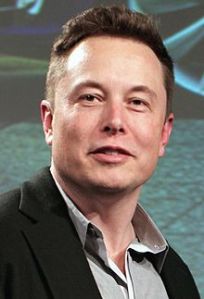
“I want to die on Mars; just not on impact.”

I see a major quandary going forward with this feature.  Elon Musk quotes may run out before Elon Musk stories run out.  And Elon Musk stories will run out, like, never.  Though this week, a couple of the stories could easily be categorized as anti-Musk.

HyperloopElon Musk says The Boring Company has received verbal government go ahead to tunnel from New York to Washington, DC.  The hyperloop that would run within it could make the run in 29 minutes, vs. the 3+ hours by Amtrak, and could begin construction in as little than 4-6 months, he asserts.

More than one observer thinks Musk is blowing smoke on the rapid startup envisioned for the NY-DC loop.  Government approval for large scale infrastructure projects don’t get done in months; they take years or even decades.

Artists conception of an underground Hyperloop station

Robotics–The L. A. Times reports that a critical shortage of migrant farm workers in California is being met by a move to robotic crop pickers.  It still has a way to go, but after years of crackdown on illegal immigration, there appears to be no other way to go.

Artificial Intelligence–China wants to be the world leader in A.I. by 2030, reports the N.Y. Times. They project a domestic industry worth $150 billion yearly.  That’s a lot of yuan.

It’s not just government project proposals that Elon Musk doesn’t understand.  According to Rodney Brooks, the founding director of MIT’s Computer Science and Artificial Intelligence Lab, Elon doesn’t know much about artificial intelligence, either.  Speaking in an interview with Tech Crunch, Brooks said that the one thing that Elon, and all of the other naysayers who warn of existential risks in A.I.,  have in common, is that none of them work in A.I.

Autonomous Vehicles–The Verge reports that buyers of autonomous vehicles could effectively face planned obsolescence as technical capabilities advance rapidly.  The last time I heard that phrase in regards to cars, it referred to the size and shape of tail fins, circa 1960.

1959 Chevy Impala tail fins. They got smaller in 1960 and again in 1961, and disappeared altogether in 1962. Planned obsolescence.


A reminder that the Seeking Delphi™ podcast is available on iTunesPlayerFM, blubrry and , and has a channel on YouTube.  You can also follow us on Facebook.

Unknown's avatar

The Future This Week: July 17, 2017

“The moon is a friend for the lonesome to talk to.”–Carl Sandburg

I don’t know about the moon, but when it comes to Mars, it does not appear that NASA will be doing much more than saying hello in the foreseeable future.  It seems there’s this little problem of money.  On the other hand, it’s full speed ahead to the lunar surface for at least one private enterprise.

Space Exploration and Technology–NASA has finally admitted what experts have been saying for some time.  It does not have enough money to land astronauts on Mars.  They could get astronauts there and orbit, but not land.  So I suppose they could say hello.

Moon Express is full speed ahead on its own ambitious space project.  They recently announced plans to launch a series of robotic lunar mining missions, the third of which will bring back samples from the surface in 2020.  The company is racing four other enterprises as finalists for the Lunar X Prize of $20 milllion, which will be awarded to the first private venture to land a rover on the moon and send back high definition pictures.

eCommerce/Retailing– According to retail guru Brittain Ladd,  Amazon could become the largest U.S. grocery retailer by 2030, if their proposed takeover of Whole Foods goes through.   Ladd predicts Amazon will pass U. S. #2 retailer Kroger by 2025 and take over the top spot from Walmart sometime between 2027 and 2030.

Electric Cars–The greatest roadblock to massive roll out of electric cars may not be infrastructure, but batteries.  Volkswagon, says that as many as 40 new giga-factories may be needed to meet global demand by 2025.

Transhumanism/Brain interface–DARPA has awarded a contract to six organizations, to be led by the University of California, Berkeley, to develop implantable interfaces that could transmit images and sound directly into the brain.  The aim is to compensate for natural visual or hearing loss.  (Reference back: in Seeking Delphi™ podcast #10, on the future of cinema and digital entertainment, film maker Steven Katz discussed this possibility.)

CRISPR/genetic editing–A team of researchers from Harvard and MIT are casting doubt on an earlier study that found that CRISPR/Cas9 gene edits could introduce unexpected mutations.  The original study was done by Columbia University.  It should be noted, however,  that the Broad Institute, a joint venture of Harvard and MIT, is in a pitched patent battle with the University of California, Berkeley, for rights to various uses of the technology.   CRISPR gene editing has the potential to change the face of human health, and perhaps even enter the domain of trans-humanism.  See video embedded below.

In the meantime, researchers at UC San Francisco and UC Berkeley (no surprise there) say they have synthesized a protein they call anti-CRISPR which shut of mutations in CRISPR altered genes.


Robotics/Artificial Intelligence–It seems that a security robot has committed suicide in Washington, DC.  After sounding a security all-clear, it threw itself into a pool.


Coming Attractions:  I’ll be attending the annual meeting of the Association of Professional Futurists July 27-29 in Seattle.  More to come on that.

A reminder that the Seeking Delphi™ podcast is available on iTunesPlayerFM, blubrry and , and has a channel on YouTube.  You can also follow us on Facebook.

Unknown's avatar

The Future This Week: July 10, 2017

“Tesla is becoming a real car company.”–Elon Musk

The stock market has considered Tesla almost more than a car company for some time now.  If you are concerned about its valuation, take a look back at Seeking Delphi™ podcast #4 on Technology Investing for The Future, and the Gartner Hype Cycle.  Whatever happens–and whatever you believe–Tesla made the first major step towards becoming a real car company this past week.  The public will vote with their wallets.  Stay tuned.

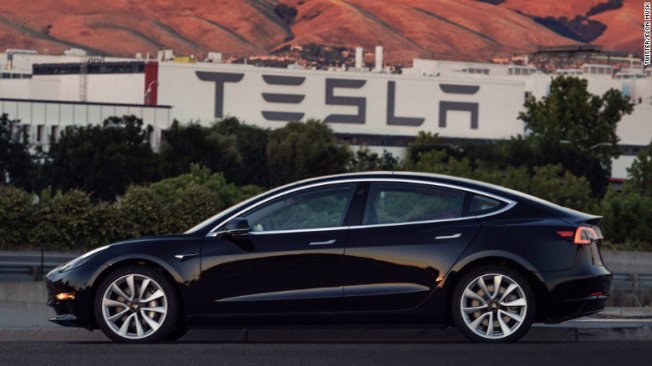
Electric Cars–Elon Musk tweeted photos of the new mass market Tesla Model 3.  Production has begun and is targeted to ramp up to 20,000 vehicles per month by the end of the year.

Tesla Model 3

Volvo announced plans to become the first premium auto make to abandon all-gasoline cars.  By 2019, all of its vehicles will be either hybrids or all-electric.

Artificial Intelligence–Wired Magazine reports that banks are increasingly resorting to artificial intelligence to detect currency transfers by terrorist organizations.  In the past, simple logic algorithms had been used to detect suspicious transactions.  But the increasing use of micro-transfers by ISIS and other groups has fueled the need for more powerful tools.

Virtual Reality–Swedish company Starbreeze is pursuing an ambitious plan to launch arcade-style virtual reality parlors.   Starbreeze is pushing ahead despite many previous retail VR disappointments by other companies.  The current venture, in partnership with Acer, will place these entertainment centers in IMAX theaters.

Global Economy–The IMF’s latest projections say China’s purchasing power parity GDP will surpass that of the US, Germany and Japan combined by 2022.  Their per capita purchasing power parity GDP will still be far down the list of countries, and GDP in total nominal dollars will still trail the U.S.

Robotics/Automation– An Australian firm Fastbricks Robotics has announced that it is being backed by Caterpillar to develop a home-building robot.  Its Hadrain X can lay down 1,000 bricks and hour a construct an entire home in two days.

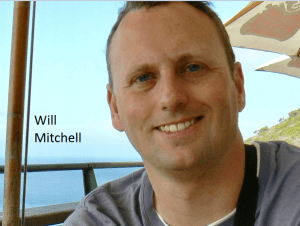
Science fiction author Will Mitchell discussed the prospects for deployment self-replicating machines, to aid in the exploitation of space, on Seeking Delphi™ podcast #14.

A reminder that the Seeking Delphi™ podcast is available on iTunesPlayerFM and , and has a channel on YouTube.  You can also follow us on Facebook.

Unknown's avatar

Podcast #14: Replicating Machines

“The real problem is not whether machines think, but whether men do.”–B.F. Skinner

Researchers at Carleton University in Ottawa, Canada have unveiled an ambitious project.  They are attempting to develop a 3D printer that can make copies of itself.  A replicating machine.  Why would anyone do something like that?  In a word: space.  It’s difficult, dangerous and expensive to launch mass of any kind into space.  If lunar and asteroid mining are ever to become a reality, let alone colonization of Mars, the ability to use materials in situ to construct many automata, from an initial compact package, would be paramount to affordability and perhaps even viability.  Is this possible?  No less a personage than  John von Neumann said that it is–and supposedly proved it mathematically.  What are the challenges, can we control them if we make them, and what happens if we can’t control them?  This is the subject of William Mitchell’s 2013 science fiction novel, Creations.  And he is  my guest of Seeking Delphi™ podcast #14: Replicating Machines.

Links to relevant stories appear after the audio file and embedded YouTube video below.  A reminder that Seeking Delphi is available on iTunes, PlayerFM, and has a channel on YouTube.  You can also follow us on Facebook.


Podcast #14: Replicating Machines


You Tube Slide Show of Episode #11


NASA Conference Publication #2255: Advanced Automation for Space Missions

News items:

Japan space agency projects manned lunar landing in 2030

European Union backs BADGER tunneling machine

Tesla begins Model 3 production

Dubai says robot police will not replace human officers.


Subscribe to Seeking Delphi™ on iTunes 

Subscribe to Seeking Delphi™ on PlayerFM

Subscribe on YouTube

Follow Seeking Delphi™ on Facebook @SeekingDelphi

Follow me on twitter @MarkSackler


Unknown's avatar

The Future This Week: June 19, 2017

“The reasonable man adapts himself to the world: the unreasonable one persists in trying to adapt the world to himself. Therefore all progress depends on the unreasonable man.”–George Bernard Shaw

It will take more than a few quarters to buy your one-way ticket to Mars. http://www.anderetoons.com

If ever there was a definition of Shaw’s unreasonable man, in two short words, it would be: Elon Musk.  The man continues his unrelenting, unreasonable march toward a drastically different future for humanity.   This week, he revealed his plans for a $200,000 ticket to Mars.  Next week?  It’s bound to be something new.

Mars/Space Colonization–Elon Musk’s SpaceX published its Mars colonization plans online.   Through a variety of cost saving measures, they aim to bring down the cost of launching mass into space by some 5 million per cent–a $200,000 one-way ticket for colonists is what that initially adds up to.  They believe that a self-sustaining colony will need a population of at least 1 million people–an effort that will require thousands of spacecraft and several decades to accomplish.

Aerospace–According to Popular Science,  both the U.S. and China could be flying hypersonic (4000+ mph) aircraft by 2030.  The technology would revolutionize both civilian and military aviation and render current air and missile defense systems obsolete.

Environment/Agriculture–Monique Barbut, Executive Secretary, UNITED NATIONS CONVENTION TO COMBAT DESERTIFICATION, issued a statement warning that even while global food and water demand may as much as double by 2050, crop yields are in danger of falling due to desertification and land degradation.  She also forecast that up to 135 million people, worldwide, may be displaced by this trend over the coming decades.

Solar/Alternative Energy–A research team at Melbourne Institute of Technology has developed a paint that can generate hydrogen fuel.  They believe it could be commercialized within five years.  Maybe that Tesla won’t need a refueling station after all. (see video below)

Robotics/Military Technology–A report in The Daily Mail quotes a former British intelligence officer as forecasting a near term burgeoning of automated warfare.  He says the U.S. military may deploy more  robotic soldiers than human combatants by as soon as 2025.

A reminder that the Seeking Delphi™ podcast is available on iTunesPlayerFM and , and has a channel on YouTube.  You can also follow us on Facebook.

Unknown's avatar

The Future This Week: May 29, 2017

The marketing division of the Sirius Cybernetics Corporation defines a robot as  “Your Plastic Pal Who’s Fun to Be With.”  The Hitchhiker’s Guide to the Galaxy defines the marketing division of the Sirius Cybernetic Corporation as “a bunch of mindless jerks who’ll be the first against the wall when the revolution comes.”–Douglas Adams, The Hitchhikers Guide to The Galaxy

Danger, Will Robinson!

The early images of robots were crude.  There was Robby the Robot in the 1956 scifi classic Forbidden Planet. His cousin, Robot B-9, on the campy mid 1960’s TV series Lost In Space, made famous the the catchphrase “danger Will Robinson.”   They look like cartoons to us today, compared, for example, to the chillingly lifelike Ava from 2015’s Ex Machinaor the robots so real in HBO’s Westworldit’s hard to tell who’s a human and who’s an android.  But how close are we to an invasion of robots of all kinds?  Some of this week’s stories would have one believe we are on the cusp.

Robby the Robot in Forbidden Planet

Robotics–The emirate of Dubai announced the roll out of the world’s first robotic policeman.   With it, they stated a goal of having these devices make up 25% of their security forces by 2030.  The robocop uses an array of cameras and sensors, along with sophisticated artificial intelligence, to go about its business.

Renewable Energy–The International Renewable Energy Agency (IRENA) issued a report stating that solar energy jobs in the U.S. grew at a rate 17 times faster than the economy a whole in 2016.  The report also mentioned strong growth in wind industry jobs, and projected employment in that sector to grow by about 40% from 2016 to 2020, while jobs related to fossil fuels will continue to decline.

Aerospace–Boeing has been awarded the contract to build the experimental XS-1, or Phantom Express, for DARPA (Defense Advanced Research Projects Agency).  The vehicle is designed as an autonomous rapid satellite launcher,  capable of being recycled and relaunched up to 10 times in 10 days.   It is slated for full operation by 2022.

Artificial Intelligence–A research team at NEMEC in Belgium has created a neuromorphic chip that mimics the activity of human neurons to compose music.  It does so by being exposed to various compositions and then copies the style.  It’s more practical future uses lie in medical sensors and personal electronics that learn the health and behavior of its users.

Urban Futures–Architect and urban futurist Cindy Frewen joined me for Seeking Delphi™ podcast #13 in a discussion of the urban landscape of the future. Watch and listen to the YouTube slide show or subscribe via any of the links below it.

A reminder that the Seeking Delphi™ podcast is available on iTunesPlayerFM and , and has a channel on YouTube.  You can also follow us on Facebook.