Unknown's avatar

#62, AI and the Future of Big Data, with Anne Boysen

“It is a capital mistake to theorize before one has data.”–Arthur Conan Doyle (Sherlock Holmes, A Study in Scarlett)

What is the fodder that feeds generative AI? Of course, there is massive software programming, but creating useful output requires data. Tons of data.

Anne Boysen has a masters in strategic foresight from the University of Houston and a graduate certificate in business analytics from Penn State University. Working in high tech for 6 years, she also works on foresight projects and uses data mining and analytics in her research. She is generally recognized as one of the top data experts in the professional futurist community. In this episode she provides an overview of the state of big data, and its importance in “feeding” today’s generative AI models.

You can subscribe to Seeking Delphi™ on Apple podcasts , PlayerFM, MyTuner,  Listen Notes, I Heart Radio, Podchaser and Blubrry Podcasts and many others. You can also follow us on twitter @Seeking_Delphi and Facebook.

Episode #62: AI and the Future of Big Data, with Anne Boysen

Anne’s Outline:

Trends

  1. Less public access and ethical considerations
  2. Better ability to combine different types of data
  3. Synthetic data
  4. More diluted data

Less public access and ethical considerations

If data is the new oil, the land grab is coming to an end. That time when anyone could grab a piece of the digital turf and put up their yard sign unsuspectingly is fading away. You still can, but you now know you may not own mining rights to the treasure beneath the soil of your homestead. 

This realization has made people more cautious, and considerations around IP and privacy make important data less accessible. Tech companies are also more protective of user generated content for liability reasons as well as their ability to capitalize on it. It wasn’t long ago that Elon Musk decided to put Twitter’s public tweets behind a paywall. I can not longer use Application Programming Interface (API) to access tweets to do sentiment analysis for my foresight research, which was vital to monitor trends I could not access any other way. Being able to take the pulse of public opinion was a phenomenal way for futurists to gain early insight into trends that otherwise would have stayed below the radar and the big headlines. This is monopolizing not only the data, but the AI models that feeds on this data.

So we see an inverse curve where there is more hope tied to advanced models, but less access for these models to feed themselves.

  • More ability to combine different types of data

Thankfully, the way we store, extract, transform and load our data is advancing along with the models, so we can get more “bang for our buck”. Different types of data used to be stored in siloes, so businesses had a hard time accessing even their own data for analysis. It too lots of time for cleaning and combining. But with the entrance of Data Lakes, we can now store different data formats in combinable ways, giving us better access to unstructured data and then query different formats together. 

  • Synthetic data

Another way to overcome data scarcity is through creating synthetic data. This is a way to make sure the core distributions remain intact but we add some “jitters” to camouflage certain aspects of the original data or create larger quantities.


There are different reasons why we may want to use synthetic data. First and foremost, we may want to remove personally identifiable information (PII). Even if we remove name, address and other identifiers from an original dataset, it doesn’t take many combined data points to reconstruct a person’s identity. The beauty of synthetic data is that we can remove all this and still keep the aggregate level distributions to see the main trends.

We can also use synthetic data to create more data. I did this recently in a deep learning model and it worked remarkably well. I was worried the synthetic data would overfit the model, but when I later got access to more original data of the same source, the performance stayed very close to it.

Of course this is a drawback with synthetic data. You don’t really get to discover the outliers, what we futurists call fringe or weak signals, so it’s just going to maximize the patterns we already have.

  • More diluted data

In this scenario we will still train large models even if data is less accessible. It may be tempting for some to train models using bad data or diluted derivative data produced by AI. This is like ingesting vomit. The “nutrients” have already been absorbed, meaning the variety and serendipity that existed in the original may be gone. This is very different from synthetic data, which keeps the properties intact. Many people mix this up.

A few words about Generative AI. Much Ado about not a whole lot at the moment. This has to do with an incongruence between the type of LLM GenAI is, the type of data it ingests, how it trains on it on the one and most real, “unsexy” business needs on the other.

Generative AI such as LLMs will probably help businesses in some hybrid form, but not as the “out-of-the-box” solution we see today.

Future of data conclusion

–Synthetic data will make up for reduced access. This will reduce important outliers and regress to the mean even more

–Peak access to random data is behind us

–Opt-in data will never be representative

Previous Podcast in this AI series

#59–Transitioning to AGI, Implications and Regulations with Jerome Glenn

#60–Investing in AI and AI in Investing with Jim Lee

#61–Keeping it Human, with Dennis Draeger

You can subscribe to Seeking Delphi™ on Apple podcasts , PlayerFM, MyTuner,  Listen Notes, I Heart Radio, Podchaser and Blubrry Podcasts and many others. You can also follow us on twitter @Seeking_Delphi and Facebook.

Unknown's avatar

After Shock, Podcast #21 redux: The Future of Privacy with Gray Scott

“It’s dangerous when people are willing to give up their privacy.”–Noam Chomsky

The upcoming volume, After Shock, features 50 of the world’s most renowned futurists reflecting on the 50-year legacy of Alvin Toffler’s Future Shock, and looking ahead to the next 50 years.  Seven of the contributors have been guests on Seeking Delphi™  This is the third in a series of repeats of these podcasts, which will lead up to panel discussion with some of the authors, on the book and the Toffler legacy.

Gray Scott is a futurist, living and working in New York City.  He joined me in april of 2018 for a discussion of the issue of privacy in the digital age, on the very day that Mark Zuckerberg was testifying before congress on the that subject.  Gray’s insights are keen, but also somewhat disturbing.

The day I read Futre Shock, just a couple of years after it came out, was the day that started me on the course to becoming a futurist.  Here’s what I wrote on this blog when Toffler died in July of 2016.

Links to relevant stories appear after the audio file and embedded YouTube video below.  A reminder that Seeking Delphi is available on iTunes and PlayerFM,  and has a channel on YouTube.  You can also follow us on Facebook.


Episode #21 redux: The Future of Privacy

YouTube slide show of episode #21


Subscribe to Seeking Delphi™ on iTunes

Subscribe on PlayerFM

Subscribe on YouTube

Follow Seeking Delphi on Facebook @SeekingDelphi

Follow me on twitter @MarkSackler


Unknown's avatar

News of The Future This Week: June 17, 2018

 “We are losing privacy at an alarming rate – we have none left.”–John McAfee


Is privacy dead?  Speaking on the Seeking Delphi™ podcast back in April, futurist Gray Scott said that privacy is not so much dead, as it seems to have become irrelevant.  Our desire for free online content has motivated us to give it up for good.  But this week’s lead stories, on surveillance levels in China and an A.I. that seemingly knows  your behavior before you do, take the issue to whole new levels.

While you’re reading about all this week’s future-related  news, don’t forget that you can subscribe to Seeking Delphi™ podcasts on iTunes, PlayerFM, or YouTube (audio with slide show) and you can also follow us on Twitter and Facebook 

Privacy/Surveillance–Already using facial scanning technology to make sure students are paying attention in class, and brain wave sensors to determine workers’ emotional states, China has taken its Big Brother approach to controlling a step farther.  Starting next year it will require RFID tracking chips installed on all newly registered cars.

–If tracking your every move isn’t creepy enough, computer scientists at the University of Bonn have created a software program that can predict your actions five minutes into the future.  It might sound like a great thing to have at the race track (assuming it also would work on horses). But one has to wonder if it could ultimately lead to a Minority Report scenario.

Retail/Consumer futures–Do malls have a future in age of e-commerce?  According to Westfield Corporation, a major mall operator, they do–though by 2028 they might look quite different.

Westfield 2028

Transportation/Electric Vehicles/Self-Driving Cars–According to a report by Washington-based think tank Securing America’s Future Energy, self-driving cars aren’t likely to steal your job until 2040 or so.  They also project that autonomous vehicles will boost the US economy by $800 billion by 2050.

Artist’s conception of high-speed electric O’Hare shuttle.

Elon Musk’s The Boring Company won a bid to provide underground transportation from downtown Chicago to O’Hare international airport.  According to Musk, the high-speed electric vehicle system should be completed within 3 years.

Space Launch Systems–California-based SpinLaunch Systems has raised $40 million to develop a space catapult launch system by 2022.   The aim is provide orbital launch capabilities for materials and supplies for under $500,000 per mission.  The system will not be able to support manned missions–the G forces generated will be too great for human tolerances.

An estimated half million bits of space junk–leftover pieces of old satellites and space craft–orbit the earth and pose a collision threat to future missions.  Russia, among others, wants to develop a laser system to blast the annoyances out of orbit.


Robotics/Coming Attractions–
The next Seeking Delphi™ podcast will feature an interview with Joanne Pransky, who bills herself as The Worlds First Robotic Psychiatrist.®

You can subscribe to Seeking Delphi™ podcasts on iTunes, PlayerFM, or YouTube (audio with slide show) and you can also follow us on Twitter and Facebook 

Unknown's avatar

News of The Future This Week: May 25, 2018

“Amazon is definitely serious about delivering its goods by an autonomous air force.”–Steven Levy


Autonomous cars.  Self-navigating boats.  Self-flying drones. Ah, if only there was a self-writing blog; I would sleep in more often.  The vehicles of the future are all over the news this week.  Let’s catch up.

While you’re reading about all this week’s future-related  news, don’t forget that you can subscribe to Seeking Delphi™ podcasts on iTunes, PlayerFM, or YouTube (audio with slide show) and you can also follow us on Twitter and Facebook 

Future Transport (autonomous, electric, etc.)–According to Bloomberg New Energy Finance, 80% of the world’s urban buses will be electric by 2040.  They also see 28% of all new car sales as electric by 2030.

Soon to be numbered?

–In December 2015, the FAA announced rules to require all flying drones over a certain size to be registered.  Now a new report, also from Bloomberg, suggests that they want to take the regulations a step further, and require license plates.

MIT, ever in the forefront of just about everything and anything autonomous and robotic, has a new invention.  It’s a 3-D printed autonomous boat.  The hope is it might help clear up urban road congestion.  No mention yet of urban waterway congestion, though.


–While we’re talking about MIT, they have a new technology for drones, too.  Its a virtual reality environment to train drones to maneuver through obstacles without putting the real world at risk.

–Mark Zuckerberg and Elon Musk don’t see eye-to-eye on the existential threats of artificial intelligence.  But they do agree on the life-saving potential of A.I. when used to power self-driving cars.

Falcon Heavy launch. Image credit: SpaceX

Space Commerce–Elon Musk aims big; even too big, at times.  But when it comes to space commerce, his SpaceX company is apparently achieving  big.   An analysis by Next Big Future finds that his Falcon 9 and Falcon Heavy rockets may be as much as 15 years ahead of other competitors is the commercial space race, and as much as 10 years ahead of China’s space agency.

Privacy–Facebook is apparently playing a proverbial “both sides against the middle” when it comes to talking privacy with the government.  On the one hand, Mark Zuckerberg promises congress and the EU parliament better safeguards of user data privacy.  On the otherhand, he’s selling facial recognition technology to law enforcement agencies

You can subscribe to Seeking Delphi™ podcasts on iTunes, PlayerFM, or YouTube (audio with slide show) and you can also follow us on Twitter and Facebook 

Unknown's avatar

News of the Future This Week, April 13, 2018

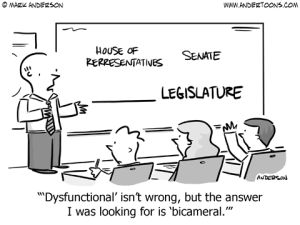
“Suppose you were an idiot, and suppose you were a member of congress; but I repeat myself.”–Mark Twain

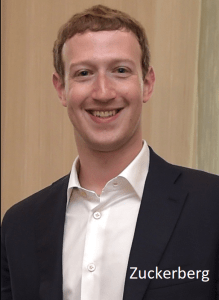
Happy Friday the 13th.  With that cheerful note, we go straight to the foibles of the U.S. Congress.  Did you really think that Senators that look and sound more like stuffed dinosaurs than live human beings could really extract anything meaningful from hearings with Mark Zuckerberg?  Really?  I didn’t think so.  My audience is more with it than that.

While you’re reading the future news of the week, don’t forget that  the Seeking Delphi™ podcast is available on iTunesPlayerFM, blubrry , and has a channel on YouTube.  You can also follow us onTwitter and Facebook.

Social Media/Future of Privacy–In a scathing opinion piece on Futurism.com,  Victor Tangermann said that congress is ill-equiped to regulate Facebook.  He says they simply don’t  understand it.

Man or machine?

–Zuckerberg wasn’t exactly stellar in his performance, either.  CNBC’s Jim Cramer speculated that he might not be able to pass a Turing Test.

–Is privacy dead?  Speaking on the Seeking Delphi™ podcast, noted futurist Gray Scott says it has simply become irrelevant. (Scroll all the way down for the YouTube link).

Artificial Intelligence–The military is pursuing AI that mimics the human brain.  But one DARPA scientist thinks that’s the wrong approach.

Biotechnology–It isn’t just for–well, you know–any more.  Viagra might be effective against some cancers.    That’s what I call a pick me up.

NASA/Space–NASA has begun construction and testing on the next Mars rover, due for launch in 2020.

image credit: BMW

Autonomous Driving-Whatever the problems and perceptions, self-driving cars are not going away.  BMW became the latest major player, launching an autonomous vehicle research center.

Automation/Future of Work–What’s billed as the world’s first “unmanned” bank has opened in Shanghai.  It’s complete with a robot bank manager.


A reminder that the Seeking Delphi™ podcast is available on iTunesPlayerFM, blubrry , and has a channel on YouTube.  You can also follow us onTwitter and Facebook.

Unknown's avatar

Podcast #21: The Future of Privacy In The Digital Age, with Gray Scott

 “We are losing privacy at an alarming rate–we have none left.”–John McAfee

Privacy is becoming irrelevant.”–Gray Scott


Is privacy dead?  The answer may be more indifferent than you suspect.  Gray Scott says it’s becoming irrelevant.  People and politicians may squawk, but if you look at their behavior, it looks as if they just don’t really care.  It seems we’d rather have free content–even at the cost of privacy–than pay even nominal amounts to access online materials.  In this wide ranging interview, conducted just hours before Mark Zuckerberg’s senate testimony in the wake of the Cambridge Analytica data breach, Gray provides us with his nuanced view of the state of privacy, both present and future.

A reminder that this and all Seeking Delphi™  podcasts are available on iTunes, PlayerFM, and  YouTube.  You can also follow us on Facebook and on twitter @MarkSackler


Podcast episode #21: The Future of Privacy In The Digital Age, with Gray Scott

YouTube slide show of Podcast #21: The Future of Privacy with Gray Scott

A reminder that this and all Seeking Delphi ™podcasts are available on iTunes, PlayerFM, and  YouTube.  You can also follow us on Facebook and on twitter @MarkSackler