Unknown's avatar

Podcast #14: Replicating Machines

“The real problem is not whether machines think, but whether men do.”–B.F. Skinner

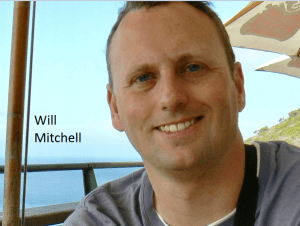
Researchers at Carleton University in Ottawa, Canada have unveiled an ambitious project.  They are attempting to develop a 3D printer that can make copies of itself.  A replicating machine.  Why would anyone do something like that?  In a word: space.  It’s difficult, dangerous and expensive to launch mass of any kind into space.  If lunar and asteroid mining are ever to become a reality, let alone colonization of Mars, the ability to use materials in situ to construct many automata, from an initial compact package, would be paramount to affordability and perhaps even viability.  Is this possible?  No less a personage than  John von Neumann said that it is–and supposedly proved it mathematically.  What are the challenges, can we control them if we make them, and what happens if we can’t control them?  This is the subject of William Mitchell’s 2013 science fiction novel, Creations.  And he is  my guest of Seeking Delphi™ podcast #14: Replicating Machines.

Links to relevant stories appear after the audio file and embedded YouTube video below.  A reminder that Seeking Delphi is available on iTunes, PlayerFM, and has a channel on YouTube.  You can also follow us on Facebook.


Podcast #14: Replicating Machines


You Tube Slide Show of Episode #11


NASA Conference Publication #2255: Advanced Automation for Space Missions

News items:

Japan space agency projects manned lunar landing in 2030

European Union backs BADGER tunneling machine

Tesla begins Model 3 production

Dubai says robot police will not replace human officers.


Subscribe to Seeking Delphi™ on iTunes 

Subscribe to Seeking Delphi™ on PlayerFM

Subscribe on YouTube

Follow Seeking Delphi™ on Facebook @SeekingDelphi

Follow me on twitter @MarkSackler


Unknown's avatar

The Future This Week: July 3, 2017

“If you die in an elevator, be sure to push the Up button.”–Sam Levenson

On more than one occasion, I have traveled in an elevator that could move horizontally as well as vertically.  How did I manage that?  It turns out I was dreaming–and I must admit I experienced a bit of a disappointment when I woke up.  Honestly, the feeling of moving sideways in an elevator was just, well, cool.  Now, though, a new technology might actually make that feeling possible.

Elevator Technology–Thyssenkrupp Elevator Technology, of Berlin, Connecticut, USA, has developed and, in fact, installed the world’s first cable-free horizontal-vertical elevator in a  test tower in Rotweill, Germany.  (See YouTube video embedded at the bottom of the page).

Space Exploration and Technology–In what appears to be an Asian reboot of the U.S.-Soviet 1960’s space race, Japan has announced plans to put a man on the moon by 2030–and beat China to the punch.  JAXA,  the Japanese space agency, recently announced the plan, thus throwing themselves into a multi-national Asian sprint to the lunar surface.

NASA announced plans to revive a dormant plan for developing nuclear power for space colonies.   Originally envisioned some 50 years ago, it aims at building a mini-fusion plant to provide electric power for bases on the moon and Mars.

Internet of Things–According to a report in Business Insider there will be 24 billion devices, globally, connected to the Internet of Things by 2020.  I feel like there are nearly a billion in my house, alone.

Computer Technology–As silicon technology nears the limits of Moore’s Law, IBM scientists say they have created carbon nano-tube transistors that are smaller and faster than silicon.  No timetable has been set for scaling up to the level of practical, useful devices.

How real is it?

Virtual Reality–The Japanese firm, Futureleap, claims to have invented the virtual girlfriend. Apparently, one can not just view, but actually feel sensations of an imaginary friend breathing down your neck.  Not tonight dear, I have some corrupt code.


 Be sure to stay tuned for the next Seeking Delphi podcast, on self-replicating machines, with science fiction author Will Mitchell.

A reminder that the Seeking Delphi™ podcast is available on iTunesPlayerFM and , and has a channel on YouTube.  You can also follow us on Facebook.

Unknown's avatar

The Future This Week: June 26, 2017

“We wanted flying cars.  Instead we got 140 characters.”–Peter Thiel

“Flying is learning how to throw yourself at the ground and miss.”–Douglas Adams


The PAL-V flying car prototype

It appears that Peter Thiel might get his flying car by this time next year.  Oh, there’s just one problem though.  If you want one, you’ll have to be as rich as Peter Thiel, as they won’t exactly be cheap.  In fact  you can buy a single engine Cessna for much less.  In any case, let’s hope the drivers miss when they throw themselves at the ground.

No, they won’t look like this

Flying Cars–Dutch firm PAL-V has announced it tends to bring its 3-wheeled, 2-passenger gyro-copter to market by sometime next year. The vehicle is certified for both the air and the road, making it a true flying car.  You’d better start saving your pennies, though, as the first model will list for about $600,000.   But don’t worry, the firm will follow the launch up with a second model–a sport vehicle–targeted to sell for a mere $350,000.

Aerospace–The European Space Agency,  while still three years away from the first test flights for its planned space plane, says it hopes to privatize the vehicle by 2025.  They foresee Space Rideras it is called, offering commercial launches into low earth orbit for about $4,200.00 per pound.

Neural Networks/Quantum Computing–The US Air Force and IBM are collaborating on a venture to build the world’s first supercomputer to be based on human brain architecture.  The device, employing IBM’s True North neurosynaptic technology, will have the equivalent of five million neurons and 16 billion synapses.  In case you’re worried about being replaced, the human brain has about 100 billion neurons and one quadrillion ( 1015 ) synapses.

The University of Southern California (USC) will head a consortium of universities and private contractors to develop a quantum computer that will be 10,000 times faster than classical computers.  The Quantum Annelear will feature 100 qubit architecture and is targeted for operation by 2023.

Meanwhile, Google remains out front in quantum computing race.  It currently is testing a 20-qubit device, and hopes to have a 49-qubit processor operational before the end of 2017.

Design Innovation–A student from the University of Nevada, Las Vegas has won the Radical Innovation Award for 2017, for his concept of a Hyperloop Hotel.  The idea would  employ modular container suites would detach and serve as luxury hotel rooms at each city stop.

All that’s needed is…a hyperloop.


A reminder that the Seeking Delphi™ podcast is available on iTunesPlayerFM and , and has a channel on YouTube.  You can also follow us on Facebook.

Unknown's avatar

The Future This Week: June 19, 2017

“The reasonable man adapts himself to the world: the unreasonable one persists in trying to adapt the world to himself. Therefore all progress depends on the unreasonable man.”–George Bernard Shaw

It will take more than a few quarters to buy your one-way ticket to Mars. http://www.anderetoons.com

If ever there was a definition of Shaw’s unreasonable man, in two short words, it would be: Elon Musk.  The man continues his unrelenting, unreasonable march toward a drastically different future for humanity.   This week, he revealed his plans for a $200,000 ticket to Mars.  Next week?  It’s bound to be something new.

Mars/Space Colonization–Elon Musk’s SpaceX published its Mars colonization plans online.   Through a variety of cost saving measures, they aim to bring down the cost of launching mass into space by some 5 million per cent–a $200,000 one-way ticket for colonists is what that initially adds up to.  They believe that a self-sustaining colony will need a population of at least 1 million people–an effort that will require thousands of spacecraft and several decades to accomplish.

Aerospace–According to Popular Science,  both the U.S. and China could be flying hypersonic (4000+ mph) aircraft by 2030.  The technology would revolutionize both civilian and military aviation and render current air and missile defense systems obsolete.

Environment/Agriculture–Monique Barbut, Executive Secretary, UNITED NATIONS CONVENTION TO COMBAT DESERTIFICATION, issued a statement warning that even while global food and water demand may as much as double by 2050, crop yields are in danger of falling due to desertification and land degradation.  She also forecast that up to 135 million people, worldwide, may be displaced by this trend over the coming decades.

Solar/Alternative Energy–A research team at Melbourne Institute of Technology has developed a paint that can generate hydrogen fuel.  They believe it could be commercialized within five years.  Maybe that Tesla won’t need a refueling station after all. (see video below)

Robotics/Military Technology–A report in The Daily Mail quotes a former British intelligence officer as forecasting a near term burgeoning of automated warfare.  He says the U.S. military may deploy more  robotic soldiers than human combatants by as soon as 2025.

A reminder that the Seeking Delphi™ podcast is available on iTunesPlayerFM and , and has a channel on YouTube.  You can also follow us on Facebook.

Unknown's avatar

The Future This Week: May 29, 2017

The marketing division of the Sirius Cybernetics Corporation defines a robot as  “Your Plastic Pal Who’s Fun to Be With.”  The Hitchhiker’s Guide to the Galaxy defines the marketing division of the Sirius Cybernetic Corporation as “a bunch of mindless jerks who’ll be the first against the wall when the revolution comes.”–Douglas Adams, The Hitchhikers Guide to The Galaxy

Danger, Will Robinson!

The early images of robots were crude.  There was Robby the Robot in the 1956 scifi classic Forbidden Planet. His cousin, Robot B-9, on the campy mid 1960’s TV series Lost In Space, made famous the the catchphrase “danger Will Robinson.”   They look like cartoons to us today, compared, for example, to the chillingly lifelike Ava from 2015’s Ex Machinaor the robots so real in HBO’s Westworldit’s hard to tell who’s a human and who’s an android.  But how close are we to an invasion of robots of all kinds?  Some of this week’s stories would have one believe we are on the cusp.

Robby the Robot in Forbidden Planet

Robotics–The emirate of Dubai announced the roll out of the world’s first robotic policeman.   With it, they stated a goal of having these devices make up 25% of their security forces by 2030.  The robocop uses an array of cameras and sensors, along with sophisticated artificial intelligence, to go about its business.

Renewable Energy–The International Renewable Energy Agency (IRENA) issued a report stating that solar energy jobs in the U.S. grew at a rate 17 times faster than the economy a whole in 2016.  The report also mentioned strong growth in wind industry jobs, and projected employment in that sector to grow by about 40% from 2016 to 2020, while jobs related to fossil fuels will continue to decline.

Aerospace–Boeing has been awarded the contract to build the experimental XS-1, or Phantom Express, for DARPA (Defense Advanced Research Projects Agency).  The vehicle is designed as an autonomous rapid satellite launcher,  capable of being recycled and relaunched up to 10 times in 10 days.   It is slated for full operation by 2022.

Artificial Intelligence–A research team at NEMEC in Belgium has created a neuromorphic chip that mimics the activity of human neurons to compose music.  It does so by being exposed to various compositions and then copies the style.  It’s more practical future uses lie in medical sensors and personal electronics that learn the health and behavior of its users.

Urban Futures–Architect and urban futurist Cindy Frewen joined me for Seeking Delphi™ podcast #13 in a discussion of the urban landscape of the future. Watch and listen to the YouTube slide show or subscribe via any of the links below it.

A reminder that the Seeking Delphi™ podcast is available on iTunesPlayerFM and , and has a channel on YouTube.  You can also follow us on Facebook.

Unknown's avatar

Podcast #13: The Urban Landscape Of The Future

“All cities are mad, but the madness is gallant. All cities are beautiful, but the beauty is grim.”–Christopher Morley

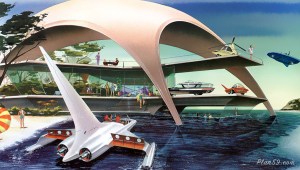
A Jetsons future?

Where will you live in 2050? What will the cities of the future look like?  Tomorrowland? The Jetsons? Waterworld?  Maybe they will look pretty much the same, but feel very much different.  To sort out some of the possible scenarios, I sought out an expert on the urban landscape of the future.  Cindy Frewen, Ph. D., is an architect and an adjunct professor in the University of Houston’s graduate foresight program.  She designs near-term urban futures, and constructs scenarios for possible longer term futures.

Links to relevant stories appear after the audio file and embedded YouTube video below.  A reminder that Seeking Delphi is available on iTunes and PlayerFM, and has a channel on YouTube.  You can also follow us on Facebook.


Cindy Frewen 
Image credit: Kansas City Star


Podcast #13: The Urban Landscape Of The Future

You Tube Slide Show of Episode #13

Cindy Frewen bio on Futurist.com

News items:

DARPA XS-1 space plane

Attacking Cancer with CRISPR gene editing

Music-making neuromorphic chip

World’s first robotic cop deployed in Dubai

Subscribe to Seeking Delphi™ on iTunes

Subscribe on PlayerFM

Subscribe on YouTube

Follow Seeking Delphi on Facebook @SeekingDelphi

Follow me on twitter @MarkSackler