The most common question that I get asked, when I tell somebody I’m a futurist, is “what is a futurist?” From now on, I’ll tell them to listen to this podcast. From the Association of Professional Futurists annual meeting, Seattle, Washington, July 27, 2017.
A reminder that Seeking Delphi is available on iTunes, PlayerFM, and has a channel on YouTube. You can also follow us onFacebook.
“When something is important enough, you do it even if the odds are not in your favor.”–Elon Musk
“I want to die on Mars; just not on impact.”
I see a major quandary going forward with this feature. Elon Musk quotes may run out before Elon Musk stories run out. And Elon Musk stories will run out, like, never. Though this week, a couple of the stories could easily be categorized as anti-Musk.
I don’t know about the moon, but when it comes to Mars, it does not appear that NASA will be doing much more than saying hello in the foreseeable future. It seems there’s this little problem of money. On the other hand, it’s full speed ahead to the lunar surface for at least one private enterprise.
The stock market has considered Tesla almost more than a car company for some time now. If you are concerned about its valuation, take a look back at Seeking Delphi™ podcast #4 on Technology Investing for The Future, and the Gartner Hype Cycle. Whatever happens–and whatever you believe–Tesla made the first major step towards becoming a real car company this past week. The public will vote with their wallets. Stay tuned.
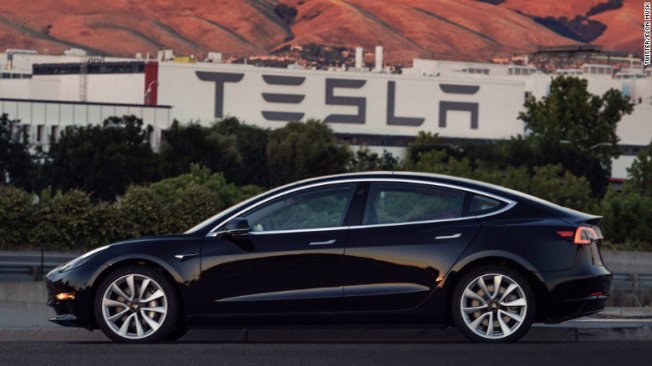
Electric Cars–Elon Musk tweeted photos of the new mass market Tesla Model 3. Production has begun and is targeted to ramp up to 20,000 vehicles per month by the end of the year.
Virtual Reality–Swedish company Starbreeze is pursuing an ambitious plan to launch arcade-style virtual reality parlors. Starbreeze is pushing ahead despite many previous retail VR disappointments by other companies. The current venture, in partnership with Acer, will place these entertainment centers in IMAX theaters.
Robotics/Automation–An Australian firm Fastbricks Robotics has announced that it is being backed by Caterpillar to develop a home-building robot. Its Hadrain X can lay down 1,000 bricks and hour a construct an entire home in two days.
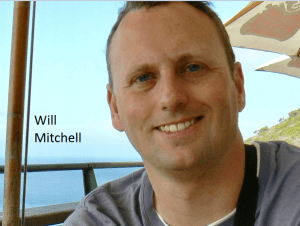
Science fiction author Will Mitchell discussed the prospects for deployment self-replicating machines, to aid in the exploitation of space, on Seeking Delphi™ podcast #14.
A reminder that the Seeking Delphi™ podcast is available on iTunes, PlayerFMand , and has a channel on YouTube. You can also follow us on Facebook.
Researchers at Carleton University in Ottawa, Canada have unveiled an ambitious project. They are attempting to develop a 3D printer that can make copies of itself. A replicating machine. Why would anyone do something like that? In a word: space. It’s difficult, dangerous and expensive to launch mass of any kind into space. If lunar and asteroid mining are ever to become a reality, let alone colonization of Mars, the ability to use materials in situ to construct many automata, from an initial compact package, would be paramount to affordability and perhaps even viability. Is this possible? No less a personage than John von Neumann said that it is–and supposedly proved it mathematically. What are the challenges, can we control them if we make them, and what happens if we can’t control them? This is the subject of William Mitchell’s 2013 science fiction novel, Creations. And he is my guest of Seeking Delphi™ podcast #14: Replicating Machines.
Links to relevant stories appear after the audio file and embedded YouTube video below. A reminder that Seeking Delphi is available on iTunes, PlayerFM, and has a channel on YouTube. You can also follow us onFacebook.
On more than one occasion, I have traveled in an elevator that could move horizontally as well as vertically. How did I manage that? It turns out I was dreaming–and I must admit I experienced a bit of a disappointment when I woke up. Honestly, the feeling of moving sideways in an elevator was just, well, cool. Now, though, a new technology might actually make that feeling possible.
Elevator Technology–Thyssenkrupp Elevator Technology, of Berlin, Connecticut, USA, has developed and, in fact, installed the world’s first cable-free horizontal-vertical elevator in a test tower in Rotweill, Germany. (See YouTube video embedded at the bottom of the page).




 CRISPR/genetic editing–



 Seeking Delphi™