

“Your genetics is not your destiny.”–Dr. George Church
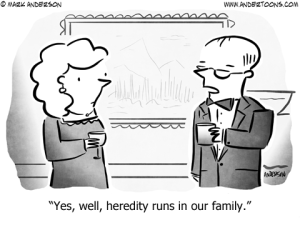
I’d like to ask Dr. George Church a question about the above quote. Does he mean that nurture can overcome nature? Or does he mean your genetics can be changed? Considering he’s one of the leading geneticists in the world, and is closely involved in one or more enterprises involved in gene editing, I’m guessing it would be the latter. Either way, CRISPR/Cas9 gene editing was prominent in news this past week.
CRISPR/Cas9 genetic editing–A multinational team of American, Korean, and Chinese researcher succeeded in correcting a serious genetic disease in human embryos. The paper appeared online in the journal Nature and was widely reported by various news sources. While creating excitement for the technique’s potential, it also raised concerns for the potential advent of genetically modified “designer” babies.
—UC, Berkeley researcher, and CRISPR co-developer, Dr. Jennifer Doudna, weighed in on the Nature paper, along with views on a variety of potential uses and abuses of the technology. In a wide ranging interview with Newsweek, she mentioned cancer, diabetes and bio-terrorism as potential targets the technology could be used to fight.
—Researchers at the University of Chicago reported success with CRISPR created skin grafts in treating diabetes in mice. While not technically a cure, it could provide an effective long term treatment alternative to insulin shots. The researchers also asserted that the technique could be useful in treating a variety of other diseases.
A brief explanation of CRISPR gene editing
3D Bio-printing–Doctors at Rutgers Robert Wood Johnson medical school successfully inserted a 3D printed bone replacement implant in a patient who had suffered irreparable damage to a portion his skull. Such a procedure was unthinkable just a few years ago and may be an indicator that bio-printing is on the verge of becoming a major health industry.
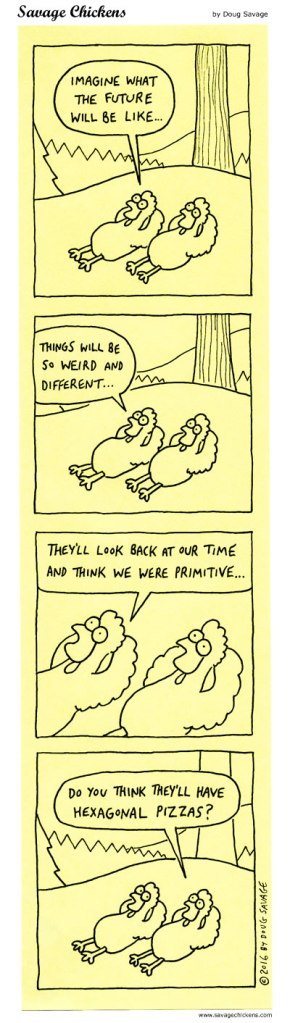
Robotics/Automation–Zume Pizza, of Mountain View, CA, has taken a Silicon Valley approach to making their pies. They use robots. While humans have not been completely automated out of the process, the robots do the repetitive parts of the process.
Politics–According to WIRED, there is a good reason why people can’t stop talking about Mark Zuckerberg as a 2020 presidential candidate. That reason is Mark Zuckerberg; his actions speak louder than his words.
Renewable Energy–Fresh on the heels of Atlanta’s goal to achieve 100% renewable energy by 2035, California is poised to set a statewide goal to do the same by 2045. A bill mandating just that has passed a committee in the state senate. Governor Jerry Brown is expected to sign it if it becomes law.
A reminder that the Seeking Delphi™ podcast is available on iTunes, PlayerFM, blubrry and , and has a channel on YouTube. You can also follow us on Facebook.

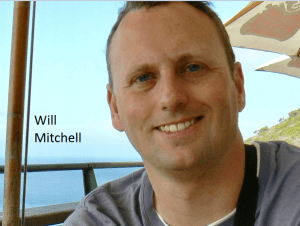

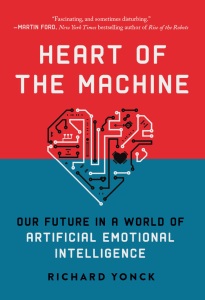
 In episode #11, futurist Ian Pearson spoke to his assertion that artificial intelligence will create jobs. One of the main reasons for this, he believes, will be the need to provide an emotional human interface between A.I. and its intended beneficiaries, be they patients, consumers, or business clients. But the field of affective computing is rapidly developing artificial intelligence that can read and respond to human emotion. They are systems with emotional intelligence. In episode #12, I talk with author Richard Yonck. His new book, Heart of the Machine, provides a comprehensive overview of the current state of development in emotional A.I., while providing cogent scenarios projecting where it might lead us in the future.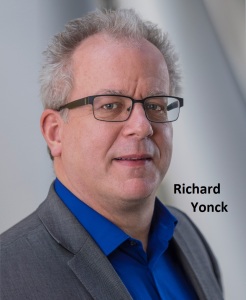


 One of the hottest topics in foresight today is artificial intelligence. And while many of the most visible forward thinkers have been stressing over potential existential threats to all of humanity, there is a more mundane threat to all of us. That would be our world of work. As automation on the assembly line replaces more and more unskilled labor jobs, there lies the looming threat of artificial intelligence taking on skilled, professional jobs. Will A.I. kill your job? Create you a new one? Both? Neither? While the media is full of pessimism on this account, at least one prominent futurist is cautiously optimistic. Author, speaker and blogger Ian Pearson, of Futurizon thinks that, at least in the short term, A.I. will create more jobs than it kills. I talk to him about these views, as well as the longer range existential effects of A.I., in this week’s Seeking Delphi Podcast.
 Seeking Delphi™