Unknown's avatar

News of The Future This Week: May 25, 2018

“Amazon is definitely serious about delivering its goods by an autonomous air force.”–Steven Levy


Autonomous cars.  Self-navigating boats.  Self-flying drones. Ah, if only there was a self-writing blog; I would sleep in more often.  The vehicles of the future are all over the news this week.  Let’s catch up.

While you’re reading about all this week’s future-related  news, don’t forget that you can subscribe to Seeking Delphi™ podcasts on iTunes, PlayerFM, or YouTube (audio with slide show) and you can also follow us on Twitter and Facebook 

Future Transport (autonomous, electric, etc.)–According to Bloomberg New Energy Finance, 80% of the world’s urban buses will be electric by 2040.  They also see 28% of all new car sales as electric by 2030.

Soon to be numbered?

–In December 2015, the FAA announced rules to require all flying drones over a certain size to be registered.  Now a new report, also from Bloomberg, suggests that they want to take the regulations a step further, and require license plates.

MIT, ever in the forefront of just about everything and anything autonomous and robotic, has a new invention.  It’s a 3-D printed autonomous boat.  The hope is it might help clear up urban road congestion.  No mention yet of urban waterway congestion, though.


–While we’re talking about MIT, they have a new technology for drones, too.  Its a virtual reality environment to train drones to maneuver through obstacles without putting the real world at risk.

–Mark Zuckerberg and Elon Musk don’t see eye-to-eye on the existential threats of artificial intelligence.  But they do agree on the life-saving potential of A.I. when used to power self-driving cars.

Falcon Heavy launch. Image credit: SpaceX

Space Commerce–Elon Musk aims big; even too big, at times.  But when it comes to space commerce, his SpaceX company is apparently achieving  big.   An analysis by Next Big Future finds that his Falcon 9 and Falcon Heavy rockets may be as much as 15 years ahead of other competitors is the commercial space race, and as much as 10 years ahead of China’s space agency.

Privacy–Facebook is apparently playing a proverbial “both sides against the middle” when it comes to talking privacy with the government.  On the one hand, Mark Zuckerberg promises congress and the EU parliament better safeguards of user data privacy.  On the otherhand, he’s selling facial recognition technology to law enforcement agencies

You can subscribe to Seeking Delphi™ podcasts on iTunes, PlayerFM, or YouTube (audio with slide show) and you can also follow us on Twitter and Facebook 

Unknown's avatar

News of The Future This Week: May 18, 2018

“Happiness is nothing more than good health and a bad memory.”–Albert Schweitzer


Ah memory.  How fleeting and ephemeral–as well as inaccurate–it can be.  Apparently, now, it can be transferred or even implanted falsely.  Westworld may be closer than we think.

While you’re reading about all this week’s future-related  news, don’t forget that you can subscribe to Seeking Delphi™ podcasts on iTunes, PlayerFM, or YouTube (audio with slide show) and you can also follow us on Twitter and Facebook 

Neuroscience/Memory–A team of UCLA scientists claims to have successfully transplanted memory from one snail to another.  I’m not exactly sure what the point is, but I hope the little buggers protected their ATM PIN numbers.

If fake news isn’t bad enough, it appears that UC Berkeley scientists have figured out how to implant fake memories in the human mind using holographic images.   While this could have constructive uses in physical therapy and psychotherapy, it’s also ripe for abuse.

Getting there? Hard. Staying there? Brutal.

Space Colonization–Getting there is less than half the battle.  Maintaining a colony on Mars is replete with challenges, and a new study says having babies maybe one of the biggest ones.

Artificial Intelligence–Demand for artificial intelligence engineers continues to outstrip supply.  In response, Carnegie Mellon has created the first undergraduate program specializing in such.

INTEL has it’s own A.I. plans, at least in the hardware department.  It’s Lohi chip, planned for release next year, will have the equivalent of 100 billion synapses–about the number in the brain of a mouse.

On the road to strong A.I.–machines that can learn anything.

DARPA may be a step closer to the quantum leap that will enable artificial general intelligence.  As advanced as we may think today’s A.I. is, it still only does tasks it is initially designed for.  But DARPA’s L2M initiative is making strides toward developing a system that can adapt to new situations outside their initial programming–a major step towards achieving strong A.I.

SpaceX/Elon Musk–Elon continues to work overtime on ambitious transport projects of all kinds.  The latest is a scheme, combining the joint efforts of SpaceX and Hyperloop, to create a transport system that will enable 1-hour travel time to almost anywhere on earth.

On the road to an ambitious future like the one described above, Musk plans 24 hour turnaround and relaunch of his reusable Falcon 9 rocket, starting in 2019.

You can subscribe to Seeking Delphi™ podcasts on iTunes, PlayerFM, or YouTube (audio with slide show) and you can also follow us on Twitter and Facebook 

Unknown's avatar

News of the Future This Week, January 17, 2018

“Consumers want a better world, not just better widgets.”–Simon Mainwaring

The annual Consumer Electronics Show (CES 2018) recently concluded.  Some of the news coming out of it suggests there are still product marketers who think consumers do just want better widgets.  Let’s hope that doesn’t lead to major investment in The Internet of Stuff.

 While you’re reading about all this week’s future-related  news, don’t forget that you can subscribe to Seeking Delphi™ podcasts on iTunes, PlayerFM, or YouTube (audio with slide show) and you can also follow us on Twitter and Facebook 

 CES 2018–IEEE Spectrum notes 5 important takeaways on the future of 5G wireless technology from CES 2018.  Most notably, it may gear up sooner than some think.

 —Nissan shared its vision for autonomous electrical vehicles at the show.  They suggested doing the other automakers one better, by adding a machine/brain interface.  Methinks Elon Musk, via Tesla and Neuralink might already be looking into that.

As for those crazy widgets,  Futurism.com reported on the most ridiculous ideas to come out of CES 2018.  These include robot strippers and a $6,000 smart toilet.  What will they waste their time thinking of next?

But we can have robodogs…this one will set you back $1,700.00

Don’t expect a personal robot butler anytime soon.  Based on Popular Science’s assessment of robotics and automation at the show, the robots won’t serve us, or take us over, any time soon.

 —Business insider reports that voice assistant integration was the top smart-home trend at CES.     Q. Hey Google, can you verify that?    A. Ask Alexa.

Space travel/exploration–China has unveiled a plan to zap space junk with orbiting lasers.  Now if only somebody could figure out how to zap robocalls.

Smart Cars–Elon Musk says that Tesla model 3 owners will be able to do just about anything with voice control.  He still needs to figure out how to build them fast enough to supply order backlog before the technology becomes obsolete.

Bitcoin/Cryptocurrencies–Bitcoin price dropped sharply this week, amid reports that the EU may place restrictions on cryptocurrencies.  This chart published by Mother Jones makes many historic investment bubbles look cheap by comparison to Bitcoin–even those infamous tulip bulbs.

A reminder that the Seeking Delphi™ podcast is available on iTunesPlayerFM, blubrry , and has a channel on YouTube.  You can also follow us on Facebook.

Unknown's avatar

The Future Last Year: 2017 In Review

“My mentality is that of a samurai. I would rather commit seppuku than fail.”–Elon Musk

“The best way to predict the future is to invent it.”–Alan Kay

Technology was everywhere in 2017.  And everywhere technology went, Elon Musk was sure to lead.  Perhaps we should paraphrase Alan Kay.  The best way to predict the future, is to watch Elon. If anybody is inventing it, it’s him. Tesla, Solar City, SpaceX, Neuralink, Hyperloop.  If it involved renewable energy, autonomous vehicles, space commerce, transhumanism, or warnings about artificial intelligence (lot’s of warnings), it probably involved Elon.

With that, I name Elon Musk, in total, our first Future Story of The Year, for 2017.  Here’s a very brief history of his year, along with some of the other top stories from 2017.

While you’re reading about it all, don’t forget that you can subscribe to Seeking Delphi™ podcasts on iTunes or PlayerFM, and you can also follow us on Twitter and Facebook 

Elon Musk

Tesla– Even as the lower priced ($35,000) model 3 production lagged way behind predictions, Elon revealed the new Tesla semi.  It’s great that he aims high, but in 2018 he will need to deliver, not just promise.

SpaceXAs of this writing, the Falcon Heavy rocket sits on pad 39A at Cape Canaveral.  It’s the precursor of even heavier launch vehicles that Elon hopes will send humans to Mars by 2030. 

HyperloopMusk may have invented it, but Richard Branson’s Virgin Hyperloop One is making the bulk of the headlines these days.  Kudos to Elon, though, for open sourcing the concept and allowing competition to rapidly develop it.

The Boring CompanyWhile aiming to odominate the transportation on the surface of the earth (Tesla) and space above it (SpaceX) , Elon also created The Boring Company to drill tunnels below it. give him credit for a sense of humor with this company’s name.

Neuralink–When it comes to A.I., Elon’s motto seems to be “if you can’t beat ’em, join ’em.” He created Neuralink to accelerate the merger of mind and machine.

So…how many new technology ventures will he create in 2018, as he continues to invent the future?  I’d put the over/under at 2 1/2.

Other top stories of the Year.

Artificial intelligence, CRISPR/Cas9 gene editing, self-driving cars, Bitcoin and blockchain, reversing aging and the future of work, were all frequently in the news in 2017.   Somewhat less visible were stories about laboratory grown meat, reversing aging, hypersonic weapons, 3D printing and advanced drone technology.  Here are few top story lists from other sources.

Futureseek Daily Link Digest

Wired Magazine’s top stories of 2017

Favorite 2017 Science Stories, The Verge

Science Fiction vs. Science Fact: Replicating Machines (my article from the first issue of Age of Robots)

IEEE Spectrum best stories of 2017

2017 in 3D printing

Dave Barry’s less than reassuring look back at 2017

Seeking Delphi™ finished the year with a podcast interview with SENS foundation,s chief science officer,  Aubrey de Grey, on ending aging.


Happy New Year, all.  2018 figures to be quite a ride.

Coming Attractions–2018 will kick off with an interview with Bioviva CEO Elizabeth Parrish, the first person to edit parts of her own genome to reverse aging.


A reminder that the Seeking Delphi™ podcast is available on iTunesPlayerFM, blubrry , and has a channel on YouTube.  You can also follow us on Facebook.

Unknown's avatar

News of The Future, This Week: December 19, 2017

Blockchain is the tech. Bitcoin is merely the first mainstream manifestation of its potential.”–Marc Kenigsberg, founder, Bitcoin Chaser

The price of a single Bitcoin, as of this writing, sits at just north of US$18,300.  At that level, I don’t think that guy to the left is going to be finding too many of them in his virtual hat.  But as this week’s lead story suggests, some workers in Japan will soon need Bitcoin wallets.***

 While you’re reading about all this week’s future-related  news, don’t forget that you can subscribe to Seeking Delphi™ podcasts on iTunes or PlayerFM, and you can also follow us on Twitter and Facebook 

 Bitcoin/Cryptocurrency/Digital Payments–A Japanese company will start paying part of it’s employees salaries in Bitcoin.  Participation is voluntary; that’s probably a good thing.  When the bubble caves in, those employees might wind up looking like the bum in the cartoon.

Wired Magazine reports that a serious unintended side effect of Bitcoin is environmental damage.  The mining of Bitcoin, according to a source they cite, is burning more energy than the entire nation of Serbia.

–Despite strong growth of digital payments and cryptocurrencies, it appears cash won’t be going away any time soon.  According to a report by Boston Consulting Group, digital payments will account for about 30-35% of all non-credit transactions by 2025.

The Future of China–Next Big Future reports that China has embarked on a three year plan for a massive roll-out of artificial intelligence systems centered mainly in manufacturing, autonomous vehicles, and energy efficiency management.

The Chinese won’t make it easy for foreign firms entering the self-driving car market, though.  They won’t be allowed to map roads in China, and will have to partner with Chinese firms to do so if they want to sell, build or operate autonomous vehicles there.

According to a new report Global Cities report by Oxford Economics,  Asian cities (mostly Chinese) will outstrip European and North American cities in total economic activity by 2035, and will account for nearly half of global GDP.

Advanced Transport–Virgin Hyperloop One set a new speed record for the vacuum tube transport system.   The system reached  240 mph (387 kph) on December 18, surpassing the record of 220 mph (355 kph) set this past summer by Elon Musk’s hyperloop.

Coming Attractions–2017, Future Stories, year in review, coming next week.

***By the time I hit the “publish” button on this post, the Price of Bitcoin had fallen, in just a few hours, to under $17,000.  That represented a drop of 15% from its high over $19,000 earlier in the day.

A reminder that the Seeking Delphi™ podcast is available on iTunesPlayerFM, blubrry , and has a channel on YouTube.  You can also follow us on Facebook.

Unknown's avatar

The Future This Week: December 12, 2017

“The pace of progress on Mars depends upon the pace of progress of SpaceX.”–Elon Musk

Who will get there first?

Oh really, Elon?  It seems that Boeing may have something to say about that.  We got to the moon because of a frantic race between the U.S. and the Soviet Union, propelled by the cold war. If an when we get to Mars, it just might be because of a frantic race between commercial ventures, fueled by the almighty dollar.

 While you’re reading about all this week’s future-related  news, don’t forget that you can subscribe to Seeking Delphi™ podcasts on iTunes or PlayerFM, and you can also follow us on Twitter and Facebook 
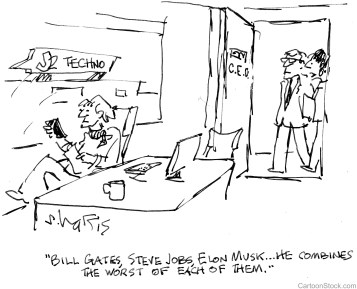
Mars/Space Exploration–Speaking on CNBC recently, Boeing CEO Dennis Mullenberg said, “I firmly believe the first person to set foot on Mars will get there on a Boeing rocket.”  There was no immediate comment from Elon Musk, whose SpaceX aims to be there first.  Whoever gets there first, maybe they can getaround on the Tesla that Elon intends to launch into Mars orbit next year.

President Trump announced that the Moon will be the next destination for U.S. astronauts.  Whether he intends to put the treasury’s money where his mouth is remains to be seen.

Physics.org reports that a new space suit design will have a “take me home” button for astronauts who get separated from their craft and disoriented on space walks. Danger, Will Robinson!

Artificial Intelligence–The IEEE released the second edition of its global treatise on ethics of autonomous and intelligent systems, today.  The report can be requested for download here.   The report was mentioned in Seeking Delphi™ podcast episode #17, featuring an interview with the initiative’s executive director, John C. Havens.  (YouTube video  link below).

Researchers from the University of Texas and the city of Austin are employing deep learning and big data to try to alleviate traffic jams.  They will present their findings at an IEEE conference on big data later this month.

Using A.I. to alleviate traffic? Good!  Using A.I. to create fake porn of anybody?  Er–not so much.  The Verge reports that just a few photographs and some open source A.I. software is all that it takes to graft anybody’s face onto any picture in a convincing manner. As they put it, seeing may no longer be believing.

Biotech–Researchers at the Salk Institute say they have been able to use CRISPR gene editing to reverse disease in mice.  They used a new procedure that does not actually cut the genes, but affects the expression–or epigenetics–of genes. It turns them on or off.

Researchers at the University of Rochester say they have successfully been able to insert new information directly in the the pre-motor cortex of the brains of two monkeys.   Anyone for trying this on politicians?

Material Science/Athletics–British sportswear brand inov-8 is partnering with the University of Manchester to introduce graphene-infused athletic footwear in 2018.  Laboratory tests have shown the shoes to be stretchier, stronger and more wear resistant than conventional rubber-soled sneakers.


Aubry de Grey

Coming Attractions–SENS foundation co-founder and chief science officer, Aubrey de Grey, will join me for the final Seeking Delphi™ podcast interview of 2017.  Look for it in soon.

A reminder that the Seeking Delphi™ podcast is available on iTunesPlayerFM, blubrry , and has a channel on YouTube.  You can also follow us on Facebook.