Unknown's avatar

#62, AI and the Future of Big Data, with Anne Boysen

“It is a capital mistake to theorize before one has data.”–Arthur Conan Doyle (Sherlock Holmes, A Study in Scarlett)

What is the fodder that feeds generative AI? Of course, there is massive software programming, but creating useful output requires data. Tons of data.

Anne Boysen has a masters in strategic foresight from the University of Houston and a graduate certificate in business analytics from Penn State University. Working in high tech for 6 years, she also works on foresight projects and uses data mining and analytics in her research. She is generally recognized as one of the top data experts in the professional futurist community. In this episode she provides an overview of the state of big data, and its importance in “feeding” today’s generative AI models.

You can subscribe to Seeking Delphi™ on Apple podcasts , PlayerFM, MyTuner,  Listen Notes, I Heart Radio, Podchaser and Blubrry Podcasts and many others. You can also follow us on twitter @Seeking_Delphi and Facebook.

Episode #62: AI and the Future of Big Data, with Anne Boysen

Anne’s Outline:

Trends

  1. Less public access and ethical considerations
  2. Better ability to combine different types of data
  3. Synthetic data
  4. More diluted data

Less public access and ethical considerations

If data is the new oil, the land grab is coming to an end. That time when anyone could grab a piece of the digital turf and put up their yard sign unsuspectingly is fading away. You still can, but you now know you may not own mining rights to the treasure beneath the soil of your homestead. 

This realization has made people more cautious, and considerations around IP and privacy make important data less accessible. Tech companies are also more protective of user generated content for liability reasons as well as their ability to capitalize on it. It wasn’t long ago that Elon Musk decided to put Twitter’s public tweets behind a paywall. I can not longer use Application Programming Interface (API) to access tweets to do sentiment analysis for my foresight research, which was vital to monitor trends I could not access any other way. Being able to take the pulse of public opinion was a phenomenal way for futurists to gain early insight into trends that otherwise would have stayed below the radar and the big headlines. This is monopolizing not only the data, but the AI models that feeds on this data.

So we see an inverse curve where there is more hope tied to advanced models, but less access for these models to feed themselves.

  • More ability to combine different types of data

Thankfully, the way we store, extract, transform and load our data is advancing along with the models, so we can get more “bang for our buck”. Different types of data used to be stored in siloes, so businesses had a hard time accessing even their own data for analysis. It too lots of time for cleaning and combining. But with the entrance of Data Lakes, we can now store different data formats in combinable ways, giving us better access to unstructured data and then query different formats together. 

  • Synthetic data

Another way to overcome data scarcity is through creating synthetic data. This is a way to make sure the core distributions remain intact but we add some “jitters” to camouflage certain aspects of the original data or create larger quantities.


There are different reasons why we may want to use synthetic data. First and foremost, we may want to remove personally identifiable information (PII). Even if we remove name, address and other identifiers from an original dataset, it doesn’t take many combined data points to reconstruct a person’s identity. The beauty of synthetic data is that we can remove all this and still keep the aggregate level distributions to see the main trends.

We can also use synthetic data to create more data. I did this recently in a deep learning model and it worked remarkably well. I was worried the synthetic data would overfit the model, but when I later got access to more original data of the same source, the performance stayed very close to it.

Of course this is a drawback with synthetic data. You don’t really get to discover the outliers, what we futurists call fringe or weak signals, so it’s just going to maximize the patterns we already have.

  • More diluted data

In this scenario we will still train large models even if data is less accessible. It may be tempting for some to train models using bad data or diluted derivative data produced by AI. This is like ingesting vomit. The “nutrients” have already been absorbed, meaning the variety and serendipity that existed in the original may be gone. This is very different from synthetic data, which keeps the properties intact. Many people mix this up.

A few words about Generative AI. Much Ado about not a whole lot at the moment. This has to do with an incongruence between the type of LLM GenAI is, the type of data it ingests, how it trains on it on the one and most real, “unsexy” business needs on the other.

Generative AI such as LLMs will probably help businesses in some hybrid form, but not as the “out-of-the-box” solution we see today.

Future of data conclusion

–Synthetic data will make up for reduced access. This will reduce important outliers and regress to the mean even more

–Peak access to random data is behind us

–Opt-in data will never be representative

Previous Podcast in this AI series

#59–Transitioning to AGI, Implications and Regulations with Jerome Glenn

#60–Investing in AI and AI in Investing with Jim Lee

#61–Keeping it Human, with Dennis Draeger

You can subscribe to Seeking Delphi™ on Apple podcasts , PlayerFM, MyTuner,  Listen Notes, I Heart Radio, Podchaser and Blubrry Podcasts and many others. You can also follow us on twitter @Seeking_Delphi and Facebook.

Unknown's avatar

#59–Transitioning to AGI, implications and regulations, with Jerome Glenn

“The true sign of intelligence is not knowledge but imagination.”-Albert Einstein

Regulating artificial intelligence is a bit like the weather. Everybody talks about it but nobody is doing anything about it. Well–there are efforts, there is trying. But as Yoda said, “there is no try, only do or do not.” The big problem, according to Jerome Glenn of the Millennium Project, is that those that are trying are metaphorically trying to keep up with a speeding racecar. He insists that they should be looking ahead to where it is going to be in three to five years, not trying to run alongside it right now. And where it is likely to be in three to five years is AGI–artificial general intelligence. AGI will be far more powerful than today’s narrow large language models. It will be able to research and learn new skills on its own, and even rewrite its code. In this episode, he explains The Millennium Project’s efforts to create urgency to regulate this coming, more powerful AGI.

You can subscribe to Seeking Delphi™ on Apple podcasts , PlayerFM, MyTuner,  Listen Notes, I Heart Radio, Podchaser and Blubrry Podcasts and many others. You can also follow us on twitter @Seeking_Delphi and Facebook.

Episode #59: Transitioning to AGI, Implications and Regulations, with Jerome Glenn

Millennium Project page: Transition form Artificial Narrow Intelligence to Artificial General Intelligence Governance

You can subscribe to Seeking Delphi™ on Apple podcasts , PlayerFM, MyTuner,  Listen Notes, I Heart Radio, Podchaser and Blubrry Podcasts and many others. You can also follow us on twitter @Seeking_Delphi and Facebook.

Unknown's avatar

#61–AI in Design: Keeping it Human, with Dennis Draeger

I’d rather see artificial intelligence than no intelligence.”–Michael Crichton

If you’re asking if artificial intelligence will work for us or against us, you may be asking the wrong question. The key, according to Dennis Draeger of Shaping Tomorrow, is to design AI to collaborate with us. In this episode, we discuss this and other related issues involving working with A.I.

You can subscribe to Seeking Delphi™ on Apple podcasts , PlayerFM, MyTuner,  Listen Notes, I Heart Radio, Podchaser and Blubrry Podcasts and many others. You can also follow us on twitter @Seeking_Delphi and Facebook.

Dennis Draeger

Episode #61–AI: Keeping it Human, with Dennis Draeger

You can subscribe to Seeking Delphi™ on Apple podcasts , PlayerFM, MyTuner,  Listen Notes, I Heart Radio, Podchaser and Blubrry Podcasts and over 2 dozen others. You can also follow us on twitter @Seeking_Delphi and Facebook.

Unknown's avatar

#60–Investing in AI and AI in Investing, with Jim Lee

“Anyone who thinks there is safety in numbers hasn’t looked at the stock market.”–Irene Peter

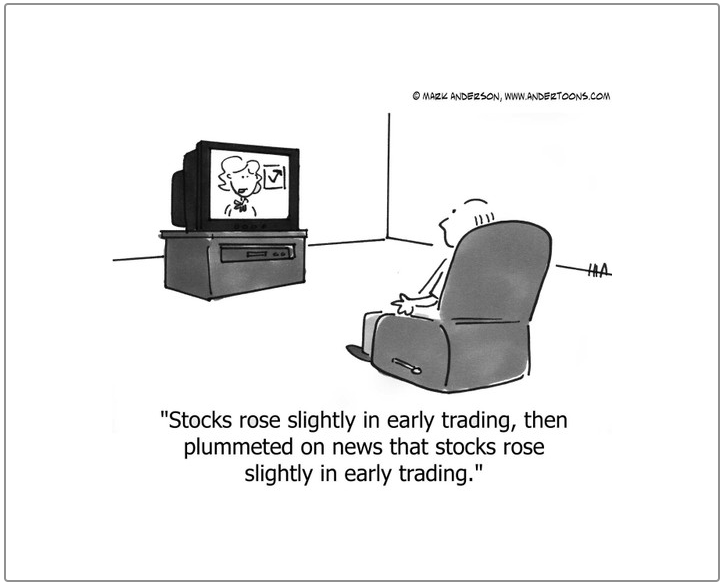
Nowhere do we hear more about artificial intelligence than in the world of investing. Nvidia and other major AI-related stocks are in the news every day.  Is AI over-bought and due for a correction?  Perhaps at the peak of Gartner Hype Cycle?  Beyond that, how much is AI being used to make investments, particularly by institutions?

One person I know who is well qualified to answer those questions is financial futurist Jim Lee.  He is a fellow member of The Association of Professional Futurists and alum of the University of Houston graduate foresight program.  He also happens to manage $100 million in assets for Stratfi (Strategic Foresight Investments, LLC)

You can subscribe to Seeking Delphi™ on Apple podcasts , PlayerFM, MyTuner,  Listen Notes, I Heart Radio, Podchaser and Blubrry Podcasts and many others.

Jim Lee

#60: Investing in AI and AI in Investing with Jim Lee

You can subscribe to Seeking Delphi™ on Apple podcasts , PlayerFM, MyTuner,  Listen Notes, I Heart Radio, Podchaser and Blubrry Podcasts and over 2 dozen others. You can also follow us on twitter @Seeking_Delphi and Facebook.
Unknown's avatar

Podcast #26 Redux: Future Driving Part 1, Interconnectivity and Self-Driving Cars with Alex Wyglinski

This podcast was originally recorded and aired in November of 2018.

 “The Promise of Autonomous Vehicles is Great.”–Dan Lipinski

“My opinion is that it’s a bridge too far to go to fully autonomous vehicles.”–Elon Musk

 ™

There’s no shortage of opinions on the viability of self-driving cars.  Be you a bull or a bear, though, there is no denying that there is a plethora of big players banking on them with R&D spending.

The issues surrounding the technology are too many and complex to deal with all of them in a single podcast.  And while things like collision avoidance, navigation, regulation, liability and public acceptance take up much of the debate over the technology, one key element has not so often been discussed.  That would be connectivity.  To assure safety and efficiency, to any degree greater than currently exists with manually driven cars, they need to be able to talk to each other.

In episode #26 of Seeking Delphi™ host Mark Sackler talks with Alex Wyglinski, president of IEEE’s Vehicle Technology Society and co-chair of the Community Development Working Group for IEEE Future Networks,  on how wireless connectivity might enable the technology.

All Seeking Delphi™  podcasts are available on iTunes, PlayerFM, and  YouTube.  You can also follow us on Facebook and on twitter @MarkSackler

Alex Wyglinski. Click for bio.

Episode #26 Redux: Future Driving Part 1, Interconnectivity and Self-Driving Cars

YouTube slide show of episode #26

A reminder that this and all Seeking Delphi ™podcasts are available on iTunes, PlayerFM, and  YouTube.  You can also follow us on Facebook and on twitter @MarkSackler

Unknown's avatar

Podcast #23(redux): A Conversation With Joanne Pransky, Robot Psychiatrist

This podcast originally ran in June of 2018. Seeking Delphi(tm)will return from hiatus with new material next month.

 “I can’t imagine a future without robots.”–Nolan Bushnell

 ™

In the popular HBO series Westworld, robotic hosts are depicted as being placed into a kind of psychiatric analysis by their creators.  Could this actually happen one day?  Joanne Pransky thinks it will.  She bills herself as the World’s First Robotic Psychiatrist® (yes, she even registered that title!).  She was dubbed the real life Susan Calvin by Isaac Asimov, after the robot psychologist he created in his classic 1950 short story anthology, I, Robot.  In this episode of the Seeking Delphi™ podcast, host Mark Sackler talks to her about this and other significant issues in the man/machine relationships to come.

All Seeking Delphi™  podcasts are available on iTunes, PlayerFM, and  YouTube.  You can also follow us on Facebook and on twitter @MarkSackler


Asimov with Pransky c.1989

Pransky and friend.


[


Podcast #23 A Conversation With Joanne Pransky, Robot Psychiatrist

YouTube slide show of podcast #23 with Joanne Pransky

Cover of a 1950’s edition of Asimov’s I, Robot

Sofia


Joanne Pransky bio


SXSW 2018 Minicast #2 Redux: Can We Create Consciousness In A Machine?

A reminder that this and all Seeking Delphi ™podcasts are available on iTunes, PlayerFM, and  YouTube.  You can also follow us on Facebook and on twitter @MarkSackler