Unknown's avatar

The Future This Week: August 28, 2017

 “Millions long for immortality who don’t know what to do with themselves on a rainy Sunday afternoon.”–Susan Ertz

Like it or not, anti-aging reasearch–the quest to slow, stop, or even reverse the aging process, has gone mainstream.  Several serious projects have been funded, animal and even human trials of age retarding pharmaceuticals have begun.  It isn’t just on the fringe, anymore.

Aging/rejuvenation therapy research– The Longevity Fund just completed its second round of capital raising, to the tune of $22 million US dollars.  It aims to invest in all manner of enterprises looking to boost human lifespan.  And it was founded by 23-year-old Laura Deming–she is certainly thinking ahead.

Electric Vehicles-The latest report on Tesla’s proposed new all-electric semi-truck, is that it will have a range of 200-300 miles.  They also assert that use of it’s auto-pilot feature could reduce crashes by up to 40%, though with the limited range it is not likely to make a significant dent (pardon the expression) in that rate any time soon.  The truck has been promised to be available as soon as next month.

Airline Travel–Qantas has set in motion a very tentative plan to launch the world’s longest regularly scheduled airline route.  They hope to begin service between Sydney and London by 2022.  There’s just one problem.  The key word is tentative–there is no current model airliner capable of a flying that far without refueling.  Qantas has thrown down the challenge to Boeing, Airbus, and others: develop one.

Flying Taxis–Speaking of aircraft manufacturer’s, Airbus intends to launch an urban, autonomous flying taxi service, and do it soon.  Worry no more about traffic jams on the ground–and let the FAA and other air transportation regulators worry about traffic jams in the sky.  Boeing says they will be flying by the end of this year.

Machine-brain Interface–The journal Science reports that engineers at Northeaster University have published a breakthrough study on miniaturized antennas.  The devices are 100-times smaller than any previously possible, and may be used to enable  implants in the brain and micro–medical devices, not to mention tiny consumer electronics.

Creative Artificial Intelligence–The world’s first music album,  composed and arranged by AI in collaboration with a human artist has been released by Amper Music.  The A.I. does almost everything except perform. That is left to popular internet artist Taryn Southern, backed by professional studio musicians. Southern wrote the lyrics and the vocal melody. See the YouTube video below.

Coming Attractions–The next Seeking Delphi™ podcast will feature an interview with Bloomlife CEO and co-founder Eric Dy.  The company’s health monitoring device that keeps tabs, simultaneously, on pregnant women and their unborn babies,  recently won an impressive innovation contest.

A reminder that the Seeking Delphi™ podcast is available on iTunesPlayerFM, blubrry , and has a channel on YouTube.  You can also follow us on Facebook.

Unknown's avatar

The Future This Week, August 21, 2017

“I wish I had never gotten involved with steroids.  It was wrong. It was stupid.”–Mark McGuire

I’ve been saying it since I first learned about CRISPR/Cas9 gene editing, two years ago.  It’s going to happen.  Maybe it has even already happened.   Performance enhancing drugs will be a thing of the past;  they will be replaced by performance enhancing genetics.

Genetic editing/human enhancement–In a wide ranging article in Next Big Future, the potential for athletic performance enhancement is analysed.  Is the super-human athlete coming?

Robotics/Artificial Intelligence–In an open letter to the United Nations, leading industrialists in the robotics and A.I. field urged an immediate global ban on autonomous weapons.  The group of 116 business leaders from 26 companies included Elon Musk, and Mustafa Suleyman, founder and Head of Applied AI at Google’s DeepMind.

DARPA announced a new program to develop better means of testing, adapting and predicting the behavior of autonomous machine learning systems.  One objective of the effort, called assured autonomy is to get beyond the predominant view of assurance systems, that such algorithms, once deployed (say, as in self-driving cars) will not learn and evolve beyond our control.  (A subject covered in Seeking Delphi™ podcast #14 on self-replicating machines).

–Robots don’t have to threaten your life or evolve out of control to be creepy.  Check out the dancing robots in the YouTube video below.

 Electric/Autonomous Vehicles–Remember the Volkswagon hippie microbus of the 1960’s?  The German automaker now plans a 21st century version of the vehicle;  it will be electric and have level 3 autonomy.    Debut is planned for 2022. Just add a peace sign, blast Jimi Hendrix on the sound system, and you are ready to go.


Wearable devices/material science–A university in China reports being able to create strong, flexible silk–that even conducts electricity, by feeding graphene to silk worms.   The resulting material could be used for a new class of wearable health sensors and create flexible robot bodies.

Coming Attractions–Speaking for wearables, the next Seeking Delphi™ podcast will feature an interview with Bloomlife CEO and co-founder Eric Dy.  The company’s health monitoring device that keeps tabs, simultaneously, on pregnant women and their unborn babies,  recently won an impressive innovation contest.

A reminder that the Seeking Delphi™ podcast is available on iTunesPlayerFM, blubrry and , and has a channel on YouTube.  You can also follow us on Facebook.
Unknown's avatar

The Future This Week: July 24, 2017

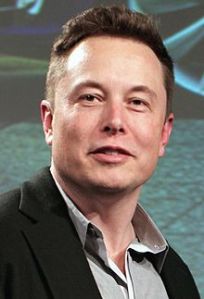
“When something is important enough, you do it even if the odds are not in your favor.”–Elon Musk

“I want to die on Mars; just not on impact.”

I see a major quandary going forward with this feature.  Elon Musk quotes may run out before Elon Musk stories run out.  And Elon Musk stories will run out, like, never.  Though this week, a couple of the stories could easily be categorized as anti-Musk.

HyperloopElon Musk says The Boring Company has received verbal government go ahead to tunnel from New York to Washington, DC.  The hyperloop that would run within it could make the run in 29 minutes, vs. the 3+ hours by Amtrak, and could begin construction in as little than 4-6 months, he asserts.

More than one observer thinks Musk is blowing smoke on the rapid startup envisioned for the NY-DC loop.  Government approval for large scale infrastructure projects don’t get done in months; they take years or even decades.

Artists conception of an underground Hyperloop station

Robotics–The L. A. Times reports that a critical shortage of migrant farm workers in California is being met by a move to robotic crop pickers.  It still has a way to go, but after years of crackdown on illegal immigration, there appears to be no other way to go.

Artificial Intelligence–China wants to be the world leader in A.I. by 2030, reports the N.Y. Times. They project a domestic industry worth $150 billion yearly.  That’s a lot of yuan.

It’s not just government project proposals that Elon Musk doesn’t understand.  According to Rodney Brooks, the founding director of MIT’s Computer Science and Artificial Intelligence Lab, Elon doesn’t know much about artificial intelligence, either.  Speaking in an interview with Tech Crunch, Brooks said that the one thing that Elon, and all of the other naysayers who warn of existential risks in A.I.,  have in common, is that none of them work in A.I.

Autonomous Vehicles–The Verge reports that buyers of autonomous vehicles could effectively face planned obsolescence as technical capabilities advance rapidly.  The last time I heard that phrase in regards to cars, it referred to the size and shape of tail fins, circa 1960.

1959 Chevy Impala tail fins. They got smaller in 1960 and again in 1961, and disappeared altogether in 1962. Planned obsolescence.


A reminder that the Seeking Delphi™ podcast is available on iTunesPlayerFM, blubrry and , and has a channel on YouTube.  You can also follow us on Facebook.

Unknown's avatar

The Future This Week: July 10, 2017

“Tesla is becoming a real car company.”–Elon Musk

The stock market has considered Tesla almost more than a car company for some time now.  If you are concerned about its valuation, take a look back at Seeking Delphi™ podcast #4 on Technology Investing for The Future, and the Gartner Hype Cycle.  Whatever happens–and whatever you believe–Tesla made the first major step towards becoming a real car company this past week.  The public will vote with their wallets.  Stay tuned.

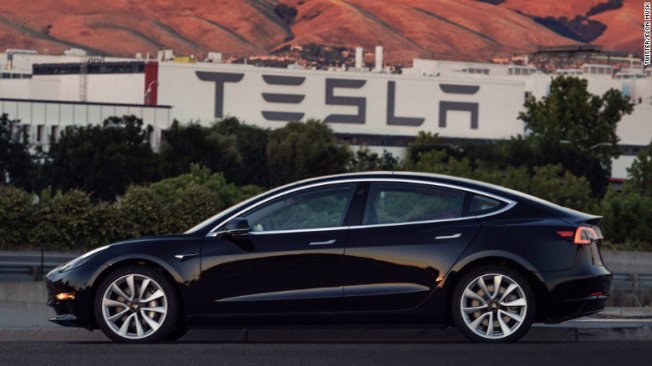
Electric Cars–Elon Musk tweeted photos of the new mass market Tesla Model 3.  Production has begun and is targeted to ramp up to 20,000 vehicles per month by the end of the year.

Tesla Model 3

Volvo announced plans to become the first premium auto make to abandon all-gasoline cars.  By 2019, all of its vehicles will be either hybrids or all-electric.

Artificial Intelligence–Wired Magazine reports that banks are increasingly resorting to artificial intelligence to detect currency transfers by terrorist organizations.  In the past, simple logic algorithms had been used to detect suspicious transactions.  But the increasing use of micro-transfers by ISIS and other groups has fueled the need for more powerful tools.

Virtual Reality–Swedish company Starbreeze is pursuing an ambitious plan to launch arcade-style virtual reality parlors.   Starbreeze is pushing ahead despite many previous retail VR disappointments by other companies.  The current venture, in partnership with Acer, will place these entertainment centers in IMAX theaters.

Global Economy–The IMF’s latest projections say China’s purchasing power parity GDP will surpass that of the US, Germany and Japan combined by 2022.  Their per capita purchasing power parity GDP will still be far down the list of countries, and GDP in total nominal dollars will still trail the U.S.

Robotics/Automation– An Australian firm Fastbricks Robotics has announced that it is being backed by Caterpillar to develop a home-building robot.  Its Hadrain X can lay down 1,000 bricks and hour a construct an entire home in two days.

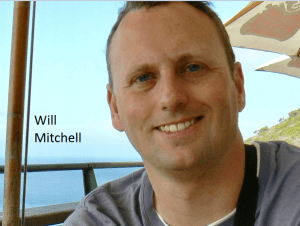
Science fiction author Will Mitchell discussed the prospects for deployment self-replicating machines, to aid in the exploitation of space, on Seeking Delphi™ podcast #14.

A reminder that the Seeking Delphi™ podcast is available on iTunesPlayerFM and , and has a channel on YouTube.  You can also follow us on Facebook.

Unknown's avatar

Podcast #14: Replicating Machines

“The real problem is not whether machines think, but whether men do.”–B.F. Skinner

Researchers at Carleton University in Ottawa, Canada have unveiled an ambitious project.  They are attempting to develop a 3D printer that can make copies of itself.  A replicating machine.  Why would anyone do something like that?  In a word: space.  It’s difficult, dangerous and expensive to launch mass of any kind into space.  If lunar and asteroid mining are ever to become a reality, let alone colonization of Mars, the ability to use materials in situ to construct many automata, from an initial compact package, would be paramount to affordability and perhaps even viability.  Is this possible?  No less a personage than  John von Neumann said that it is–and supposedly proved it mathematically.  What are the challenges, can we control them if we make them, and what happens if we can’t control them?  This is the subject of William Mitchell’s 2013 science fiction novel, Creations.  And he is  my guest of Seeking Delphi™ podcast #14: Replicating Machines.

Links to relevant stories appear after the audio file and embedded YouTube video below.  A reminder that Seeking Delphi is available on iTunes, PlayerFM, and has a channel on YouTube.  You can also follow us on Facebook.



Podcast #14: Replicating Machines


You Tube Slide Show of Episode #11


NASA Conference Publication #2255: Advanced Automation for Space Missions

News items:

Japan space agency projects manned lunar landing in 2030

European Union backs BADGER tunneling machine

Tesla begins Model 3 production

Dubai says robot police will not replace human officers.


Subscribe to Seeking Delphi™ on iTunes 

Subscribe to Seeking Delphi™ on PlayerFM

Subscribe on YouTube

Follow Seeking Delphi™ on Facebook @SeekingDelphi

Follow me on twitter @MarkSackler


Unknown's avatar

The Future This Week: June 26, 2017

“We wanted flying cars.  Instead we got 140 characters.”–Peter Thiel

“Flying is learning how to throw yourself at the ground and miss.”–Douglas Adams


The PAL-V flying car prototype

It appears that Peter Thiel might get his flying car by this time next year.  Oh, there’s just one problem though.  If you want one, you’ll have to be as rich as Peter Thiel, as they won’t exactly be cheap.  In fact  you can buy a single engine Cessna for much less.  In any case, let’s hope the drivers miss when they throw themselves at the ground.

No, they won’t look like this

Flying Cars–Dutch firm PAL-V has announced it tends to bring its 3-wheeled, 2-passenger gyro-copter to market by sometime next year. The vehicle is certified for both the air and the road, making it a true flying car.  You’d better start saving your pennies, though, as the first model will list for about $600,000.   But don’t worry, the firm will follow the launch up with a second model–a sport vehicle–targeted to sell for a mere $350,000.

Aerospace–The European Space Agency,  while still three years away from the first test flights for its planned space plane, says it hopes to privatize the vehicle by 2025.  They foresee Space Rideras it is called, offering commercial launches into low earth orbit for about $4,200.00 per pound.

Neural Networks/Quantum Computing–The US Air Force and IBM are collaborating on a venture to build the world’s first supercomputer to be based on human brain architecture.  The device, employing IBM’s True North neurosynaptic technology, will have the equivalent of five million neurons and 16 billion synapses.  In case you’re worried about being replaced, the human brain has about 100 billion neurons and one quadrillion ( 1015 ) synapses.

The University of Southern California (USC) will head a consortium of universities and private contractors to develop a quantum computer that will be 10,000 times faster than classical computers.  The Quantum Annelear will feature 100 qubit architecture and is targeted for operation by 2023.

Meanwhile, Google remains out front in quantum computing race.  It currently is testing a 20-qubit device, and hopes to have a 49-qubit processor operational before the end of 2017.

Design Innovation–A student from the University of Nevada, Las Vegas has won the Radical Innovation Award for 2017, for his concept of a Hyperloop Hotel.  The idea would  employ modular container suites would detach and serve as luxury hotel rooms at each city stop.

All that’s needed is…a hyperloop.


A reminder that the Seeking Delphi™ podcast is available on iTunesPlayerFM and , and has a channel on YouTube.  You can also follow us on Facebook.