“All cities are mad, but the madness is gallant. All cities are beautiful, but the beauty is grim.”–Christopher Morley
A Jetsons future?
Where will you live in 2050? What will the cities of the future look like? Tomorrowland? The Jetsons? Waterworld? Maybe they will look pretty much the same, but feel very much different. To sort out some of the possible scenarios, I sought out an expert on the urban landscape of the future. Cindy Frewen, Ph. D., is an architect and an adjunct professor in the University of Houston’s graduate foresight program. She designs near-term urban futures, and constructs scenarios for possible longer term futures.
Links to relevant stories appear after the audio file and embedded YouTube video below. A reminder that Seeking Delphi is available on iTunesand PlayerFM, and has a channel on YouTube. You can also follow us onFacebook.
Or, as the saying goes, technology is great when it works. Will artificial intelligence make it work smarter? Faster? More reliably? Or might it just give us more headaches? We’ll find out soon enough, as we careen towards an AI-dominated future.
Google CEO Sundar Pichai delivered a mostly A.I. oriented keynote address at the company’s annual I/O event. This included the revelation that it has developed an AI that is better at creating new AI systems than Google’s own software engineers. Forbes article on the talk here. Futurism.com article, including embedded YouTube video of the entire 2 hours speech, here.
Digital Images–A joint team of Chinese and Australian researchers has developed what is being called the world’s thinnest hologram. It holds out the possibility of 3D images on tablet and smartphone screens.
Socioeconomic—Fast Company reports that it’s not just millennials struggling with college debt. Increasingly, their baby boomer parents and grandparents are also saddled with crushing payments in support of their progeny. The long-term effect on the economy is unclear; but it can’t be good for consumer spending or the real estate market.
Renewable Energy–Swiss voters have struck a blow for clean energy. They overwhelmingly backed a binding referendum to provide billions of dollars in subsidies for renewable energy, while banning the construction of new nuclear plants.
Cindy Frewen
Urban Futures–Architect and urban futurist Cindy Frewen joins me in the next Seeking Delphi™ podcast for a discussion of the urban landscape of the future. Look for it soon.
A reminder that the Seeking Delphi™ podcast is available on iTunes, PlayerFMand , and has a channel on YouTube. You can also follow us on Facebook.
“‘Far out in the uncharted backwaters of the unfashionable end of the western spiral arm of the Galaxy lies a small unregarded yellow sun.”–Douglas Adams
If Douglas Adams were still alive today, he might be pleased to find that little yellow sun getting more and more regard every year. Solar industry jobs grew at a rate 12 times faster than that of overall economy in 2016. Solar panel installer was the single fastest growing job description in the U.S. between 2012 and 2016. More respect for the sun, please.
Clean/ renewable energy– According to a report in Business Insider, findings by the Global Alliance of Solar Energy Research Institutes suggest that improved solar cell efficiency and cheaper storage batteries will allow solar to surpass traditional fossil fuel production in cost-effectiveness by 2020. Further, the report states that the entire electrical grid, as it now stands, may become obsolete by 2030 due to widespread localized production.
Flying Cars–Toyota has entered the race to build flying cars. They are backing a project called Skydrive, which is developing a vehicle that can fly at 100kph (62mph) at a height of 33 feet. They are hoping to commercialize it in time for the 2020 Tokyo Olympics.
Robotics–If your worried about losing your job to a robot, consider the problem Japan has. Their shrinking workforce is forcing firms to replace workers with robots. So reports Daily Mail.com.
“I feel like an email cross-dresser – I use a Microsoft product on my Apple product to access my Google product.”–Brad Feld
Um, OK. I’m guilty as charged, too, Brad Feld. In the 1960’s mixed marriages caused controversy. In the 2010’s it’s mixed technology. But make no mistake about it, whatever you use, the cloud is about to get a lot bigger–and higher. With the SpaceX announcement of its initiative to launch thousands of internet beaming micro satellites beginning in 2019, those unread emails are literally going to be orbiting the earth. That’s just the beginning, in The Future This Week.
Made in Space, Inc., the company behind the 3D printer currently on the International Space Station, unveiled a video of its latest out-of-this world manufacturing venture. It’s a heavier duty 3D printer, called Archinaut, that will have the capability to build entire satellites and even space craft while in orbit. (see below)
Transhumanism–A recent DARPA press release outlines the expansion of its plans to “hack” the human brain. The idea is to enable the downloading of training directly into the mind.
Scientist at the Univeristy of Munich have developed a technology to transmit holographic images over the internet. A paper describing how the radiation from a wi-fi transmitter can be used to transmit 3-dimensional images of surrounding environment is available here.
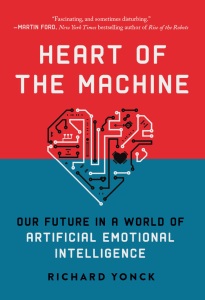
Artificial Intelligence–In case you missed it, author and futurist Richard Yonck discussed his groundbreaking book, Heart of The Machine, with me on the latest Seeking Delphi™ podcast. (YouTube slide show below).
A reminder that the Seeking Delphi™ podcast is available on iTunes, and has a channel on YouTube. You can also follow us on Facebook.
“Your intellect may be confused, but your emotions will never lie to you.”–Roger Ebert
In episode #11, futurist Ian Pearson spoke to his assertion that artificial intelligence will create jobs. One of the main reasons for this, he believes, will be the need to provide an emotional human interface between A.I. and its intended beneficiaries, be they patients, consumers, or business clients. But the field of affective computing is rapidly developing artificial intelligence that can read and respond to human emotion. They are systems with emotional intelligence. In episode #12, I talk with author Richard Yonck. His new book, Heart of the Machine, provides a comprehensive overview of the current state of development in emotional A.I., while providing cogent scenarios projecting where it might lead us in the future.
Links to relevant stories appear after the audio file and embedded YouTube video below. A reminder that Seeking Delphi is available on iTunes andPlayerFM, and has a channel on YouTube. You can also follow us onFacebook.
“If the government regulates against use of drones or stem cells or artificial intelligence, all that means is that the work and the research leave the borders of that country and go someplace else.”–Peter Diamandis
Automation and artificial intelligence continue to be hot topics–and getting hotter. I’ve heard more than one call to limit or ban them in the last week. That won’t work, for the very reason Peter Diamandis states in the quote above. There are over 200 countries in the world; there is no global governance that can impose the same restrictions on all of them. We have no choice but to proceed. Proceed with caution, of course. Proceed with our eyes open and with a close monitoring of the consequences. But proceed we must.
Google’s director of research, Peter Norvig, said that he does not buy the doomsday scenarios of rampant, runaway artificial intelligence destroying mankind. Speaking in an interview with CNBC, though, he did warn that massive workplace disruption is coming. “The pace may be so rapid as to create disruptions. We need to find ways to mitigate that,” he said.





 Digital Images–A joint team of Chinese and Australian researchers has developed what is being called
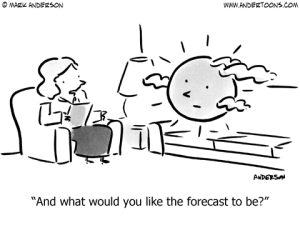
 Um, OK. I’m guilty as charged, too, Brad Feld. In the 1960’s mixed marriages caused controversy. In the 2010’s it’s mixed technology. But make no mistake about it, whatever you use, the cloud is about to get a lot bigger–and higher. With the SpaceX announcement of its initiative to launch thousands of internet beaming micro satellites beginning in 2019, those unread emails are literally going to be orbiting the earth. That’s just the beginning, in The Future This Week.
 In episode #11, futurist Ian Pearson spoke to his assertion that artificial intelligence will create jobs. One of the main reasons for this, he believes, will be the need to provide an emotional human interface between A.I. and its intended beneficiaries, be they patients, consumers, or business clients. But the field of affective computing is rapidly developing artificial intelligence that can read and respond to human emotion. They are systems with emotional intelligence. In episode #12, I talk with author Richard Yonck. His new book, Heart of the Machine, provides a comprehensive overview of the current state of development in emotional A.I., while providing cogent scenarios projecting where it might lead us in the future.


 Seeking Delphi™