Unknown's avatar

The Future This Week: July 24, 2017

“When something is important enough, you do it even if the odds are not in your favor.”–Elon Musk
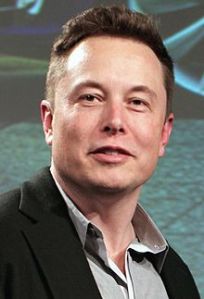
“I want to die on Mars; just not on impact.”

I see a major quandary going forward with this feature.  Elon Musk quotes may run out before Elon Musk stories run out.  And Elon Musk stories will run out, like, never.  Though this week, a couple of the stories could easily be categorized as anti-Musk.

HyperloopElon Musk says The Boring Company has received verbal government go ahead to tunnel from New York to Washington, DC.  The hyperloop that would run within it could make the run in 29 minutes, vs. the 3+ hours by Amtrak, and could begin construction in as little than 4-6 months, he asserts.

More than one observer thinks Musk is blowing smoke on the rapid startup envisioned for the NY-DC loop.  Government approval for large scale infrastructure projects don’t get done in months; they take years or even decades.

Artists conception of an underground Hyperloop station

Robotics–The L. A. Times reports that a critical shortage of migrant farm workers in California is being met by a move to robotic crop pickers.  It still has a way to go, but after years of crackdown on illegal immigration, there appears to be no other way to go.

Artificial Intelligence–China wants to be the world leader in A.I. by 2030, reports the N.Y. Times. They project a domestic industry worth $150 billion yearly.  That’s a lot of yuan.

It’s not just government project proposals that Elon Musk doesn’t understand.  According to Rodney Brooks, the founding director of MIT’s Computer Science and Artificial Intelligence Lab, Elon doesn’t know much about artificial intelligence, either.  Speaking in an interview with Tech Crunch, Brooks said that the one thing that Elon, and all of the other naysayers who warn of existential risks in A.I.,  have in common, is that none of them work in A.I.

Autonomous Vehicles–The Verge reports that buyers of autonomous vehicles could effectively face planned obsolescence as technical capabilities advance rapidly.  The last time I heard that phrase in regards to cars, it referred to the size and shape of tail fins, circa 1960.

1959 Chevy Impala tail fins. They got smaller in 1960 and again in 1961, and disappeared altogether in 1962. Planned obsolescence.


A reminder that the Seeking Delphi™ podcast is available on iTunesPlayerFM, blubrry and , and has a channel on YouTube.  You can also follow us on Facebook.

Unknown's avatar

The Future This Week: June 26, 2017

“We wanted flying cars.  Instead we got 140 characters.”–Peter Thiel

“Flying is learning how to throw yourself at the ground and miss.”–Douglas Adams


The PAL-V flying car prototype

It appears that Peter Thiel might get his flying car by this time next year.  Oh, there’s just one problem though.  If you want one, you’ll have to be as rich as Peter Thiel, as they won’t exactly be cheap.  In fact  you can buy a single engine Cessna for much less.  In any case, let’s hope the drivers miss when they throw themselves at the ground.

No, they won’t look like this

Flying Cars–Dutch firm PAL-V has announced it tends to bring its 3-wheeled, 2-passenger gyro-copter to market by sometime next year. The vehicle is certified for both the air and the road, making it a true flying car.  You’d better start saving your pennies, though, as the first model will list for about $600,000.   But don’t worry, the firm will follow the launch up with a second model–a sport vehicle–targeted to sell for a mere $350,000.

Aerospace–The European Space Agency,  while still three years away from the first test flights for its planned space plane, says it hopes to privatize the vehicle by 2025.  They foresee Space Rideras it is called, offering commercial launches into low earth orbit for about $4,200.00 per pound.

Neural Networks/Quantum Computing–The US Air Force and IBM are collaborating on a venture to build the world’s first supercomputer to be based on human brain architecture.  The device, employing IBM’s True North neurosynaptic technology, will have the equivalent of five million neurons and 16 billion synapses.  In case you’re worried about being replaced, the human brain has about 100 billion neurons and one quadrillion ( 1015 ) synapses.

The University of Southern California (USC) will head a consortium of universities and private contractors to develop a quantum computer that will be 10,000 times faster than classical computers.  The Quantum Annelear will feature 100 qubit architecture and is targeted for operation by 2023.

Meanwhile, Google remains out front in quantum computing race.  It currently is testing a 20-qubit device, and hopes to have a 49-qubit processor operational before the end of 2017.

Design Innovation–A student from the University of Nevada, Las Vegas has won the Radical Innovation Award for 2017, for his concept of a Hyperloop Hotel.  The idea would  employ modular container suites would detach and serve as luxury hotel rooms at each city stop.

All that’s needed is…a hyperloop.


A reminder that the Seeking Delphi™ podcast is available on iTunesPlayerFM and , and has a channel on YouTube.  You can also follow us on Facebook.