Unknown's avatar

#58 redux–Future-Fluent with Dmitriy Zakharov

“To have another language is to possess a second soul.”–Charlemagne

“To have another language is to possess a second soul.”–Charlemagne

I wouldn’t call future fluency a a new jargon. I would call it a unique and practical way of looking at foresight–of integrating it into the culture of an organization.

Dmitriy Zakharov is a fellow alumnus of the University of Houston’s graduate foresight program. His recent volume Future-Fluent equates foresight with language. He breaks down it’s component parts into syntax and semantics and discusses how to implement this point of view of the future into your life and your organization.

In episode #58 of Seeking Delphi™ Dmitriy tells us of his journey to write the book, and explains what it’s all about.

You can subscribe to Seeking Delphi™ on Apple podcasts , PlayerFM, MyTuner,  Listen Notes, and YouTube.    You can also follow us on twitter @Seeking_Delphi and Facebook. Now also on I Heart Radio, Podchaser and Blubrry Podcasts

    Dmitry                                                                      future-fluent             

          Dmitriy Zakharov

#58: Future-Fluent

You can subscribe to Seeking Delphi™ on Apple podcasts , PlayerFM, MyTuner,  Listen Notes, and YouTube.    You can also follow us on twitter @Seeking_Delphi and Facebook. Now also on I Heart Radio, Podchaser and Blubrry Podcasts

Unknown's avatar

#62, AI and the Future of Big Data, with Anne Boysen

“It is a capital mistake to theorize before one has data.”–Arthur Conan Doyle (Sherlock Holmes, A Study in Scarlett)

What is the fodder that feeds generative AI? Of course, there is massive software programming, but creating useful output requires data. Tons of data.

Anne Boysen has a masters in strategic foresight from the University of Houston and a graduate certificate in business analytics from Penn State University. Working in high tech for 6 years, she also works on foresight projects and uses data mining and analytics in her research. She is generally recognized as one of the top data experts in the professional futurist community. In this episode she provides an overview of the state of big data, and its importance in “feeding” today’s generative AI models.

You can subscribe to Seeking Delphi™ on Apple podcasts , PlayerFM, MyTuner,  Listen Notes, I Heart Radio, Podchaser and Blubrry Podcasts and many others. You can also follow us on twitter @Seeking_Delphi and Facebook.

Episode #62: AI and the Future of Big Data, with Anne Boysen

Anne’s Outline:

Trends

  1. Less public access and ethical considerations
  2. Better ability to combine different types of data
  3. Synthetic data
  4. More diluted data

Less public access and ethical considerations

If data is the new oil, the land grab is coming to an end. That time when anyone could grab a piece of the digital turf and put up their yard sign unsuspectingly is fading away. You still can, but you now know you may not own mining rights to the treasure beneath the soil of your homestead. 

This realization has made people more cautious, and considerations around IP and privacy make important data less accessible. Tech companies are also more protective of user generated content for liability reasons as well as their ability to capitalize on it. It wasn’t long ago that Elon Musk decided to put Twitter’s public tweets behind a paywall. I can not longer use Application Programming Interface (API) to access tweets to do sentiment analysis for my foresight research, which was vital to monitor trends I could not access any other way. Being able to take the pulse of public opinion was a phenomenal way for futurists to gain early insight into trends that otherwise would have stayed below the radar and the big headlines. This is monopolizing not only the data, but the AI models that feeds on this data.

So we see an inverse curve where there is more hope tied to advanced models, but less access for these models to feed themselves.

  • More ability to combine different types of data

Thankfully, the way we store, extract, transform and load our data is advancing along with the models, so we can get more “bang for our buck”. Different types of data used to be stored in siloes, so businesses had a hard time accessing even their own data for analysis. It too lots of time for cleaning and combining. But with the entrance of Data Lakes, we can now store different data formats in combinable ways, giving us better access to unstructured data and then query different formats together. 

  • Synthetic data

Another way to overcome data scarcity is through creating synthetic data. This is a way to make sure the core distributions remain intact but we add some “jitters” to camouflage certain aspects of the original data or create larger quantities.


There are different reasons why we may want to use synthetic data. First and foremost, we may want to remove personally identifiable information (PII). Even if we remove name, address and other identifiers from an original dataset, it doesn’t take many combined data points to reconstruct a person’s identity. The beauty of synthetic data is that we can remove all this and still keep the aggregate level distributions to see the main trends.

We can also use synthetic data to create more data. I did this recently in a deep learning model and it worked remarkably well. I was worried the synthetic data would overfit the model, but when I later got access to more original data of the same source, the performance stayed very close to it.

Of course this is a drawback with synthetic data. You don’t really get to discover the outliers, what we futurists call fringe or weak signals, so it’s just going to maximize the patterns we already have.

  • More diluted data

In this scenario we will still train large models even if data is less accessible. It may be tempting for some to train models using bad data or diluted derivative data produced by AI. This is like ingesting vomit. The “nutrients” have already been absorbed, meaning the variety and serendipity that existed in the original may be gone. This is very different from synthetic data, which keeps the properties intact. Many people mix this up.

A few words about Generative AI. Much Ado about not a whole lot at the moment. This has to do with an incongruence between the type of LLM GenAI is, the type of data it ingests, how it trains on it on the one and most real, “unsexy” business needs on the other.

Generative AI such as LLMs will probably help businesses in some hybrid form, but not as the “out-of-the-box” solution we see today.

Future of data conclusion

–Synthetic data will make up for reduced access. This will reduce important outliers and regress to the mean even more

–Peak access to random data is behind us

–Opt-in data will never be representative

Previous Podcast in this AI series

#59–Transitioning to AGI, Implications and Regulations with Jerome Glenn

#60–Investing in AI and AI in Investing with Jim Lee

#61–Keeping it Human, with Dennis Draeger

You can subscribe to Seeking Delphi™ on Apple podcasts , PlayerFM, MyTuner,  Listen Notes, I Heart Radio, Podchaser and Blubrry Podcasts and many others. You can also follow us on twitter @Seeking_Delphi and Facebook.

Unknown's avatar

#58–Future-Fluent with Dmitriy Zakharov

“To have another language is to possess a second soul.”–Charlemagne

“To have another language is to possess a second soul.”–Charlemagne

I wouldn’t call future fluency a a new jargon. I would call it a unique and practical way of looking at foresight–of integrating it into the culture of an organization.

Dmitriy Zakharov is a fellow alumnus of the University of Houston’s graduate foresight program. His recent volume Future-Fluent equates foresight with language. He breaks down it’s component parts into syntax and semantics and discusses how to implement this point of view of the future into your life and your organization.

In episode #58 of Seeking Delphi™ Dmitriy tells us of his journey to write the book, and explains what it’s all about.

You can subscribe to Seeking Delphi™ on Apple podcasts , PlayerFM, MyTuner,  Listen Notes, and YouTube.    You can also follow us on twitter @Seeking_Delphi and Facebook. Now also on I Heart Radio, Podchaser and Blubrry Podcasts


    Dmitry                                                                      future-fluent             

          Dmitriy Zakharov

#58: Future-Fluent

You can subscribe to Seeking Delphi™ on Apple podcasts , PlayerFM, MyTuner,  Listen Notes, and YouTube.    You can also follow us on twitter @Seeking_Delphi and Facebook. Now also on I Heart Radio, Podchaser and Blubrry Podcasts

Unknown's avatar

Podcast #10: Lights! Action! Camera! The Future of Cinema and Digital Entertainment

“Movies are a fad. Audiences really want to see live actors on a stage.”–Charlie Chaplin

How wrong could Charlie Chaplin have been, over 100 years ago, when he made that statement?  He was in the nascent stages of a film career that would make him one of the most iconic figures in the history of cinematic arts.  Yet, even in the middle of a major communication revolution, he couldn’t see the forest for the trees.   Today, technology changes that used to take decades, take barely a few months.  Can we be any better than Charlie Chaplin at foreseeing which of today’s new media technologies will be the long term winners?  For that matter, will anything last long enough to be considered “long term?”  In Episode #10 of Seeking Delphi, I talk to author and filmmaker Steven D. Katz.  He was writing about technologies like CGI and digital media for Millimeter Magazine before most others in the industry were even noticing them.  Steve acknowledges that the traditional large-screen movie house will have to continue to up its game to compete with home technologies and distribution options that keep on getting better.

Links to relevant stories appear after the audio file and embedded YouTube video below.  A reminder that Seeking Delphi is available on iTunes, and has a channel on YouTube.  You can also follow us on Facebook.

Film Directing Shot By Shot
by Steven D. Katz
One of the best-selling film making textbooks of all time.

Episode #10: The Future of Cinema and Digital Entertainment


(YouTube slide show)


Books by Steven D. Katz

Hyperloop One finished its test track, and narrowed down the candidates for the first two systems to be built in the U.S.

Boeing and Jet Blue have backed a venture aiming to deliver hybrid electric commuter jets by the early 2020s

The U.S Air Force is developing hyper-sonic attack drones for the 2040’s.

No, I didn’t make this up.  A Chinese engineer married his robot wife!

Subscribe to Seeking Delphi on iTunes 

Subscribe on YouTube

Follow Seeking Delphi on Facebook @SeekingDelphi

Follow me on twitter @MarkSackler

Unknown's avatar

Podcast #9, Ethics and Emerging Technologies

All attempts to adapt our ethical code to our situation in the technological age have failed.–Max Born 

When thinking about the future of technology, many envision one extreme or the other.  Apocalyptic collapse, or Utopian delight.  There is a broad in between, however, filled with ethical as well as existential conundrums.  In this episode of Seeking Delphi, I talk with James J. Hughes, director of The Institute for Ethics and Emerging Technologies about a wide range of issues.  These include not just the ethics of if, how, and when to proceed with certain technologies, but the ethics of public policy in dealing with the potentially disruptive social and economic changes they trigger.  The future is not black and white–in case you hadn’t noticed–but infinite shades of gray. It’s also clouded by the rise of the right and the Trump administration.

Links to relevant stories appear after the audio file and embedded YouTube video below.  A reminder that Seeking Delphi is available on iTunes, and has a channel on YouTube.  You can also follow us on Facebook.


Episode #9: Ethics and Emerging Technology


(YouTube slideshow)


James Hughes bio

Harvard scientists to launch ambitious geoengineering experiment

World Future Society 2017  conference in Edinburgh, Scotland, Oct 12-14 (details soon).

Elon Musk launches venture to link brains directly to computers

Subscribe to Seeking Delphi on iTunes 

Subscribe on YouTube

Follow Seeking Delphi on Facebook @SeekingDelphi

Follow me on twitter @MarkSackler

Unknown's avatar

Podcast #7, The 3D Printing Explosion: Cars, Homes, Even Human Bodies!

“Whatever good things we build end up building us.”– Jim Rohn

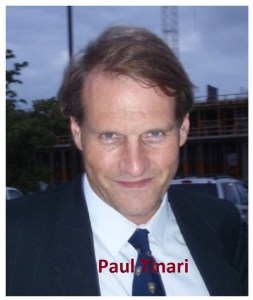
I can’t say for sure if the quote above was intended literally, but it is now becoming literally true.  The applications of additive manufacturing–better known as 3D printing–are expanding to include food, body parts, cars, and even entire buildings.  In this episode of the Seeking Delphi™  podcast, I talk with one of the gurus of this technology, Dr. Paul Tinari, of JOOM3D.com .  He’s working on a project the scope of which would have been unimaginable just a few years ago.

Links to relevant stories appear after the audio file and embedded YouTube video below.  A reminder that Seeking Delphi is available on iTunes, and has a channel on YouTube.  You can also follow us on Facebook.


Episode #7, Additive Manufacturing: We Are What We Print 21:07


(YouTube slideshow)


Paul Tinari Bio

Russian space agency recruiting cosmonauts for 2031 lunar landing mission

Ray Kurzweil revises his singularity forecast to 2029

The U.S. military seeks to “understand” its autonomous machines

Subscribe to Seeking Delphi on iTunes 

Subscribe on YouTube

Follow Seeking Delphi on Facebook @SeekingDelphi

Follow me on twitter @MarkSackler