

“The real problem is not whether machines think, but whether men do.”–B.F. Skinner

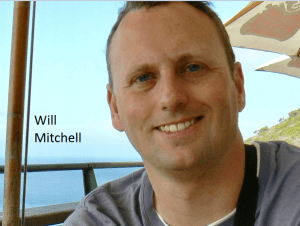
Researchers at Carleton University in Ottawa, Canada have unveiled an ambitious project. They are attempting to develop a 3D printer that can make copies of itself. A replicating machine. Why would anyone do something like that? In a word: space. It’s difficult, dangerous and expensive to launch mass of any kind into space. If lunar and asteroid mining are ever to become a reality, let alone colonization of Mars, the ability to use materials in situ to construct many automata, from an initial compact package, would be paramount to affordability and perhaps even viability. Is this possible? No less a personage than John von Neumann said that it is–and supposedly proved it mathematically. What are the challenges, can we control them if we make them, and what happens if we can’t control them? This is the subject of William Mitchell’s 2013 science fiction novel, Creations. And he is my guest of Seeking Delphi™ podcast #14: Replicating Machines.
Links to relevant stories appear after the audio file and embedded YouTube video below. A reminder that Seeking Delphi is available on iTunes, PlayerFM, and has a channel on YouTube. You can also follow us on Facebook.
Podcast #14: Replicating Machines
You Tube Slide Show of Episode #11

NASA Conference Publication #2255: Advanced Automation for Space Missions
News items:
Japan space agency projects manned lunar landing in 2030
European Union backs BADGER tunneling machine
Tesla begins Model 3 production
Dubai says robot police will not replace human officers.
Subscribe to Seeking Delphi™ on iTunes
Subscribe to Seeking Delphi™ on PlayerFM
Subscribe on YouTube
Follow Seeking Delphi™ on Facebook @SeekingDelphi
Follow me on twitter @MarkSackler
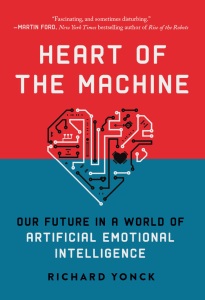
 In episode #11, futurist Ian Pearson spoke to his assertion that artificial intelligence will create jobs. One of the main reasons for this, he believes, will be the need to provide an emotional human interface between A.I. and its intended beneficiaries, be they patients, consumers, or business clients. But the field of affective computing is rapidly developing artificial intelligence that can read and respond to human emotion. They are systems with emotional intelligence. In episode #12, I talk with author Richard Yonck. His new book, Heart of the Machine, provides a comprehensive overview of the current state of development in emotional A.I., while providing cogent scenarios projecting where it might lead us in the future.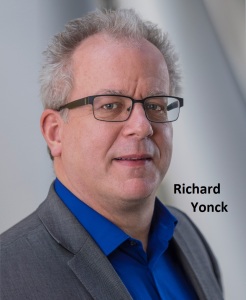
 One of the hottest topics in foresight today is artificial intelligence. And while many of the most visible forward thinkers have been stressing over potential existential threats to all of humanity, there is a more mundane threat to all of us. That would be our world of work. As automation on the assembly line replaces more and more unskilled labor jobs, there lies the looming threat of artificial intelligence taking on skilled, professional jobs. Will A.I. kill your job? Create you a new one? Both? Neither? While the media is full of pessimism on this account, at least one prominent futurist is cautiously optimistic. Author, speaker and blogger Ian Pearson, of Futurizon thinks that, at least in the short term, A.I. will create more jobs than it kills. I talk to him about these views, as well as the longer range existential effects of A.I., in this week’s Seeking Delphi Podcast.



 Seeking Delphi™