

“Forethought we may have, undoubtedly, but not foresight.”–Napoleon Bonaparte

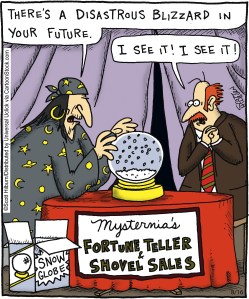
Is it foresight or forethought that is required to navigate forward?
http://www.cartoonstock.com
Foresight? Forethought? What’s the difference? Maybe with better forethought, Napoleon would have had the foresight to avoid Waterloo. Maybe.
But really, the two words are practically synonymous, so we are more in the province of semantics. Just take a look at how Dictionary.com defines them. Its first given definition of foresight is care or provision for the future. The first definition for forethought is thoughtful provision for the future. Practically the same thing, no? But for the purposes of this blog, I’ll come down on the side of none of the above.
Slightly paraphrased, the 4th definition of foresight given by Dictionary.com is knowledge or insight gained by looking forward. This is foresight as I see it, and for that matter, I believe it is how the true professional futurist sees it. We cannot really predict the future, but we can be better prepared for it by adroit use of foresight. This type of insight is the aim of Seeking Delphi.™
Moving forward then (what other direction is there?), posts herein will fall into two broad categories. Posts in the How to Think About the Future category will discuss the theory and practice of forethought–they will cover the basics for the layman. They will also delve into some of my heavier philosophical and scientific views on how we ought to think about the future. Posts in the Seeking Delphi category will delve into the future of various domains of human endeavor, including, when possible, interviews with experts in the fields covered. There will be obvious subjects, such as biotechnology, information technology, education, politics and the like; there will also be less obvious explorations into narrower areas. A podcast is targeted for a July launch.
Up next will be a reprise of two posts from my other blog The Millennium Conjectures,™ which provide my rather physics imbued philosophy of the future.
 The Ol’ Perfessor knew what he was talking about. Well, maybe he didn’t, but the advice is sage nonetheless. It is notoriously difficult to predict anything in the future with consistent accuracy. So why in the world would anyone want to become a futurist? Why bother? Well, to be blunt, that is exactly why! Ignoring the opportunities and dangers of the future is what I like to call The Ostrich Syndrome. Go ahead, hide your head in the sand. The future is not going to go away; it will get here. And if we can’t predict it, there are certainly ways to prepare for it. To prevent bad outcomes, or at least make them less likely. To create good outcomes, or at least make them more likely. And to be better prepared to deal with whatever does come.
 Seeking Delphi™