We’d all like the perfect crystal ball to tell us where the financial markets are headed. Sadly, no such thing exists. But there is a tool that can be used to help evaluate specific technologies, relative to their stage of development. In episode 4 of Seeking Delphi, I speak to professional futurist and financial manager Jim Lee about the Gartner Hype Cycle and how it might be used make better technology investing decisions. To listen, click on the audio file below or the embedded YouTube link below that. You can also subscribe on iTunes or YouTube.
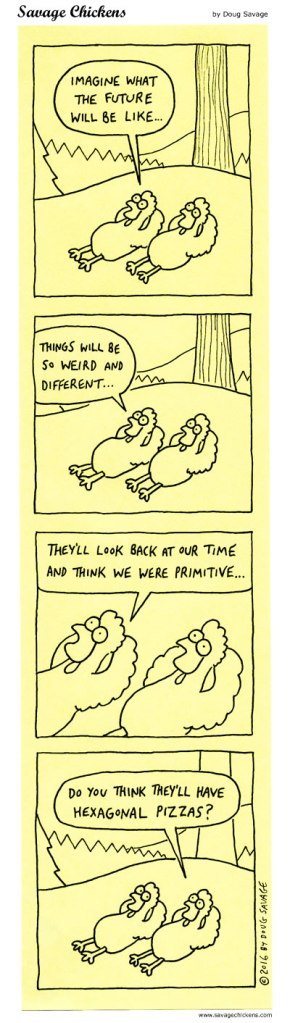
Future news travels here, if a week behind (eat your heart out, John Oliver). And we won’t report on hexagonal pizzas. I promise.
Without further ado, then, here is this past week’s future-related news.
Biotech–
The U.S. Patent and Trademark office issued a ruling in favor of the Broad Institute, a joint venture of Harvard and M.I.T., in its patent dispute with the University of California, Berkeley over the rights to CRISPR/Cas 9 gene editing. The ruling upheld patents granted to Broad in 2014, and effectively stated that they were different enough from those applied for by Berkeley to stand. Shares of Editas Medicine which has an exclusive CRISPR license from Broad were up 20% after the ruling. Both sides indicated expectations that the I.P. battle has probably just begun.
Since CRISPR/Cas9 and other new and powerful gene editing techniques have the potential to exact great change in the human genome–and with it the entire future of human experience, it would probably be a good idea to engage a public discussion on how and when to proceed, and with what applications. That’s just what a group of U.S. scientists suggest. In a far reaching report issued jointly by The National Academy of Sciences and the National Academy of Medicine, they suggest heritable human germ cell tests be limited primarily to the treatment of intractable genetic diseases, at least until more public discussion can be generated.
Dr. George Church of Harvard University, who was mentioned in the first Seeking Delphi podcast on radical longevity extension, predicted that age reversal in humans will be achieved in 10 years. This vs. the 50% probability within 25 years forecast by David Wood in The Abolition of Aging. I hope I’m around long enough to see at least one of them be right. If you missed the podcast, the YouTube version is embedded at the bottom of this post.
Elon Musk–(yes, he’s reached the point of being his own category–just a few of the relevant stories below)
He railed against flying cars, saying they won’t solve traffic problems and pose serious traffic risks. I agree with him.
Bill Gates doesn’t warrant his own category these days, but he did say something bold. He suggested that if robots take your job, they should be taxed. While acknowledging that such a measure could hinder innovation to some degree, he also realizes that massive job losses need to be offset. One way he suggests is to use the tax proceeds to to fund training for jobs that humans will still do. Hmmm. Like robot maintenance?
If you see something during the coming week that ought to be here next time, please let me know. The next Seeking Delphi Podcast, scheduled for midweek release, will feature futurist and financial manager Jim Lee talking about Technology Investing for the Future.
David Wood on The Abolition of Aging, in the premiere episode of the Seeking Delphi, podcast.


 Seeking Delphi™